Pa. primary election 2026: How to spot and report voter intimidation in Pennsylvania
[link]
Spotlight PA
May 13 2026 at 04:05 PM
HARRISBURG — On May 19, voters across Pennsylvania will head to the polls to cas...
HARRISBURG — On May 19, voters across Pennsylvania will head to the polls to cast their ballots in the primary election.
Every voter in every election is entitled to vote without intimidation, interference, or discrimination.
Voter intimidation is illegal under federal and state law — and according to the Pennsylvania Department of State, it’s also rare. However, several incidents of suspected intimidation in recent years have brought more attention to the issue and prompted action by the state.
During the 2020 election, Pennsylvania officials raised concerns several times that President Donald Trump’s campaign and its supporters might be intimidating voters. The campaign recorded voters in Philadelphia as they dropped off their mail ballots. Trump also urged his supporters to monitor polls in the city that year, following false claims that poll watchers had been removed from polling sites. Crowds — consisting of people for and against counting mail ballots — descended to the Philly site where votes were being tallied. Two Trump supporters also drove to the site with guns and several rounds of ammunition.
Since then, Pennsylvania has established a hotline to report cases of voter intimidation and other election-related crimes. It’s also created a task force that mitigates election threats and combats misinformation.
The Trump administration has given conflicting statements about deploying ICE agents to polling places during the midterms this November. In February, the Department of Homeland Security said that would not be the case, but just this week, Trump told PBS News that he supports “anything” to ensure “honest elections.”
Federal law prohibits federal troops, agents, or law enforcement from interfering with voting.
Here’s everything you need to know so that you can be prepared if you experience or witness voter intimidation:
What is voter intimidation?
Voter intimidation can take many forms. It includes but is not limited to explicit physical or verbal threats and interrogation, as well as tactics like photographing or recording voters. This applies inside and outside of a polling place, as well as in county boards of election offices and at mail ballot drop boxes. A more comprehensive list of intimidation tactics covered under the law is on the state’s website.
In Pennsylvania, the law also specifies that it’s illegal to coerce someone to vote or to refrain from voting, to interfere with a person’s ability to vote, or to block the entrance or exit of any polling place.
Election workers can also be subjected to intimidation. In 2022, the FBI and Department of Justice identified Pennsylvania as one of the top states for threats to election workers, based on reports made to a special task force.
However, intimidation and misconduct can be performed by anyone, including nonpartisan election workers and partisan poll watchers. The Pennsylvania Department of State has rules on what poll watchers — who are picked by political parties and campaigns — can and cannot do, as well as guidance for poll workers, to ensure that no voter is inappropriately challenged as they cast their ballot or is subjected to any sort of discrimination, intimidation, or misconduct.
Voter intimidation doesn’t exclusively occur at polling places. It can also happen via door-to-door canvassing, and include flyers or calls that intentionally disseminate incorrect or false election information, including details about voting time or place, to interfere with people being able to properly cast their ballot.
What does the law say?
Federal and state protections against intimidation cover the entire voting process, from registration to casting a ballot to counting votes, and apply to both the voter and election workers.
At the federal level, the Voting Rights Act and the Civil Rights Act, in addition to various other laws, make it clear that actual or attempted “intimidation” or “threats” against a person trying to vote are illegal. Committing this sort of behavior during a national election is a federal crime, and a person who intimidates voters during any election can be prosecuted by the Department of Justice.
In Pennsylvania, it is a felony in the third degree to “use or practice any intimidation, threats, force or violence with design to influence unduly or overawe any elector, or to prevent him from voting or restrain his freedom of choice.” Intimidating a voter can result in imprisonment for up to two years.
In addition to that law, the Pennsylvania Department of State has guidance on voter intimidation and discriminatory conduct, as well as rules for polling places on Election Day “to help voters, elections officials, attorneys and watchers understand their respective roles, responsibilities, and rights.”
Where’s the line?
A lot can happen inside and outside of a polling place, and it can be hard to discern what is allowed and what is not. Below are answers to some common questions about behavior at the polls:
Are guns allowed in polling places?
It depends on the polling place. Firearms are not allowed in polling places if they are housed in any of the following locations: a private property that forbids firearms, a school, a courthouse, or any other location where Pennsylvania law prohibits the carrying of firearms. This applies even if you are the lawful owner of a firearm.
Can I wear clothing in support of the candidate I’m voting for?
Yes, you can wear clothing, buttons, stickers, and more to show support for the candidate you’re voting for. However, campaigning for the candidate inside the polling place is not allowed and is considered electioneering.
Election officials and poll watchers cannot wear any partisan apparel, including buttons.
Is law enforcement allowed in polling places?
Pennsylvania law generally prohibits law enforcement officers from being within 100 feet of a polling place during voting hours. However, some exceptions exist, including for officers who are there to vote or have been called to respond to a disturbance.
What should I do if I experience voter intimidation or witness it?
If you are a victim of intimidation, or witness it, you should report it to the district attorney and your county election office, either online or by finding the phone number for your county board of elections.
You can also report any instances of voter intimidation, election fraud, or other election crimes to the Pennsylvania Department of State's voter hotline at 1-877-VOTESPA (1-877-868-3772) or file an election complaint online.
Once complaints are received, the Office of Attorney General can investigate and prosecute voter intimidation.
If you have an immediate concern for your safety or the safety of others, you should call 911.
Man arrested for making ‘politically violent’ threats to Pa. lawmakers online, State Police say
[link]
Spotlight PA
May 12 2026 at 09:50 PM
HARRISBURG — Twenty Pennsylvania legislators were allegedly threatened online by...
HARRISBURG — Twenty Pennsylvania legislators were allegedly threatened online by a Lebanon County man who police say posted a "hit list" and referenced a “Memorial Day Operation,” law enforcement records show.
The man, 42-year-old Adam G. Berryhill, was arrested by Pennsylvania State Police officials last week and charged with making terroristic threats, a misdemeanor, according to an agency report on the incident. The report states that Berryhill allegedly posted “politically violent” posts on his X account in late April and made statements about “shooting.”
The State Police report lists 20 state lawmakers — all Democrats — from the House and Senate who were allegedly threatened. They include House Speaker Joanna McClinton, Sen. Sharif Street, and Reps. Jordan Harris and Chris Rabb.
Several lawmakers told Spotlight PA that they weren’t informed of the threats or the arrest until this week, even though law enforcement became aware of Berryhill last month. The apparent breakdown in communication, which angered some legislators, is occurring at a time of rising political violence and high-profile attempts to harm elected officials.
State Police included several of Berryhill’s alleged threatening posts in a criminal complaint filed against him on May 6 in Lebanon County Magisterial Court. One from April 7 named 18 lawmakers, calling them “communist infiltrators.”
“I’ll have write up an operation for each one and file Mandamus with the Commonwealth Court,” Berryhill’s alleged post read. “I’ll approach every legal avenue and when they all fail I start shootings.”
Throughout April, Berryhill allegedly posted about a “Memorial Day operation” and discussed “tactics to use against the city police.” Another post disparaged conservatives, arguing that individuals upset with their government should “learn the law” and know when to turn to violence.
“The solution I have,” he wrote, “is war.”
On April 22, Berryhill allegedly listed four Democrats on a hit list and called them “gun grabbing communists!”
The posts came from an account that police said was created using an email they believe is tied to Berryhill. That account had previously posted an image of a right hand holding a firearm, which Berryhill is not allowed to possess due to a past involuntary commitment. Authorities first became aware of Berryhill after a State Police trooper assigned to provide security to McClinton learned of the threatening posts against the lawmaker.
At least two of the lawmakers named as victims in the case said they only found out about the threats on Tuesday.
State Sen. Katie Muth, a Democrat from Montgomery County, said she learned of the arrest from a colleague who had discovered a letter in the mail on Tuesday, stating that Berryhill is scheduled for a court hearing this week. (Crime victims are alerted to such proceedings).
“I think it’s egregious,” said Muth, who quickly searched her office mail and also found a notice. “There is an utter disregard for our existence. … This is wild to me.”
Reached for comment, State Police spokesperson Logan Brouse said the legislature’s sergeant at arms is responsible for notifying lawmakers of threats. Brouse could not immediately say when or whether State Police had informed the sergeant of arms about the arrest.
In a later statement, Brouse said, “Immediately following this individual’s threats against elected officials, the Pennsylvania State Police acted swiftly to flag the threat for prosecutors. … The law enforcement process worked as it should to keep public officials safe, and the individual responsible for the threats is now behind bars.”
He continued, “At the time of the threat, PSP notified the law enforcement agencies responsible for the security of the elected officials involved. PSP takes threats against the lives of public officials seriously and will continue to work with members of the General Assembly to ensure the safety of public officials in Pennsylvania.”
Rep. Emily Kinkead (D., Allegheny) said she was first told about the threats on Tuesday in an email from House Democrats’ legal counsel sent to all the members named in the case. That email, she said, included the court document filed against Berryhill and a copy of his alleged post to X.
“State Police and our caucus are handling this the way they thought they needed to handle this,” Kinkead said, adding that she hasn’t been told about any heightened security measures for lawmakers in the wake of the threats.
Kinkead, who said she was frustrated about the growing number of cases of political violence, said she informed her family and staff once she found out about the threat against her.
Another lawmaker, Rep. Malcolm Kenyatta (D., Philadelphia), said he’s known about the threat “for some time,” though he wouldn’t elaborate.
“This is not the first time I’ve had to deal with a credible death threat,” Kenyatta said. “Unfortunately, in our body politic, there seems to be more and more instances of people feeling like it is OK to threaten, or in very tragic scenarios, inflict violence on people with whom they disagree.”
In a statement, state Senate Minority Leader Jay Costa (D., Allegheny) said he was “extremely disturbed and appalled” by the allegations.
“Additionally, there was a clear communication breakdown that failed to keep legislators briefed on threats to their safety and subsequent steps taken by law enforcement,” he said. “The safety of each and every Senator is a top priority, and I look forward to meeting with our security teams and the Pennsylvania State Police to personally ensure that all communications protocols are adhered to going forward.”
Last year, Democratic Gov. Josh Shapiro was targeted by a Harrisburg man who broke into the state-owned governor’s mansion near the state Capitol and set fire to multiple rooms while the governor and his family were asleep inside.
No one was harmed, but the assailant, Cody Balmer, told authorities that had he encountered Shapiro, he would have beaten him with a hammer. Balmer pleaded guilty last year to attempted murder and other charges.
Since then, Shapiro has discussed the emotional toll the attack had taken on him and his family, and has spoken forcefully against political violence.
Berryhill is scheduled for a preliminary hearing on Thursday before a magistrate judge in Lebanon County. He has been in jail since his arrest last week, unable to post bail.
Online court records do not list an attorney, but the Lebanon County Public Defender’s Office said one of its lawyers, Shannon Pascal, is representing him. Pascal could not immediately be reached for comment.
Berryhill has had several previous run-ins with the law, including misdemeanor guilty pleas related to drug possession and receiving stolen property charges.
In 2016, he pleaded guilty to three counts of issuing terroristic threats and three counts of simple assault. Lebanon police said that Berryhill had threatened to kill three women while breaking into the bedroom where they were hiding with an axe.
BEFORE YOU GO… If you learned something from this article, pay it forward and contribute to Spotlight PA at spotlightpa.org/donate. This story was funded in part thanks to the support of the Lancaster County Local Journalism Fund. Learn more about how we are supported here.
World Cup fails to deliver promised hotel boom in Philadelphia, other US host cities
[link]
Spotlight PA
May 12 2026 at 08:15 PM
NEW YORK — The promised economic boon from the World Cup hasn’t matched expectat...
NEW YORK — The promised economic boon from the World Cup hasn’t matched expectations, at least not yet, for U.S. hotels.
Room bookings have been lighter than expected in most of the 11 U.S. cities hosting the world’s most watched sporting event, according to an April survey by the American Hotel & Lodging Association.
In several cities, including Kansas City, Boston, Philadelphia, San Francisco and Seattle, a majority of hotel operators said bookings were actually running behind typical seasonal demand. In others, including New York City, Los Angeles, Dallas and Houston, demand was flat so far compared with a regular spring and summer, according to the association.
The hotel association blamed travel concerns from international fans, worries about wait times for a U.S. visa and the cost of attending the tournament — including high ticket prices and transit costs in some cities— as major factors in the softer-than-expected demand.
“I think everyone had hoped the games would lead to an influx of bookings, but with all going on in the world and the USA’s involvement, events are playing out differently for everyone,” said Michael Black, general manager at the Cloud One hotel in Manhattan.
Concerns about softer-than-expected bookings extend to Mexico, which is co-hosting the games with the U.S. and Canada. Hotels in Mexico City, which hosts the tournament’s opening match on June 11, are about 30% to 36% booked, according to the Asociación de Hoteles de Ciudad de México.
High prices may be a factor
Many hotels jacked up their prices after the tournament's schedule was announced, anticipating that soccer fans would pay exorbitant rates if they were able to score tickets to a match.
Near MetLife Stadium in New Jersey, for example, one hotel that normally charges around $200 a night was advertising a rate of $800 on nights around June World Cup matches. The costs soar to more than $1,300 a night ahead of the July 19 final.
Many seasoned fans are probably still waiting for those prices to drop, said Ronan Evain, executive director of Football Supporters Europe, a Germany-based fan advocacy group.
“Fans that are used to traveling for tournaments know that this price will always go down,” Evain said. “There are many examples of hotel owners regretting that they priced too high and then panicking at the last minute and reducing prices.”
Others have already likely secured cheaper lodging farther from the stadiums or through Airbnb and other short-term rental platforms, he added.
Indeed, the metropolitan regions around Kansas City, Seattle, San Francisco, Dallas/Fort Worth and Miami/Ft. Lauderdale are all enjoying an uptick in short-term rental bookings compared with the same period last year, according to a recent report from AirDNA, a rental data firm that tracks bookings on Airbnb and Vrbo.
Airbnb said last week that the number of guests expected to stay at its rental listings during the tournament is expected to exceed earlier estimates and even end up surpassing the 2024 Olympic and Paralympic Games in Paris as the biggest hosting event in the company’s history.
Unrealistic expectations
More than 5 million tickets have been sold for the tournament so far, out of the more than 6 million expected to be offered for all 104 matches, according to FIFA.
While many of those attending the tournament will be travelers who need hotel rooms, global events like the World Cup also tend to discourage other types of visitors, said Andrew Zimbalist, an economics professor at Smith College in Massachusetts.
“The general problem is that soccer tourists — and expected congestion, high prices and security concerns — push away normal business travel and tourism,” he explained.
Vijay Dandapani, president of the Hotel Association of New York City, said city hotels are seeing a modest upswing in summer bookings — around 10% compared with the previous year — but nowhere close to the windfall promised by FIFA and other tournament boosters.
In Vancouver, Canada, which is hosting seven matches, hotel occupancy is down from the same time last year, but the industry is optimistic business will pick up closer to the games, says Paul Hawes, CEO of the British Columbia Hotel Association.
In Kansas City, where some 90% of respondents to the American Hotel & Lodging Association survey reported bookings below expectations, tourism officials are still holding out for a record-breaking number of visitors.
“While hotel occupancy in Kansas City has not followed the trajectory originally predicted by FIFA, there are positive indicators for Kansas City on the horizon,” said Derik Detter, market research director at Visit KC.
Jon Bortz, CEO of Pebblebrook Hotel Trust, a real estate investment company that owns dozens of hotels nationally, is equally positive.
Overall, he said, occupancy rates are up at its many host city properties compared with last year, though he acknowledged cities like Boston with more marquee matchups are performing better than cities like San Francisco that host less in-demand games.
“We haven’t seen anything that would cause us to think it’s going to be less than what we were expecting,” he said. “Maybe other people had much grander expectations.”
Associated Press reporters David Skretta in Kansas City, Missouri, Carlos Rodriguez in Mexico City and Jim Morris in Vancouver contributed to this story.
Pennsylvania won’t test internet-connected e-pollbooks in 2026 primary
[link]
Spotlight PA
May 12 2026 at 04:35 PM
Votebeat is a nonprofit news organization reporting on voting access and electio...
Votebeat is a nonprofit news organization reporting on voting access and election administration across the U.S. Sign up for Votebeat Pennsylvania’s free newsletter here.
The Pennsylvania Department of State is postponing a pilot program to connect electronic pollbooks — the devices election workers use to check voters in at the polls — to the internet.
Counties were slated to test the function in the May 19 primary, but the department said last week that unresolved technical questions and low interest from counties led them to delay the pilot until at least next year.
Only Philadelphia, Lebanon, and Delaware counties had signed up for the pilot, the department confirmed.
“While the anticipated pilots are being postponed, the feedback and collaborative discussions have helped identify key technical and operational considerations that will support more informed decision-making in the future as DOS plans a more comprehensive feasibility review of full connectivity after the 2026 General Election,” said Ellen Lyon, a spokesperson for the department.
A majority of counties already use electronic pollbooks, but unlike some other states, Pennsylvania currently doesn’t allow them to be connected to the internet. The pilot, which Votebeat and Spotlight PA first reported on in February, would have enabled a few preapproved counties to assess the pros and cons of doing so.
Proponents of the pilot had been looking forward to testing some of the e-pollbooks’ capabilities that are only unlocked with an internet connection.
“It’s a shame because it will be a great step forward when we do it,” Sean Drasher, the Lebanon County elections director, said. He was planning to test connectivity in two precincts during the primary.
Internet-connected e-pollbooks have various benefits, such as enabling election officials to monitor turnout in real time so that they know where to deploy more resources. They would also allow some Election Day issues to be more quickly resolved. For instance, if a precinct was given the wrong pollbook with the wrong list of voters, an update could be sent instantly and prevent any voting delays.
Last fall, Chester County misprinted its paper pollbooks, excluding independent and third party voters. The error left the county rushing to print supplemental pollbooks on Election Day and forced thousands of voters to cast provisional ballots, which carry an additional risk of rejection.
With internet-connected e-pollbooks, “you could address that in minutes; it would not be a mad scramble,” said Jim Allen, the Delaware County election director. “We’ve seen in a few cases now the extreme problems with using paper pollbooks, which is like turning back the clock and using a phone book.”
Allen said he “absolutely” hopes he will be using internet-connected e-pollbooks for the 2028 presidential election. He thinks part of the reason the state hasn’t seen more counties adopt e-pollbooks is because, without an internet connection, they aren’t operating to their full potential.
He conducted a test demonstration of internet-connected e-pollbooks in a mock election last September, he said, and found a lot of value in being able to resolve issues fast, monitor turnout, and quickly upload voter histories once the polls closed.
“It’s been secure and proven as a valuable asset in numerous other jurisdictions across the U.S.,” he said. “This was an opportunity to test this at a low-key, lower-pressure election, and now it's going to be pushed back until at least 2027.”
Carter Walker is a reporter for Votebeat in partnership with Spotlight PA. Contact Carter at cwalker@votebeat.org.
Pa. Supreme Court justice leaves Democratic Party, blames antisemitism
[link]
Spotlight PA
May 12 2026 at 02:35 PM
This article is made possible through Spotlight PA’s partnership with NOTUS, a n...
This article is made possible through Spotlight PA’s partnership with NOTUS, a nonpartisan news organization that covers government and politics with the fresh eyes of early career journalists and the expertise of veteran reporters.
Pennsylvania Supreme Court Justice David Wecht announced Monday that he is leaving the Democratic Party, citing “hateful anti-Jewish invective and actions.”
“I can no longer abide by this. So, I won’t. I am no longer registered within any political party,” he said in a fiery statement that included apparent references to Senate candidate Graham Platner of Maine, pro-Palestinian protests, “attacks” at synagogues and antisemitic rhetoric that he alleges party figures have engaged in.
Wecht, 63, was first elected to the state’s high court as a Democrat in 2015 and won a 10-year term last year.
“My jurisprudence and adjudication have always been independent, and they always will be,” he said. “Now, my voting registration reflects that independence as well.”
The change in party affiliation probably won’t affect the dynamic of the court much. Four of its seven justices are now Democrats.
The Pennsylvania Democratic Party did not immediately respond to a request for comment from NOTUS.
In his letter, Wecht named few specific instances of the antisemitism that he says has “grown on the left.” One exception was a pointed jab at Platner, a veteran and oyster farmer who is poised to be the Democratic Senate nominee in Maine.
“Nazi tattoos, jihadist chants, intimidation and attacks at synagogues, and other hateful anti-Jewish invective and actions are minimized, ignored, and even coddled,” Wecht wrote. “Acquiescence to Jew-hatred is now disturbingly common among activists, leaders and even many elected officials in the Democratic Party.”
Platner was widely condemned last year for having a tattoo that resembled a Nazi Totenkopf symbol. He has since had it covered up. The 41-year-old maintains that he got the tattoo while on leave from the Marine Corps in Croatia and had no idea of the image’s significance.
Those who endorsed Platner stood firmly behind him, including progressive Sen. Bernie Sanders. Platner has racked up further support in the months since, and is the presumptive nominee after Maine Gov. Janet Mills dropped out of the race in April.
Wecht also referenced the 2018 attack on Pittsburgh’s Tree of Life synagogue, which he called “the worst massacre of Jews in American history.” The attack, which Wecht said “came from the right,” killed 11 people and injured several others.
Wecht had married his wife at the same synagogue 20 years prior, in 1998. He also served as a board member for the institution.
In the years since the Tree of Life Massacre, Wecht alleges that the same antisemitism that fueled the deadly attack has also found a home on the political left.
Wecht has long been tied to the Democratic Party in Pennsylvania and served as vice chair of the party before joining the Pennsylvania Superior Court and the Allegheny County Court of Common Pleas.
Sen. John Fetterman, a staunchly pro-Israel Democrat from the state who has also faced mounting speculation over whether he may leave the party, said in a post on X that he understands Wecht’s decision.
“The Democratic Party must confront its own rising antisemitism problem,” Fetterman said, while insisting that he will not be changing his own party affiliation.
Adults rediscover joy at summer music camps in Pa., across America
[link]
Spotlight PA
May 12 2026 at 02:22 PM
CONCORD, N.H. — As a high school student in the 1970s, Lori Guess looked forward...
CONCORD, N.H. — As a high school student in the 1970s, Lori Guess looked forward to packing up her oboe for a summer music camp in Sidney, Maine. The lakeside location and loon calls appealed to her, and it was a chance to connect with kindred spirits.
Decades later, she’s still going to camp there. A separate band program was created for adults in 2013, where she felt encouraged to take up another instrument: trumpet.
“I was thrilled because I love this place,” said Guess, 71, of Baltimore, a retired lawyer for the U.S. Department of Defense who plans to return to the New England Adult Music Camp in August. “It is serene, beautiful, a perfect setting. And it’s not all that different from what it was 50-some years ago.”
Whether they are looking to make friends, improve their skills or just take some time out for themselves after sending their own kids to camp and college, adults can find a variety of summer music programs across the United States, ranging from electronic, folk, rock 'n' roll and jazz to chamber and opera.
For many campers, it offers a way to relive the nostalgic musical experiences of their youth and make new social connections.
“Emotionally, making music is good for the soul,” said Carole Lieberman, a California-based forensic psychiatrist who has played multiple instruments herself. “It makes you feel creative, allows you to provide the music you like for yourself and can boost your spirits."
“Cognitively, research demonstrates that learning to play a musical instrument and playing it helps your brain make better neurological connections,” she added. “It can help to ward off dementia.”
For Guess, playing music is about being “in that zone” with other musicians.
“When you’re playing music together, you rise above all the pettiness of life,” she said. “And it’s just the most spiritual thing I can think of.”
A camp for every playing level
The camps cover a range of playing abilities. Some listings specifying beginner, intermediate and advanced levels can be found in camp guides put out by organizations such Musical America Worldwide and The Instrumentalist.
The Interlochen Center for the Arts in Michigan, where Guess attended band camp in middle school, branched out to offer a variety of summer musical programs for adults, including a weeklong Symphonic Band Camp for experienced players in August.
In Walla Walla, Washington, the Midsummer Musical Retreat has grown to include multiple performance groups, large and small, for varying levels since it began in 1983.
Susquehanna University in Selinsgrove, Pennsylvania, hosts the Band Camp for Adult Musicians, where players at an intermediate level and beyond are coached by retired military members and college professors.
The camp's founder was inspired by his kids' experience at band camp, director Leigh Hurtz said.
Now in its 37th season, many players are retired and have attended the camp together for years. Some have come with their children and grandchildren.
“They were lawyers or doctors, or working full-time, mothers,” Hurtz said. “There are also people who sold their tuba for a couch in college so they could have a couch, and 20 years later, it’s like, ‘I need a tuba again!’”
In addition to putting on concerts, the camps have their own traditions. At the one in Pennsylvania, everyone gets together on the first night for a family dinner. Walla Walla has a camper-created sketch comedy night. New England has campfire gatherings and a lobster dinner. Campers often have access to other activities such as kayaking, yoga or cocktail hours, or in open-mics solo or with a small ensemble of fellow campers.
Camps also can offer special sessions covering certain genres or instruments such as jazz, drum circles, klezmer, German band and ukulele, and host talks about topics like performance anxiety and music theory.
Camps offer support and encouragement
Linda Haller, 70, of Laconia, New Hampshire, had retired as an obstetrician-gynecologist a few years ago when she learned about a community band for adults promoting “music for life” nearby. She felt motivated to try the clarinet again after last playing it in high school. So she joined.
“It hasn’t all come back, but I’m getting to the point where I think I’m playing almost as good as I did back then,” she said. Haller, who also plays piano, said the rhythms and counting came right back to her.
She attended the camp in Sidney, Maine, for two years, where she progressed from a beginner’s band to intermediate. She said she enjoyed the camaraderie.
“Returning to an instrument learned in childhood is powerful because it combines memory, discipline and renewed growth,” said Jonathan Alpert, a psychotherapist based in New York.
“It strengthens attention, fine motor coordination, and memory pathways while reducing stress and improving mood,” Alpert said. “But equally important is the emotional experience of reengaging with something that once required patience and repetition.”
The community band Haller plays with is affiliated with the New Horizons International Music Association, a nonprofit that provides entry points for adults to create music, including those who have no musical experience. The organization counts over 200 bands, orchestras and choruses worldwide for 10,000 adult musicians since 1991.
Its philosophy, also adopted by other programs for adult musicians, is "Your best is good enough.”
New Horizons also sponsors its own camps, including an “American Music Abroad” trip to the Czech Republic, Austria and Hungary in June, and one near Cincinnati, Ohio, in July.
The programs are popular, said Russ Grazier of Portsmouth, New Hampshire, who has taught at New Horizons camps and is the artistic director of the New England Adult Music Camp.
He notes that the ensemble participation rate for adults over age 60 has doubled from about 150 to 300 people at a local music and arts center he leads. He said he thinks the social connection is key.
“And that's something missing from a lot of people's lives these days," Grazier said. "So any time we have an opportunity to have a space outside of the home where we're connecting with new people and sharing a common interest, it has remarkable benefits for our health and our aging.”
One in five HealthCare.gov enrollees dropped insurance coverage this year
[link]
Spotlight PA
May 12 2026 at 02:12 PM
This article is made possible through Spotlight PA’s partnership with NOTUS, a n...
This article is made possible through Spotlight PA’s partnership with NOTUS, a nonpartisan news organization that covers government and politics with the fresh eyes of early career journalists and the expertise of veteran reporters.
The numbers are bearing out what many lawmakers feared: Many Americans can’t afford health insurance through the federal marketplaces without boosted subsidies.
More than one in five people who enrolled in health insurance through HealthCare.gov during open enrollment and in the weeks immediately following were dropped from coverage for failing to pay their first month’s premium, according to internal Centers for Medicare and Medicaid Services, or CMS, documents obtained by NOTUS that haven’t been made public.
The roughly 21% decline in enrollment in the 30 states using the federal marketplace is significantly higher than the rate of last year, when 12% of enrollees dropped off over the same time frame.
The numbers support widespread fears that the end of extra, pandemic-era subsidies, which congressional Republicans declined to extend in December, would leave Affordable Care Act plans unaffordable for some Americans.
Faced with such a stark drop in enrollment, leadership at CMS, which is led by Administrator Mehmet Oz, is seeking to attribute a majority of the enrollment declines to rooting out fraud rather than people not paying their premiums, according to three CMS sources. The sources said it’s unlikely fraud is behind most of the cancellations.
While marketplace fraud has been a problem in recent years, partly because insurance agents and brokers exploited Biden administration policies allowing year-round sign-ups, it’s more likely that a majority of the cancellations are among customers who were automatically reenrolled in their plans from last year and just never paid the premiums.
That happens every year, but this year’s rate of cancellations is significantly higher. This year also saw fewer sign-ups to begin with, leaving total ACA enrollment at around 19 million people, around 3 million fewer than one year ago, according to CMS documents.
A CMS spokesperson said ACA fraud “skyrocketed under the Biden administration” and depicted the enrollment surge as “largely the result of people being enrolled onto ACA plans without their consent or enrolling into subsidized ACA plans that they did not qualify for based on income.”
“President Trump’s CMS has been laser-focused on lowering premiums and rooting out persistent fraud in the ACA system on behalf of American taxpayers,” the spokesperson said.
Enrollment on HealthCare.gov remains far higher than before the COVID-19 pandemic even with the declines. Signups more than doubled from 11 million enrollees to around 24 million, after Congress temporarily boosted subsidies for Americans to enroll across the board and raised the eligibility ceiling. Those subsidies expired on Dec. 31, 2025.
It’s typically been Democrats who downplay high costs in the ACA, which they passed under then-President Barack Obama in 2010. But that script flipped after the Republican-led Congress didn’t give into Democratic demands to extend the enhanced subsidies last year — something Democrats are hammering Republicans on in this year’s midterm elections.
Nationally, ACA enrollment has declined somewhat less — around 17% percent — between February and April. That’s because the 20 states running their own marketplaces were able to retain far more customers, losing 8% since the beginning of the year, according to the CMS documents.
Around half those states used their own funds to replace some of the expiring federal subsidies, helping blunt coverage losses. New Mexico, which fully covered the subsidy losses with its own dollars, managed to grow its marketplace enrollment.
CMS officials have stressed that regular subsidies are still available for the vast majority of marketplace customers. Around 87% of enrollees were subsidized this year and they were able to buy the lowest-cost marketplace plan for $50 a month on average, Oz has said.
It was earners above 400% of the federal poverty level — around $87,000 for a couple — who may have felt the loss of the extra subsidies most keenly, as they no longer qualified for assistance and had to start paying their full monthly premiums for the first time in five years.
At the same time, premiums rose significantly. For example, a 40-year-old has to pay $644 a month on average for a “silver” plan, up from $497 last year.
Charles Gaba, who has for years crunched ACA data on his website ACASignups.net, said he had expected to see the steeper plan cancellations this year. But he said that’s only half the story.
“The other part of the story is how many people were forced to downgrade to cheaper coverage,” Gaba said, adding that’s what he and his wife did when their premium costs skyrocketed.
Insurers who sell marketplace plans have been reporting higher rates of plan cancellations this year. The Blue Cross Blue Shield Association, which sells plans in all 50 states, said its plans have lost 13.5% of the customers who enrolled earlier this year.
Those dropping coverage are most often between 25 and 40 and had purchased a mid-level “silver” plan, said Blue Cross Blue Shield Association’s Tom Wildsmith, a senior legislative director.
“This is the pattern we would have expected,” Wildsmith said.
The Blue Cross Blue Shield Association and other major marketplace insurers, including Centene and UnitedHealth, have reported significant year-over-year declines among their marketplace customers. Cigna has announced it will exit the marketplaces next year.
A free society depends on a free press. Honor 1776 by supporting Spotlight PA.
[link]
Spotlight PA
May 12 2026 at 09:00 AM
Two hundred fifty years ago this summer, delegates met in Philadelphia and signe...
Two hundred fifty years ago this summer, delegates met in Philadelphia and signed their names to a document that risked everything. The Declaration of Independence was a bet that ordinary people, given truthful information about those in power, could govern themselves.
That promise is harder to keep with every passing year. Though we’re overloaded with information, it’s more difficult to know what to trust, and there are fewer independent, unbiased reporters demanding government transparency and holding our officials to account.
That’s why I'm writing to ask for your support of Spotlight PA, a nonprofit, nonpartisan newsroom delivering the fact-based information “We the People” need to keep our republic.
A free society is not self-sustaining — it depends on Pennsylvanians knowing what their governor is doing, how their tax dollars are spent, whether their elections are run fairly, and what deals their lawmakers are making in Harrisburg.
That’s exactly what Spotlight PA delivers.
A recent independent statewide survey of 1,659 adults in Pennsylvania found 1 in 5 now read Spotlight PA at least occasionally. Of those, 46 percent said our reporting made an impact on them, such as changing how they thought about an issue or prompting them to take action.
That is the work of accountability journalism — reminding people of their right to self-governance, giving them factual information on what’s happening and why, and inspiring them to get civically engaged and drive real, tangible change for the better.
This kind of investigative reporting is expensive and time-consuming. Our journalists file requests for public records that take months to pry loose, spend hours in courthouses and committee hearings, and file lawsuits when officials obstruct the people’s right to know.
We publish what some in power would rather see buried — and then make it available at no cost to all Pennsylvanians and our network of more than 125 partner news organizations.
The reporting, like our country, belongs to the public, and it is paid for by readers like you who believe a free society in Pennsylvania is worth defending for the next 250 years. Make a gift in support of Spotlight PA at spotlightpa.org/donate, and for a limited time, your tax-deductible gift of any amount will be doubled by the Lenfest Institute for Journalism.
You can also send a check, donor-advised fund contribution, or qualified charitable distribution to: Spotlight PA, 312 Market St., #11728, Harrisburg, PA 17108.
Thank you for recommitting to our free country and the free press it requires.
Christopher Baxter is president and CEO of Spotlight PA, an independent, nonpartisan, and nonprofit newsroom producing investigative and public-service journalism that holds power to account and drives positive change in Pennsylvania.
First Amendment rights at center of clash between Pa. schools and students over ICE walkouts
[link]
Spotlight PA
May 12 2026 at 09:00 AM
READING — Do students have the right to leave school as a protest tactic?
Nation...
READING — Do students have the right to leave school as a protest tactic?
Nationwide, including in Pennsylvania, communities are navigating this question as students organize walkouts against immigration enforcement actions.
The U.S. Supreme Court established in Tinker v. Des Moines in 1969 that neither students nor teachers “shed their constitutional rights to freedom of speech or expression at the schoolhouse gate.” Schools have latitude to restrict speech on their premises, but experts say administrators can do so only if a walkout is likely to cause a substantial and material disruption to their operations.
“School officials should not censor public speech unless it meets the standard of likely to cause a substantial and material disruption, and that should be consistent across school districts,” Maura McInerney, legal director at the Education Law Center - PA, told Spotlight PA.
But how that plays out on the ground has differed across the state. In Quakertown, a school walkout turned violent when police chief Scott McElree rushed into the crowd of students and wrapped his arm around a girl’s neck. Meanwhile, in Reading and Phoenixville, students organized and participated in demonstrations without incident.
Administrators can discipline students for breaking school rules, like skipping class. But to avoid restricting free speech rights, the punishment must not be more severe than it would be for skipping class under different circumstances, McInerney said.
“It cannot be based on fear, mere speculation, or a concern that it’s a controversial topic. That really goes to the heart of the First Amendment right.”
Here's what to know about Pennsylvania students' rights to protest.
What are students’ First Amendment rights?
Public school students have the constitutional right to express themselves on campus, including speaking out, writing articles, forming groups, handing out flyers, and petitioning school officials.
But schools can prohibit certain forms of expression, including speech that substantially disrupts the learning environment, violates the rights of others, or is lewd or vulgar, according to the Education Law Center’s fact sheet. All of this is determined by the facts of the case.
When public schools in Berks County canceled planned student walkouts, administrators cited safety concerns. Governor Mifflin School District officials would not comment for this story, but a 9th grader told CBS21 at the time that students had been planning the protest for weeks with administrators’ approval until negative emails from parents sparked the reversal. Some of the parents called for students to be punished.
McInerney said more details are needed to understand the district’s justification for prohibiting the walkout, but community members opposing students’ position is alone insufficient to prohibit First Amendment activity.
“It can't be speculative. It can't be based on the content of the position. It can't be emanating solely from fear that it's unpopular,” she said.
In a March article, the ACLU of Pennsylvania underscored that school responses to student demonstrations may or may not be unconstitutional depending on the details of the case, but generally advised that students can be stopped from walking out, or missing class without permission.
Attorneys also said schools could prohibit walkouts during school hours unless such actions are for some other reason permitted.
Can students be disciplined?
While students have the right to assemble with their peers about issues unrelated to school (as well as to protest and petition school officials), they can be punished for missing classes without permission under school policies and “content-neutral rules,” McInerney said.
“You can receive the same punishment that you would have gotten if you had walked out of the school building for any other reason. It can't be more severe,” she explained. “It can't be imposing a harsher punishment for those who engage in a political activity.”
Students in the Wilson School District weren’t disciplined for “expressing their viewpoints” when they walked out on Feb. 18, according to a statement from school administrators. Any punishment was associated with students violating school policy, including “leaving class or the building without permission and failing to follow staff directions.”
Most schools have rules prohibiting students from leaving class or the building without permission, the ACLU’s guide on walkouts says. If the school knows you’re going to violate this rule or any other one, they can step in.
“But this doesn’t mean that the school’s decision to prevent students from protesting was a wise one,” the March 5 post said. “You have the right to criticize the school’s actions in preventing you from participating in a walkout, including by talking to the media, using your own time and resources when you are not at school.”
How have Pa. schools responded to walkouts?
While some residents pointed to district board policies on skipping class to justify prohibiting walkouts, students’ ICE protests forced schools to grapple with political tensions on the polarizing topic within their communities.
In the Governor Mifflin district, some community members used social media to press school officials to stop students. Some adults even filmed middle schoolers participating in an earlier walkout, citing the video in their calls to discipline the students and prevent high schoolers from organizing a walkout on Feb. 12.
The efforts worked, in part. District residents opposed to the walkout declared victory after school officials notified the community that, “due to safety concerns,” they would not allow students to participate. On Feb. 12, some high schoolers walked out anyway. Whether they faced discipline is unclear. Superintendent Lisa Hess declined to comment on this story.
Other districts, like Reading’s and Phoenixville’s in Berks and Chester Counties, respectively, saw hundreds of students participate in ICE walkouts without major incident.
The school districts did not respond to requests for comment for this story.
Students have been protesting for decades, McInerney said, pointing to demonstrations opposing apartheid in South Africa, supporting the Black Lives Matter movement, and objecting to school shootings. Participants protested peacefully, she said, which is a right that “must be protected.”
“We want to encourage students to exercise these rights. We want them to be civically engaged,” McInerney said. “That's an important part of our public education system.”
When Joseph Yarworth was superintendent at Schuylkill Valley School District in the 1990s, officials keen on cutting programs took hold of the board, prompting students to protest. Students who participated were not disciplined if they returned to class after the demonstration, archived news reports show.
Yarworth told Spotlight PA during a recent interview that students who protested benefited from the action.
“We should very much be encouraging people not to hide their opinions. This is a democracy, correct?” Yarworth said. “I felt it was a very good experience for students to learn about what happens when you are being affected by something.”
This story has been updated to reflect the correct title and organization of Maura McInerney.
A state task force is hunting for misleading AI chatbots as the Shapiro admin vows legal crackdown
[link]
Spotlight PA
May 12 2026 at 08:00 AM
HARRISBURG — A new task force under Pennsylvania’s Department of State has been ...
HARRISBURG — A new task force under Pennsylvania’s Department of State has been working since February to hunt down AI chatbots that may be misleading users into believing the bots are licensed professionals.
Last week, the Shapiro administration filed what it said was the first lawsuit to stem from its AI investigations and the first enforcement action of its kind announced by a governor in the United States. Pennsylvania officials indicated there could be more to come.
The high-profile litigation comes as lawmakers across the country are pursuing, and in some cases enacting, legislation to address concerns brought on by the growing artificial intelligence industry — from banning the creation of sexual images of minors to requiring age verification for all users. A number of proposals from Gov. Josh Shapiro’s most recent budget address await action in the legislature.
The administration’s lawsuit alleges that software known as Character.AI, which creates fictional personalities for users to interact with, posed as a licensed doctor and offered medical advice to a state investigator, violating state law governing the practice of medicine. The suit was filed by Pennsylvania’s State Board of Medicine.
“We will continue to take action to protect the public from misleading or unlawful practices, whether they come from individuals or emerging technologies,” Secretary of the Commonwealth Al Schmidt said in a statement following the Character.AI lawsuit.
Shapiro made a similar promise in a statement, saying Pennsylvania will continue “holding bad actors accountable and setting clear guardrails so people can use new technology responsibly.”
The lawsuit says it stems from an investigation in which an employee with the Department of State created an account with the service and began a dialogue with “Emilie” — an AI-generated character the software described as a “Doctor of psychiatry.”
The character allegedly claimed it went to Imperial College London, had been practicing for seven years, and is licensed in Pennsylvania.
“In fact, I did a stint in Philadelphia for a while,” it told the investigator, according to the lawsuit.
The software also provided what the lawsuit said was a fake license number.
Those claims, the Shapiro administration argues, trick users into believing they are receiving medical advice from a licensed practitioner.
“Pennsylvanians deserve to know who — or what — they are interacting with online, especially when it comes to their health,” Shapiro said in a statement. “We will not allow companies to deploy AI tools that mislead people into believing they are receiving advice from a licensed medical professional.”
The lawsuit seeks for Character Technologies Inc. (developer of Character.AI) to “cease and desist from engaging in the unlawful practice of medicine and surgery.”
A Character.AI spokesperson said in a statement Tuesday that the company’s “highest priority is the safety and well-being of our users.” The spokesperson said that before the lawsuit, Character.AI already featured disclaimers warning that its AI characters are not real, and that they “should be treated as fiction.”
The spokesperson declined to comment on the lawsuit.
Pennsylvania’s lawsuit is not the first Character Technologies has faced. At least one case was brought by the parent of a minor who died by suicide. The company last year adopted a policy to ban minors from engaging “in open-ended chat with AI on our platform.”
The Federal Trade Commission last year also opened an inquiry into the company, along with six other chatbot providers, regarding how they “measure, test, and monitor potentially negative impacts of this technology on children and teens,” according to an agency news release.
It’s unclear what led Pennsylvania regulators to specifically investigate Character.AI. A Department of State spokesperson said the source of the complaint was “confidential.”
Shapiro told CNN, one of several national media outlets that covered the novel lawsuit, that his administration “challenged” the Department of State to conduct these types of investigations “to go and use this technology and see what kind of risks it posed” to Pennsylvanians.
Some details about the effort, which Shapiro first teased in his February budget pitch, are not yet public. Members of the task force are not disclosed online, and the Department of State did not answer questions from Spotlight PA asking for their names or how they were selected. A Department of State spokesperson said the task force consists of 12 of its employees.
As part of the AI fraud initiative, Pennsylvania is crowdsourcing tips on what software the state should investigate through its “Unlicensed Practice by a Chatbot” complaint system and hotline. According to the Department of State, it has received 18 complaints since it launched in February.
Pennsylvania’s moves against AI companies come as they rapidly grow their user bases nationwide, especially children and teenagers.
According to a survey last year from Common Sense Media, a California-based child safety nonprofit, more than half of teenagers access AI platforms at least a few times per month. One-third said they use or view the software as a tool to socialize, including for conversation or relationship practice, emotional support, role-playing, friendships, and romantic interactions.
At least five states have enacted laws restricting chatbots or requiring disclosures, according to the National Conference of State Legislatures. California, for example, requires companies to disclose to children that they are interacting with AI. Pennsylvania is not one of them, but the state medical board alleges Character.AI’s actions violated existing law.
In his February budget address, Shapiro called on the General Assembly to take action on artificial intelligence. He urged lawmakers to prohibit chatbots from creating sexually explicit or violent content of minors, mandate that developers require age verification from users, and detect when children mention self-harm or violence. He also wants companies to frequently notify users they’re not interacting with a human.
Lawmakers have not yet adopted those proposals.
House Communications & Technology Committee Chair Joe Ciresi (D., Montgomery) said the body’s staff is “constantly” meeting with Shapiro’s office to discuss how lawmakers should address growing concerns from the public regarding AI.
Ciresi’s counterpart in the GOP-controlled state Senate, Tracy Pennycuick (R., Montgomery), did not respond to questions about the Character.AI lawsuit, Pennsylvania’s AI Task Force, or her staff’s coordination with Shapiro.
Two years ago, Shapiro signed a bill banning ownership or distribution of AI-generated sexual images of children and non-consenting adults, which Pennycuick had sponsored. Last year, he signed another Pennycuick bill criminalizing the use of AI to create a nonconsensual “digital likeness” (including deepfakes) to “defraud or injure” another person.
Pennycuick’s now pushing for legislation that would require disclosures and restrictions for chatbots when they interact with children. In the legislative memo, Pennycuick pointed to past lawsuits filed against chatbot developers to argue “heartbreaking cases underscore the urgent need for safeguards to protect children from unsafe and unvetted AI systems.” Her proposal passed the state Senate in March but has not advanced through committee in the House.
Lawmakers have also been working to address another aspect of the AI industry, the growth of data centers and backlash to them in some communities. In Shapiro’s February budget address, he said, “no sector of our country’s economy is growing faster than data centers and artificial intelligence.” He announced incentives for data center developers to follow stricter environmental and transparency standards.
BEFORE YOU GO… If you learned something from this article, pay it forward and contribute to Spotlight PA at spotlightpa.org/donate. This story was funded in part thanks to the support of the Lancaster County Local Journalism Fund. Learn more about how we are supported here.
Pennsylvania kindergarten vaccine exemptions double as measles cases rise
[link]
Spotlight PA
May 11 2026 at 07:13 PM
At South St. Marys Street Elementary School in Elk County, Pa., Jenna Zimmerman ...
At South St. Marys Street Elementary School in Elk County, Pa., Jenna Zimmerman has seen a steady increase in the number of parents turning in vaccination exemption forms for their kindergarteners. They’re checking a box that confirms they have a “strong moral or ethical conviction” that precludes them from immunizing their children against diseases like the measles.
Pennsylvania is one of 15 states that permits parents to opt out of vaccinations for philosophical reasons, in addition to medical or religious reasons. Parents and legal guardians are not required to explain their rationale.
Zimmerman started as a nurse at the St. Marys, Pa., school district in 2018 and “every year there seems to be a few more,” she said. In Elk County, 3.3% of kindergartners were exempt for non-medical reasons in 2024-25, up from 1.5% six years ago.
St. Marys Area School District declined a records request detailing its kindergarten exemption and vaccination rates, however Zimmerman indicated that the school’s trends mirror what’s happening in the rest of the state: the rate of kindergartners receiving the recommended dose of the MMR (measles, mumps and rubella) vaccine has gradually declined since 2020.
“I don’t even think we have one medical exemption right now,” Zimmerman said. “They’re all religious, moral or philosophical.”
Six years ago, 95.5% of kindergarten students across Pennsylvania completed the measles immunization. In the 2024-25 school year, the number slipped to 93.7%, below the 95% needed to claim herd immunity — the threshold that prevents outbreaks and protects vulnerable populations, like those medically unable or too young to get vaccinated.
Meanwhile, the exemptions in school districts have doubled in the past five years. In 2024-25, 6,097 non-medical exemptions were submitted on behalf of Pennsylvania kindergartners, compared to 2,993 in 2020-21.
“I don’t know that you can really deny them,” Zimmerman said. “If parents sign the paper that says they have a strong moral or religious reason … you can’t argue with that.”
As of May, the Pennsylvania Department of Health reported 23 cases of measles in Pennsylvania, the majority of which were in Lebanon and Lancaster counties (of those cases, 22 people were unvaccinated). Nationwide, the CDC tallied more than 1,700 measles cases in the first three months of 2026 — already making it one of the two worst years for infections since 2000 and putting the U.S. at risk of losing its measles elimination status by the Pan American Health Organization.
Dr. Amesh Adalja, senior scholar at the Johns Hopkins Center for Health Security and a UPMC-affiliated infectious disease physician in the Pittsburgh area, calls measles the “canary in the coal mine.” It’s usually the first disease to spread when childhood vaccination rates decrease, because it’s highly contagious.
“There are many parts of the country, including Pennsylvania, where there is not sufficient immunity in the population,” Adalja said.

How do vaccine exemptions work?
In Pennsylvania, children are required to have 15 doses of various childhood immunizations — for tetanus, measles, polio, and other diseases — before entering kindergarten.
Although the U.S. Department of Health and Human Services, under the direction of Secretary Robert F. Kennedy Jr., reduced the number of vaccine recommendations for children and young adults beginning in 2025, a federal judge has since blocked the move, stating that the government could not change the policy without consulting appropriate scientific bodies. Pennsylvania bases its stipulations on the recommendations of the American Academy of Pediatrics, which endorses the original protocol.
But these state requirements also allow for exemptions. With a doctor’s note, a child may receive a medical release. With a parent’s signature, Pennsylvania also grants exceptions for families with “religious or philosophical/strong moral or ethical convictions.” The only caveat? Those who have not been immunized may be excluded from school in the event of an outbreak of any vaccine-preventable disease.
Exemptions are filed with school nurses like Zimmerman and Jessica Canner, who is a nurse at Moshannon Valley, located in Clearfield County where 93% of kindergartners were vaccinated for measles in 2024-25 and 6.3% had non-medical exemptions (up from 3.2% in 2020-21). Moshannon Valley School District has seen an uptick in exemptions. In 2020, 1.8% of kindergartners were granted an exemption. In 2025, that rate jumped to 11.4%.
“They’re all always approved, because it’s a parent’s choice,” Canner said, adding that most of the exemption forms she receives are for philosophical reasons.
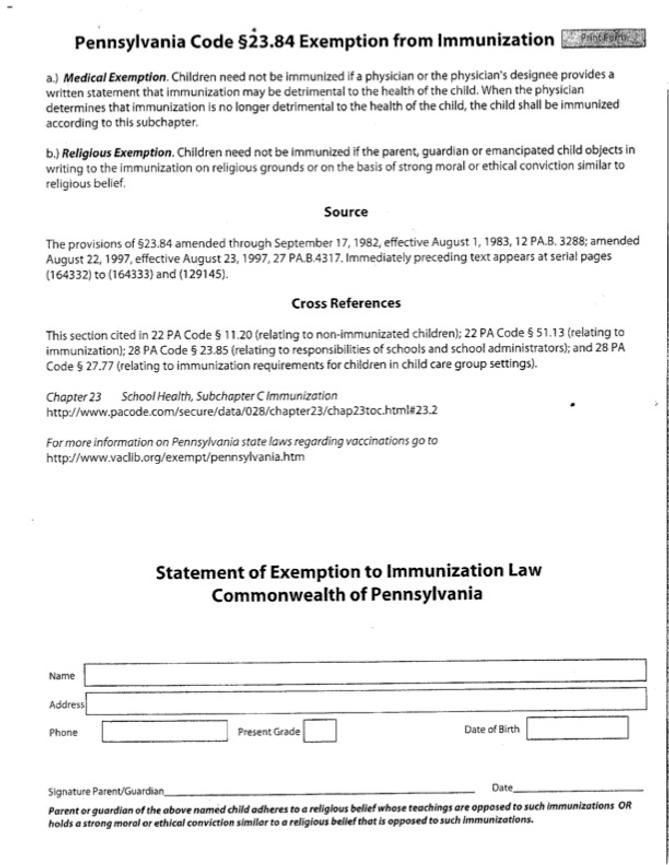
Legal experts agree — even if a school district wanted to deny an exemption request, it would have little ground to do so. Pennsylvania has not seen any public court cases in which a parent has sued a school district for denying an exemption, said Lawrence Katz, an attorney for LLF National Law Firm, which has represented clients in vaccine exemption disputes, in an email.
“A school that demanded clergy letters, interrogated the parent about the specifics of their beliefs, or applied subjective sincerity judgments would be vulnerable to a legal challenge,” Katz said.
State Rep. Arvind Venkat (D., Allegheny), who is also an emergency department physician at Allegheny General Hospital, said he doesn’t see Pennsylvania’s policy shifting anytime soon — public health and vaccines have become so politically partisan, in large part due to Kennedy’s anti-vaccine views, it’s become impossible to legislate changes, he said.
As a physician, Venkat hasn’t come across any credible moral or religious traditions that would prevent vaccinations, he said. But he also knows that the U.S. Constitution protects individuals’ rights to make their own choices, he added.
“I don’t think we’re in any position, and nor do I immediately favor revoking philosophical and religious exemptions,” Venkat said. “I think the first step is to be far more systematic about how we communicate with the public and at the bedside about vaccines.”
Why are parents opting out of vaccines for their children in rural Pennsylvania?
Most medical professionals in Pennsylvania and beyond agree that the U.S. has always experienced varying degrees of vaccine hesitancy, but it started increasing exponentially during the COVID-19 pandemic, when public health communications became mixed and muddied.
In 2020, the country was already fragmented — political ideology and social media algorithms influenced what people knew and how they felt about policies related to COVID mitigation strategies, including school closings, masking and vaccinations. In addition, some feared the COVID vaccine was rushed — even though the mRNA technology had been studied for 30 years before the shot was approved — and questioned its safety. In many cases, misinformation and disinformation left a portion of the population feeling skeptical, angry or scared.
In rural areas of Pennsylvania, the COVID effect was pronounced. Politically conservative counties like Elk, Cameron, and Clearfield mirrored much of what other Republican-dominated regions experienced nationwide. An analysis of the 2020 presidential election by NPR showed that people living in counties that voted 60% or higher for Donald Trump had 2.73 times the COVID death rates of those who went for Joe Biden.
Rep. Venkat said the pandemic “magnified divisions within society.” Access to accurate information and healthcare was limited, especially in rural areas. The dynamic created increasing hesitancy.
“The combination of an environment that was so polarized to begin with, along with evolving understanding of a new disease, unfortunately created a recipe for the skepticism and the divisions that came out of COVID, then it spilled over into the childhood vaccine schedule,” Venkat said.
Add Kennedy’s increasing influence, and it’s created an environment with more anti-vaccination sentiment, or at least more vaccine hesitancy. The secretary has appointed skeptics to the CDC vaccine advisory committee and continues to link vaccines to autism, a theory that has been refuted and debunked by scientists after decades of research.
“It’s been very discouraging for pediatric providers,” said Dr. Maryann Rigas, former president of the Pennsylvania chapter of the American Academy of Pediatrics and pediatrician in Coudersport, Pa. (Potter County). “[Parents] will say to me, ‘I trust you as our child’s pediatrician, but I want to do my own research.’ And that worries me, because I think most research these days is done on social media and it doesn’t have the most up-to-date or scientifically based information.”
Dr. Zoe Hawkins, a family medicine physician at Penn Highlands Elk, has noticed a shift in how her patients approach their children’s medical decisions.
“We are seeing more parents requesting delays or alternative [vaccine] schedules,” Hawkins said in an email. “Since the COVID-19 pandemic, there has also been a noticeable rise in distrust toward healthcare systems and public health recommendations, which has made the vaccine discussions more complex.”
Alexandria Gribble, a former school board member and parent of three from Emporium, Pa., fully vaccinated her children because, at the time, she “didn’t really look too closely” at the standard recommendations. Her experience during the pandemic — when she felt dismissed by school leadership while advocating for more parent choice about masking — reshaped how she views health decisions in schools.
As a result, Gribble built a network of like-minded parents through social media and encouraged them to advocate for masking accommodations. Although she still supports vaccinations overall, she sees that many parents in her community want a greater sense of control and respect in healthcare decisions affecting their children.
Other parents described how they have a more deliberate approach to weighing the risks and their personal beliefs about shots like MMR and polio. Jared Shelly, who lives in south central Pennsylvania, said his family evaluates each vaccine individually, taking into consideration religious values, medical guidance from his wife, who is a nurse, and their perception of how serious a disease is. The couple decided against vaccinating their two children against COVID-19, he said.
“If it’s a higher risk … then it helps justify it,” Shelly said.
Josh Beidel and his family also decided against the COVID shot due to concerns about how quickly it was developed, he said, but his two children are fully vaccinated otherwise. He worries that other parents are opting out based on misinformation.
“I would be more concerned [about the increase in exemptions] if my kids weren’t vaccinated for those things,” Beidel said. “The polio vaccine and things like that have been around for a very long time. I think that people are not opting out of that for good reasons — they’re just kind of jumping on the bandwagon, so to speak.”
How are medical professionals coping with distrust?
It’s also because the immunizations have been so effective over a long period of time that some parents simply don’t know how contagious or even how fatal the vaccine-preventable diseases can be for children.
Adalja, of Johns Hopkins, predicted that measles will become endemic again (transmitted continuously for 12 months) in the U.S. before its spread is brought back under control.
“It’s not a foregone conclusion that civilization always progresses forward,” Adalja said. “You have a very dangerous situation where people are rejecting the science and technology that makes their lives better in favor of a time when measles killed people and disrupted lives.”
Hawkins, the family medicine physician in Elk County, said she reserves judgement while listening to parents’ concerns, answering questions with evidence-based information and addressing “misconceptions in a respectful and understandable way.”
She also pointed out that rural communities face other unique challenges that contribute to the decline in vaccinations. Many families have limited access to healthcare providers and transportation. It’s also difficult for caregivers to schedule appointments during working hours.
“Some families may also lack awareness of vaccine programs that reduce or eliminate cost. Additionally, missed well-child visits and limited health literacy can contribute to children falling behind on immunizations,” Hawkins said.
Rigas has worked in pediatrics for 35 years, she’s watched attitudes toward childhood vaccinations ebb and flow. Today, she and her colleagues must walk the fine line between encouraging parents to vaccinate their children and respecting their beliefs.
“Some pediatric practices actually decline to care for children who don't receive immunizations,” Rigas said. “The American Academy of Pediatrics encourages pediatricians … to keep these families in their practice and obviously continue to encourage them at each visit to vaccinate.”
In her own practice with UMPC Cole Medical Center Pediatrics, Rigas said she offers hesitant parents a staggered schedule. In Potter County, the kindergarten MMR vaccination rate has slipped to 92.6% while the non-medical exemptions have climbed from 2.6% in 2020 to 7.3% in 2025.
“I will allow families, if they prefer, to give one vaccine at a time or two vaccines at a time,”
Rigas said.“I definitely continue to see these kids and continue to talk to the family every single time about vaccinations. I never give up. I'm hoping, hoping that at some point they will see the light and make the decision that's safest for their children.”
This work was produced by a team in the News Lab at Penn State where student journalists focus on critical coverage gaps across the Commonwealth of Pennsylvania with an emphasis on the issues most important to rural communities. This work is made possible by funding from the Arthur P. Miller Newsroom Fund and Hearst Foundations.
Congressional Republicans don’t want to talk about gas prices anymore
[link]
Spotlight PA
May 11 2026 at 03:13 PM
This article is made possible through Spotlight PA’s partnership with NOTUS, a n...
This article is made possible through Spotlight PA’s partnership with NOTUS, a nonpartisan news organization that covers government and politics with the fresh eyes of early career journalists and the expertise of veteran reporters.
The same party that spent years pinning every penny increase at the pump on former President Joe Biden is now scrambling to explain why prices have surged to their highest level in years.
The Republican attacks were everywhere in 2022. Following Russia’s invasion of Ukraine, gas prices surged to a record high of an average of $5 per gallon that June. It’s a familiar strategy for the party, using rising gas prices as a political weapon against Democratic candidates. From the moment Biden took office, GOP leaders lined up at microphones, held press conferences on Capitol Hill, and plastered “I Did That” stickers of Biden’s face on gas pumps across the country. Every rise in fuel costs was, in their telling, a direct consequence of Democratic leadership.
Then came February 28, 2026 — and a new war started by President Donald Trump.
Gas prices have surged nearly 50% amid the U.S.-Israeli conflict with Iran. The response from congressional Republicans has been a study in spin.
Some Republicans pivoted to argue this wasn’t as high as under the previous administration. “People will remember, you go back two years ago, we were paying almost $6 a gallon for gasoline,” House Majority Leader Steve Scalise said on CNBC late last month. Even conservative CNBC host Joe Kernen pointed out that Scalise was making up numbers.
The price for a gallon of gas is one of the most visible ways that many Americans feel the cost of living. The recent spike has exposed what Democrats call the bad faith of the GOP’s yearslong gas price campaign.
Lawmakers running for reelection in the most competitive districts are using decidedly different messages this year. Rep. Tom Barrett, who ran a 2023 ad warning Michigan families that filling up their minivans was “even scarier” than cleaning them out, responded to questions about constituent pain at the pump by connecting it to the war in Iran. When a Reuters reporter mentioned interviewing a woman who could only afford $14 of gas, Barrett repeatedly redirected the exchange to Iran’s nuclear program. “Did you ask her if she thought Iran should develop a nuclear weapon?” he asked.
Rep. Mike Lawler, a New York Republican facing a tough reelection race, had declared in a 2024 campaign ad that “housing, car payments, gas — the cost of everything has gone through the roof.” By January 2026, he was writing op-eds crediting Washington with bringing gas prices down. When CNN asked him in March whether higher prices were worth the Iran war, he said they were “absolutely worth it.”
Not all Republicans have been so vocal in their reversal, with some just simply going silent.
Rep. Juan Ciscomani, who ran ads warning that “food, gas, medicine, it all costs more,” in 2024 has said essentially nothing about gas prices since the war began.
Rep. María Elvira Salazar, who held up an egg on camera and told voters in 2024 she felt the weight of rising gasoline and grocery costs, blamed Biden for gas prices in an X post in February, weeks before the current spike made that framing harder to sustain.
Reps. Mariannette Miller-Meeks and David Valadao, both of whom ran promising “lower gas prices” messaging in 2024, have offered little detail on the issue since.
Other Republicans have tried a different approach, such as shifting blame to the oil companies themselves. Rep. Derrick Van Orden, whose 2024 message centered on “gas, groceries, and grandkids,” warned energy producers on Fox Business in March that “there’s a difference between profiting and profiteering.” On X the next day, he told a constituent complaining about prices: “I don’t recall you complaining when gas was $5.00 under Biden. Hypocrisy much?”
Rep. Zach Nunn, whose 2024 ads blamed “Biden-Harris inflation” for making gas and groceries more expensive, acknowledged on Fox News in March that prices are “right back to exactly where they were in the last year of the Biden administration.” His advice to anyone who wanted to make that a political issue: “Grow a stronger spine.”
The whiplash has also forced the party to navigate the best message to address the spring surge in prices. Multiple Republican strategists argued that there are few good options on that front, but that the most reasonable one is stressing that the uptick is only temporary and will hopefully return closer to average levels in the coming months.
“Isn’t that the only argument you can have right now?” one Republican operative involved in midterm contests said. “It affects our voters more than their voters. We live farther apart from each other. … You hope and pray it’s temporary.”
“I can’t with a straight face come up with anything better,” the operative added.
There have been other arguments flickering about, including that despite the high prices, they still have not reached the apex of nearly $5 per gallon that was experienced during the summer of 2022 under Biden, and that other economic indicators were far worse during those years. One senior Senate GOP aide noted that the line has been more utilized by MAGA and right-wing influencers, while casting doubt on its efficacy.
“That’s not really a good defense. You don’t try to defend high prices, you just try to bring them down. That they’re temporary is the best defense,” the aide said, adding that the problem is only being exacerbated by the high fertilizer prices that are rocking farm states. “That’s almost as big of a liability as gas prices. … A lot of states up this cycle have the combination.”
“It’s not good. It’s a nasty combination,” the aide added.
There are also the national security-based arguments — that the latest prices are a small price to pay in order to harm Iran’s nuclear capability.
Some also believe the gas price debate has allowed the party to pivot back to the tax cuts included in the One Big Beautiful Bill Act last year, which Republican leaders have been trying to sell for almost a full year.
Operatives also don’t believe those approaches are the cure for their current political ills, which they believe need to be fixed around the Fourth of July. Otherwise, they will be ingrained in the public consciousness — much like what happened to Biden and Democrats four years ago in the midterms.
“If other things are low, it kind of doesn’t matter because the gas prices are high. People pump gas once a week or more. They see that expenditure often, just like groceries. They’re the two things regularly where they’re like, ‘Oh that’s a big number.’ Over time that builds this callus where even if they go down, it’s baked in,” the first Republican operative said. They’re like, ‘Yeah it got better, but we already thought it was too high.’”
Democratic Congressional Campaign Committee spokesperson Liam Buckley made it clear Democrats plan to keep the issue front and center. “Vulnerable House Republicans got caught in a lie and it’s going to cost them their jobs in November,” he said in a statement. “Skyrocketing gas prices are a regular reminder for everyday Americans that Republicans broke their promise to lower prices and only care about obeying their party bosses in D.C.”
Republican strategists point out that Trump’s approval numbers on the economy were consistently in a good spot during his first term, only to see them underwater for months on end while heading into a crucial stretch before voters go to the polls.
“What’s the argument we make to the American people then?” the operative said of addressing economic concerns. “If it’s not that, then what are we doing better?”
New state policies stopped popular Pa. haunted attraction from using minor volunteers
[link]
Spotlight PA
May 11 2026 at 08:00 AM
Field of Screams, the popular haunted house in central Pennsylvania, did not all...
Field of Screams, the popular haunted house in central Pennsylvania, did not allow minors to volunteer for the company at a recent event due to new state safety requirements, according to a company post to staff. The changes in state policy were put in place after a 2025 Spotlight PA investigation.
The Department of Labor and Industry announced in March 2026 that all haunted attractions in Pennsylvania need a state-approved safety plan before they could use minors in performance roles. The agency held a webinar in April to go over the change with companies, said Danielle Woods, the department’s press secretary.
Attractions were told that as of May 1, failure to meet the requirement will result in performance permits for minors being denied, Woods told Spotlight PA. The companies must submit the permits for every minor they intend to use in any performances, and the state must sign off.
Field of Screams’ decision to not use minor volunteers for its “Halfway to Halloween” event on May 2 was “strictly related to the timing of the new requirements,” according to the post.
The changes come after a 2025 Spotlight PA investigation found that current and former volunteers, including minors, described dangerous situations at Field of Screams over the past decade.
They alleged there were sexual relationships between teenagers and adults, that workers were groped by customers, and that volunteers experienced respiratory issues and injuries due to workplace conditions. They also said the company pressured teenage volunteers to work long hours on school nights and to stay for shifts exceeding state rules.
Similar allegations were reported by news outlets and on social media in 2020.
The Department of Labor and Industry visited Field of Screams in September and October of 2025 and found no violations of the Child Labor Act, Woods wrote in an email to Spotlight PA.
Woods noted that state law does not require the department to make regular inspections of haunted houses. But the agency does perform unannounced site visits, she said.
In a statement to Spotlight PA, Field of Screams said it remains “fully committed to complying with and exceeding all applicable local, state, and federal requirements.”
“While these new regulations were implemented shortly before this event, Field of Screams has a long-standing track record of adapting quickly and responsibly, and we will continue that standard when we reopen for the fall season,” the company added.
New rules
For years, Field of Screams has relied on adult and minor volunteers to staff its various attractions, using federal and state exemptions for seasonal and recreational establishments. These volunteers aren’t protected by most labor laws that empower regulators to inspect businesses and issue penalties for violations.
Field of Screams does, however, have to obtain permits from the state for each volunteer under the age of 18 that it uses, and must certify that it won’t put minors in danger or force them to volunteer for an amount of time beyond what’s allowed under Pennsylvania law.
The 2025 Spotlight PA investigation found the company used minor volunteers for nearly a decade without applying for the required permits.
Previously, Field of Screams required parents and children to sign waivers detailing possible risks and dangers minors could be exposed to while volunteering, including physical, psychological, and emotional injuries; pain, suffering, illness, permanent disability, paralysis, and death. The waiver also informs parents, “There may be periods of time that your child is not directly supervised.”
The company didn’t formally apply for the permits — which the state calls “minor in performance” permits — until 2021.
Since the changes to state rules, haunted attractions must submit safety plans 20 days before applying to use minors, according to the Department of Labor’s website. The plans are good for one year and attractions resubmit them annually, Woods said.
The state requires that these plans include a comprehensive background check for all adult staff — whether employees or volunteers — who interact with minors. The background checks must identify all convictions involving minor victims and misdemeanor or felony sex offenses.
According to the agency’s website, the department is allowing the attractions to choose how to perform the background checks. This can include third-party vendors as long as the checks identify the offenses the agency lists involving minors and sex offenses.
The 2025 Spotlight PA investigation found Field of Screams allowed a man convicted of exposing himself to children to volunteer alongside minors for three years. The company said in a statement to the newsroom that it found out about Christopher Rohrbaugh’s conviction in 2023 and allowed him to continue volunteering because they received no complaints against him and “he had no criminal convictions of any kind since 2011.”
The agency will also accept the clearances listed in the Child Protective Services Law. The clearances involve a three-step process that includes a PA Child Abuse History Certification through the Department of Human Services, a PA State Police Criminal History Record Check, and a FBI fingerprint-based criminal background check.
Safety plans must also include a description of a training program on the prevention of sexual abuse and harrassment in the workplace for all staff who interact with minors; training on general workplace safety including hazards and handling any misbehavior from guests or patrons; identification of risks or hazards; and reporting mechanisms and enforcement protocals.
Woods told Spotlight PA that Field of Screams had not submitted a safety plan as of May 2 but said the company told the department no minors would be performing at the weekend's event.
Pennsylvania Supreme Court ruling on cast vote records creates uncertainty for counties
[link]
Spotlight PA
May 11 2026 at 08:00 AM
Votebeat is a nonprofit news organization reporting on voting access and electio...
Votebeat is a nonprofit news organization reporting on voting access and election administration across the U.S. Sign up for Votebeat Pennsylvania’s free newsletter here.
In a rare unanimous decision last month, the Pennsylvania Supreme Court ruled that the public should have access to super-granular election results data, making it easier for researchers to analyze electoral patterns and for those concerned about voter fraud to inspect the results.
But it’s unclear how many counties will be able to release the data due to unanswered technological questions and concern about keeping ballots secret in some jurisdictions.
The data, known as a cast vote record or CVR, is essentially a log of each ballot cast in an election and what candidates it voted for. It does not reveal the names of the voters who cast those ballots (election officials don’t even keep that data), but it does include the precinct where the vote was cast.
“Disclosure of CVRs allows the public to ‘check the math’ of [Lycoming County] Voter Services to ensure the number of reported votes match the number of recorded votes,” Justice Daniel McCaffery wrote for the majority. “Such disclosure promotes fair, honest, and transparent elections, which strikes to the heart of ‘trust but verify.’”
In October 2021, conservative activist Heather Honey, who is now the Trump administration’s deputy assistant secretary of homeland security for election integrity, requested Lycoming County’s cast vote record for the 2020 election. The county initially denied her request — a decision upheld by the state’s Office of Open Records. But a local court overturned that ruling, only to be overturned itself by the state’s Commonwealth Court, a decision that was then overturned by the state Supreme Court in late April.
Court case hinged on technology, ballot secrecy
The disagreement in the case stemmed from whether a cast vote record counts as the “contents of ballot boxes and voting machines,” which are exempt from disclosure under state law.
While the Commonwealth Court ruled that cast vote records, and the ballot tabulation machines that create them, are the equivalent of physical ballots in ballot boxes and voting machines, the Supreme Court disagreed.
“CVRs are spreadsheets of raw data pulled from the cast ballots. They are not the physical ballots contained in the ballot box,” McCaffery wrote. “Here, Lycoming County’s scanners constitute voting devices but not voting machines. Similarly, Lycoming County’s tabulators (which no party disputes are responsible for generating the CVRs) are automatic tabulating equipment.”
The justices faulted the legislature for the confusion, noting the state’s election code was written in 1937, long before spreadsheets or electronic voting equipment were ever envisioned.
“Citizens should be entitled to expect their legislators to address and account for advances in voting technologies more frequently than on a centennial basis,” Justice David Wecht wrote in a concurring opinion.
The other issue the case dealt with is ballot secrecy.
Under Pennsylvania law, voters are entitled to have their votes kept secret. Lycoming County expressed concern that, if a cast vote record is made public, it could be analyzed in conjunction with other public documents to identify how specific people voted.
To prevent this, Lycoming County’s equipment randomizes the order of the ballot data in the cast vote record, so that the order of the ballots in the spreadsheet is not the same as the order in which they were cast.
The technique is not foolproof. Individual voters’ choices could still be divulged if, say, everyone in a precinct votes the same way in a given race. But the court pointed out that uncommon scenarios like that already jeopardize ballot secrecy even in the absence of cast vote records. The court argued that voters’ right to a secret ballot needed to be balanced with the public’s right to transparent data.
How the cast vote record decision will affect Pennsylvania counties
The decision means Lycoming County will now have to release its cast vote record.
“The court has made its decision that the CVR is a public record and anyone who requests it, we will provide it,” Lycoming County Elections Director Forrest Lehman said.
It’s unclear, however, how many other counties will have to release cast vote records as a result of the ruling. That’s because the randomization process that protects secrecy in Lycoming County is specific to tabulation machines manufactured by the company Clear Ballot, which is used by only seven other counties in the state.
“We acknowledge Voter Service’s concern that not all counties may follow the same randomization procedures that are established on this record,” McCaffery wrote. “We recognize that, under certain circumstances, it is possible that a county’s method of generating CVRs may violate the secrecy mandate. But that is a question to be addressed on a case-by-case basis.”
A Votebeat and Spotlight PA review of the voting equipment used by Pennsylvania’s other 59 counties found that most are capable of randomizing the data in cast vote records, but some may not be. The most recent software certifications for the equipment used throughout the state don’t mention randomization, and the Department of State did not answer a question about whether all of the state’s vendors randomize their data.
It’s also unclear whether the specific randomization processes used by machines other than Clear Ballot’s would pass the court’s test.
“The Pennsylvania Department of State is reviewing the court’s decision and is working with our county partners to provide appropriate guidance,” a spokesperson for the department said in a statement.
Most Pennsylvania counties, including Philadelphia and Allegheny, use tabulation machines manufactured by Election Systems & Software. A spokesperson for ES&S told Votebeat and Spotlight PA that the CVR data is randomized twice, eliminating any connection to the voter.
At least two less commonly used companies are also capable of randomization. Margia Hansen, the Warren County election director, said Liberty Vote, which serves Warren and 11 other counties, told her that their equipment does randomize the data.
And Jim Allen, the Delaware County election director, said his county’s Hart equipment — which is used by three other counties — generates randomized cast vote records as well. He plans to make Delaware County’s cast vote records available once he gets official guidance from the Department of State.
Allen applauded the Supreme Court’s decision as a win for transparency.
“I think it's an excellent ruling in terms of setting the record straight and in terms of transparency and giving voters one more way of verifying election results,” he said. “As long as we can randomize them sufficiently to make it impossible to associate a ballot with one individual, this is stuff we should get out there.”
Allen, as well as the court’s opinion, noted that some places, such as counties in Colorado and Wisconsin, have been releasing cast vote records for years.
Some election officials still have privacy concerns about cast vote records
However, some smaller counties might not even have cast vote records to provide. Matthew Repasky, the Columbia County elections director, said his county opted not to buy additional software that would generate cast vote records for its Unisyn equipment because they didn’t feel it was a worthwhile expense.
He also worried that there was no way to protect the secrecy of voters in especially small jurisdictions, such as Centralia, which has only four voters.
“How do you randomize that?” he asked.
Even in more populous precincts, an election with low turnout, like a primary, could make it easier to identify voters. As a result, election directors may not release the cast vote records for precincts with low turnout so as to not violate secrecy requirements.
“You’re not going to be able to give those out, and people are going to be angry," Repasky said.
Sean Drasher, the Lebanon County elections director, also raised the possibility that a person could theoretically bribe or threaten someone else to vote a certain way, and then use the cast vote record to confirm they voted that way.
The cast vote record might also contain information other than votes, he said, such as machine-testing records that could look confusing to viewers if they’re presented without explanation — or even images of ballots, which could raise new legal questions about being “contents of ballot boxes.”
“When these decisions come down, you have to be really careful to look at every word in every paragraph to see what is the fallout,” Drasher said, adding that he will be consulting closely with the Department of State and his county attorney before releasing any cast vote records.
Carter Walker is a reporter for Votebeat in partnership with Spotlight PA. Contact Carter at cwalker@votebeat.org.
Meet a volunteer helping people with disabilities play baseball
[link]
Spotlight PA
May 09 2026 at 12:00 PM
This article originally appeared in Good Day, Berks — Spotlight PA’s free daily ...
This article originally appeared in Good Day, Berks — Spotlight PA’s free daily newsletter for Berks County and your daily dose of Berks County essentials. Sign up here.
This week’s Community Spotlight honoree is Tom Frebel, 64, a volunteer with Baseballtown Charities Dream League, a nonprofit that enables young and not-so-young players with physical and intellectual disabilities to play the sport.
This conversation, which took place through email, has been edited for length and clarity.
Good Day, Berks: Where do you live?
Tom Frebel: Sinking Spring.
Tell us a little about your family.
My wife, Mary, and I have been married for 36 years. Our daughter, Ally, is 32 and our son, Wes, is 31. Both are married and we have one grandchild, Cooper, who is 16 months old.
Tell us about your work and what you like about it.
I have been a volunteer at Baseballtown Charities Dream League since its inception in 2018. The Dream League gives players who have physical and intellectual challenges the same chance as anyone else to enjoy the game of baseball. I love the enthusiasm of our athletes and the fun and joy we experience during every game.
I am the primary pitcher for most games. That allows me to interact closely with all the players, who range in age from four to 60. Their big smiles make the time I spend with them totally worthwhile. I am so proud to be part of this great organization.
Tell us about a challenge you faced.
My challenge has been to ensure that our athletes have an enjoyable experience every time they step onto the field. We are really fortunate to have so many local volunteers to help in our efforts.
Favorite place to eat in Berks County?
Too many choices! Anywhere is fine with me as long as I’m with family and friends.
Where would you take a visitor to in Berks and why?
I would take them to West Reading to enjoy the restaurants, bars, and wonderful businesses along the avenue. One of my favorite places to hang out is Barley Mow.
What book, poem, song, or artwork is meaningful to you?
Listening to music is a huge part of my life. I grew up in the ‘70s and ‘80s, which was a golden time for music. So many songs from that era are meaningful to me because they bring back fond memories of my youth. Give me any song from the Stones, Clash, or Neil Young and I will be very happy.
Who in your life has had a great influence on you, and how did they influence you?
My parents had the greatest influence on me. They provided a wonderful life for my four siblings and me and taught us how to be good human beings. However, over the past nine years, the Dream League players and their parents have also had an amazing influence on me. I have so much respect, admiration, and love for them all. They have taught me how to be a better human being.
This positive news for Berks County is made possible thanks to a generous grant from the United Way of Berks County, which is celebrating 100 years of service to the community. Learn more here | Become a supporter of Spotlight PA here.
Congressional Dem campaign’s endorsements in Pa., other races give unselected candidates ammo
[link]
Spotlight PA
May 08 2026 at 06:43 PM
This article is made possible through Spotlight PA’s partnership with NOTUS, a n...
This article is made possible through Spotlight PA’s partnership with NOTUS, a nonpartisan news organization that covers government and politics with the fresh eyes of early career journalists and the expertise of veteran reporters.
The Democratic House candidates who didn’t win a party committee’s endorsement this week are looking for a silver lining.
Being associated with the Democratic Party might actually be bad in this political climate, they’re arguing.
“It’s almost a badge of honor that D.C. has let us know who their candidate is, who they believe will bend the knee to party leadership and to corporate interests,” said Randy Villegas, who is running to be the Democratic nominee in California’s 22nd District, currently led by Rep. David Valadao.
The Democratic Congressional Campaign Committee backed his opponent, California State Assembly member Jasmeet Bains, in a slate of endorsements announced earlier this week for candidates they think can flip red districts blue.
The committee weighed in on four contested primaries this week. DCCC picks Joe Baldacci in Maine’s 2nd Congressional District, Bob Brooks in Pennsylvania’s 7th District, and Marlene Galán-Woods in Arizona’s 1st District also face primary challengers. The list caused a stir within the party.
Several House progressives rebuked the DCCC for intervening in contested primaries.
“We disagree with the DCCC’s decision to attempt to tip the scales in this race. Voters, not the DCCC, should pick Democratic nominees,” several members of the Congressional Progressive Caucus said in a statement.
For its part, the DCCC is defending its picks. The stakes of this midterms cycle, where Democrats have a real shot of taking back the House majority, are too high, the committee said.
“It’s imperative that Democrats must take back the House to hold Trump accountable and deliver on what truly matters to voters – lower costs and affordable health care,” Viet Shelton, the DCCC’s national press secretary, said in a statement. “That’s why we are proud to announce our latest round of Red to Blue candidates who span the ideological spectrum, are authentic voices in their districts, and are best positioned to win in November.”
In making an endorsement, the committee considers momentum on the ground, fundraising, polling and local support. In other words, if they see a stand out, they’re going to back them.
“If we know that one candidate is going to put us in that strongest possible position to win the general, the stakes are too high to do anything else,” a source familiar with the committee’s thinking said.
Endorsements from House Democrats’ official campaign arm typically unlocks operational and fundraising support, which can range from candidate training to staff resources to help on campaign strategy.
The House Majority PAC, the House Democrats’ Super PAC, has not spent in any primaries yet this cycle but “nothing is off the table at this point,” a source familiar said.
The candidates that didn’t get the DCCC’s endorsements and their supporters said they were frustrated by the party weighing in on their primaries. But they’re also trying to make the case that the Democratic Party’s brand is currently so toxic that perhaps the association isn’t one worth seeking out.
They pointed to a number of the party’s recent miscalculations as evidence of its waning influence: losing the White House in 2024, the unreleased autopsy analyzing that loss, and the establishment’s preferred Senate candidates who are lagging behind in the polls.
“Fortunately, the DCCC endorsement doesn’t carry a lot of weight with voters in [California’s 22nd District] at a time where people have serious questions about Democratic leadership and trust in the Democratic Party,” said Ravi Mangla, a spokesperson for the Working Families Party, which endorsed Villegas.
Perhaps no state is witnessing more of an anti-establishment wave than Maine. Last week, Gov. Janet Mills, the apparent pick of the Senate Democrats’ campaign arm, dropped out of the state’s Senate primary against oyster farmer turned populist political sensation Graham Platner.
“The response from people in Maine has been, ‘This is wrong,’” Jordan Wood, a former congressional staffer running in Maine’s 2nd District against Baldacci, told NOTUS. “Why are they trying to decide the primary for us? We are weeks away from starting to vote. Why do they think they know better than us? It looks just very reminiscent of what we’ve been dealing with for months in the Senate race.”
Ezra Levin, co-executive director of the progressive organizing group Indivisible, also believes the DCCC’s endorsement could be more of a liability because of how disliked party leadership is right now.
“There’s just this sense that the national Democratic Party failed to prevent the catastrophe of the ’24 election, and then spent a year plus failing to rise to the occasion while Trump accumulated power,” he said. “The DCCC’s engagement here fits into an image that the national Democratic Party has earned.”
That’s evidenced by the diverse group of voters rallying behind Platner, he said.
“There has never, since Indivisible existed, been a greater gulf between rank-and-file Democrats and the national Democratic Party,” Levin said, criticizing the party for only backing the status quo.
The source familiar with the committee’s thinking pushed back on the idea that their picks are status quo, pointing to the variety of candidates the party has backed.
Bob Brooks, for example, who is running in Pennsylvania’s 7th District, has earned endorsements from Sen. Bernie Sanders and the Blue Dog PAC.
“I do not think anyone who looks at the profiles of the folks that are on this Red to Blue program would think they are status quo in any way, shape or form,” the source familiar said.
Veteran operatives of past midterms cycles say aspersions cast at a DCCC endorsement are just sour grapes.
“[That argument is] probably familiar to folks who weren’t picked for the kickball team in recess,” Drew Godinich, a former deputy communications director at the DCCC, said.
“We should be thankful that you have a national Democratic arm that is doing the work that we need to select the candidates and give them the resources so that they have an easier path to victory in November,” said Godinich, who is now working on D.C. councilmember Brooke Pinto’s congressional bid.
“It’s not about ideology, it’s about who’s running the best campaign.”
PA Local Heroes: The champion athlete advocating for people with disabilities
[link]
Spotlight PA
May 08 2026 at 08:30 AM
PA Local Heroes is a monthly feature sponsored by Ballard Spahr. Installments ap...
PA Local Heroes is a monthly feature sponsored by Ballard Spahr. Installments appear first in PA Local, Spotlight PA’s weekly newsletter that takes a fresh, positive look at the incredible people, beautiful places, and delicious food of Pennsylvania. Sign up for free here.
When Special Olympian Loretta Claiborne was a child, her mother imparted advice she’s never forgotten: “You don’t quit.”
Those words have stuck with the York County native ever since, shaping her athletic and professional careers.
Diagnosed at a young age with an intellectual disability, Claiborne was taught to always strive and believe in herself.
“A disability doesn’t define who you are,” Claiborne told Spotlight PA.
Her record speaks for itself: In the more than 50 years since she started competing, Claiborne has won 15 medals at nine Special Olympics World Games, completed over 30 marathons, and received the ESPYs Arthur Ashe Award for Courage. She now sits on the Special Olympics Board of Directors, serving as chief inspiration officer and an advisor to the CEO.
Claiborne’s athletic accomplishments and work advocating for people with intellectual disabilities earned her a nomination for our PA Local Heroes series, sponsored by Ballard Spahr.
Claiborne, one of seven children, grew up in the Parkway housing projects north of the City of York. She described the area as community-minded and full of families.
But having a disability came with hardships. And Claiborne said her mother dutifully prepared her to overcome them.
“She knew she had a child that wasn't going to be in the community as the kid to get picked for the game, she knew that I was going to struggle, and she would always say to me ‘Look, you got to work two times harder,’” Claiborne said.
Sports ended up helping her obtain the independence her mom saw as vital.
At first, Claiborne had no interest in the Special Olympics, she said. That changed in 1970 when a school counselor saw her running.
She ended up participating in the York County Special Olympics that year, competing in several events. Quietly, her career was getting underway.
“Next thing I know, 1972 I was going to California for the Special Olympic Games,” Claiborne said. Decades of competitions followed.
Claiborne attributed her longevity to her mother’s teachings.
“You quit today, you quit tomorrow,” she recalled her mother saying.
Through the Special Olympics, Claiborne also ended up taking up other sports at the competitive level, including figure skating, swimming, bowling, and tennis.
Lin Huber, the coach who taught Claiborne to swim and skate, called her work ethic “unbelievable.” Huber has been a Special Olympics coach for more than 40 years, in York County and statewide.
Huber, who first met Claiborne in the 1970s, described Claiborne as a “kind, loving, generous” person who will also “let you know when you’re wrong.” She praised Claiborne’s advocacy and message of resolve, touting the groundwork she’s laying for the next generation of athletes.
Claiborne’s time with the Special Olympics has taken her across the globe as both a competitor and champion for people with disabilities.
“I represent the movement, where it is today, and where it's going to go in the future,” Claiborne said of this ongoing work.
In her free time, Claiborne likes to knit. She tends to donate many of her creations, particularly preemie hats for babies and knockers for women who have had breast cancer.
Claiborne hasn’t slowed down, and vows to go wherever she is needed to advocate for people with disabilities.
“Never underestimate the power of a person and always remember to look at the person first as a whole, before you look at them differently,” Claiborne said. “We're all human and we all deserve to have respect.”
Know someone worthy of a PA Local Heroes feature? Let us know!

Pennsylvania’s mail ballot dating rules have been in flux for years. Here's what you need to know.
[link]
Spotlight PA
May 08 2026 at 08:00 AM
Votebeat is a nonprofit news organization reporting on voting access and electio...
Votebeat is a nonprofit news organization reporting on voting access and election administration across the U.S. Sign up for Votebeat Pennsylvania’s free newsletter here.
As some Pennsylvania voters prepare to vote by mail in this month’s primary election, they could be forgiven for not knowing what they need to do with the date line on their ballot envelope.
Court rulings have flip-flopped on the requirement several times since Act 77, the law that implemented no-excuse mail voting, went into effect in 2020. For some elections since then, counties had to reject mail ballots that lacked a proper date; for others, they didn’t.
The rule has resulted in thousands of otherwise qualified ballots being rejected and left many voters confused about what they need to do to have their votes counted.
Here’s what voters need to know for the May 19 primary.
What do I need to do with the date line for this election?
Don’t write your birthday. Don’t write the day you registered to vote.
Fill out the current date in the date line just below the signature space, which also needs to be filled out.
During elections when counties were required to reject ballots for missing or improper dates, writing birthdays was among the most common mistakes voters made.
In 2023, the Pennsylvania Department of State made changes to the ballot return envelope to reduce the number of ballots rejected for date issues. The department prefilled the year portion of the date line, which did indeed lead to fewer errors.
Will my ballot be rejected if it has an improper date?
Currently, counties cannot reject mail ballots for lacking a proper date. The Pennsylvania Commonwealth Court ruled in 2024 that it was unconstitutional for counties to reject ballots for missing or improper dates. Last year, the 3rd U.S. Circuit Court of Appeals also upheld a separate ruling that said the requirement to date the return envelope violated voters’ First Amendment rights.
That could change, however, as both the state case and federal case are being appealed. Election officials still recommend that voters date their return envelope.
Why does the envelope need a date in the first place?
Simply put, because the law says it does.
When lawmakers passed Act 77 in 2019, it said voters must “date and sign the declaration” on the return envelope. The declaration affirms that the voter is qualified to vote and that they have not cast another ballot.
The language was carried over from the state’s existing law governing absentee voting, which was written before counties used technology to track ballots and voters.
Why has this been so contentious?
Some voting-rights advocates, such as Common Cause, the NAACP, and the ACLU, believe the dating requirement does not serve any legitimate purpose and has disenfranchised otherwise eligible voters.
They argue that the state’s ballot tracking system records when counties send a ballot out and when they receive it back, meaning the date isn’t needed to determine if the voter cast the ballot within the time allowed for the election. Proponents of keeping the date argue the written date could serve as a backup check if the tracking system fails, but election officials also timestamp ballot envelopes when they are received back from the voter, which can serve as a backup as well.
Another argument for keeping the date is that it could help in detecting voter fraud, such as if someone requests a ballot, dies, and another person casts the ballot. This happened in Lancaster County in 2022, but opponents of the date requirement point out that, even if the date line had not been filled out in that case, there were other factors that would have detected the fraud.
Carter Walker is a reporter for Votebeat in partnership with Spotlight PA. Contact Carter at cwalker@votebeat.org.
Why has GOP US Rep. Bresnahan slowed his prolific stock trading?
[link]
Spotlight PA
May 07 2026 at 04:34 PM
This article is made possible through Spotlight PA’s partnership with NOTUS, a n...
This article is made possible through Spotlight PA’s partnership with NOTUS, a nonpartisan news organization that covers government and politics with the fresh eyes of early career journalists and the expertise of veteran reporters.
Not long ago, Republican Rep. Rob Bresnahan, a multimillionaire who represents one of Pennsylvania’s poorest congressional districts, ranked among Congress’ most prolific stock traders.
But Bresnahan appears to have stopped trading individual stocks, purchasing just four municipal and state bonds and federal government securities so far this year, a NOTUS analysis of federal financial disclosures indicates.
It’s a stark comparison to Bresnahan’s activity a year ago, when he made almost 650 individual stock trades during 2025.
Bresnahan, whose median net worth is more than $34 million, disclosed about 100 stock trades this month last year — the same month he introduced legislation to ban members of Congress from buying stocks. But after a flurry of trades in June 2025, his stock trades became significantly less frequent in late 2025, and this year, he hasn’t disclosed trading a single stock share, according to federal records.
A spokeswoman for Bresnahan confirmed to NOTUS that the congressman has stopped trading stocks, adding, “Rob Bresnahan has never traded his own stocks and an outside financial institution manages his investments.”
The spokeswoman did not respond when asked by NOTUS what prompted Bresnahan to stop trading individual stocks and if the congressman instructed the outside financial institution to stop trading them.
During his 2024 congressional campaign, Bresnahan lambasted politicians for making big money while in office, calling it “sickening.”
But when Bresnahan entered Congress in 2025, he often traded individual stocks weekly, including of companies that had significant business with the federal government. Bresnahan repeatedly maintained that his financial trades were made by an adviser without his input.
Bresnahan’s 2026 congressional opponent, Paige Cognetti, the Democratic mayor of Scranton, has repeatedly hammered Bresnahan for his trading ways. Republican House Speaker Mike Johnson, meanwhile, has endorsed a bill limiting how members of Congress may play the stock market, and it awaits a vote on the House floor.
Bresnahan isn’t the first lawmaker to make such a dramatic shift. Democratic Rep. Julie Johnson of Texas divested from her stock holdings in order to “eliminate conflicts of interest” in August. Republican Rep. Jefferson Shreve of Indiana took similar action. And even earlier, then-Rep. Peter Welch of Vermont sold off his individual stocks in 2021 after Business Insider found he had failed to properly disclose his wife’s sale of ExxonMobil stock around the time Welch was grilling the company’s CEO during a congressional oversight hearing.
The more recent pledges from members of Congress come alongside a bipartisan push to ban stock trading for lawmakers entirely. In addition to the Stop Insider Trading Act — favored by Republican leaders but criticized by many Democrats as weak — a bill backed by both Republican Rep. Chip Roy and Democratic Rep. Alexandria Ocasio-Cortez and introduced in September would ban members, their spouses and their dependents from trading individual stocks. Bresnahan signed a discharge petition to conduct a vote on the separate End Congressional Stock Trading Act, a bill introduced in early 2025 that has since garnered little traction.
Bresnahan drew criticism from Democrats for selling hundreds of thousands of dollars worth of stock in companies that manage Medicaid just before the House took its first vote on Republicans’ sweeping 2025 tax bill cutting the program last year.
Detractors also hammered him for buying stock in Credo Technology, a data center supplier, while advocating for the controversial centers on Capitol Hill, and for purchasing stock in defense companies such as Lockheed Martin shortly before U.S. strikes on Iranian nuclear sites.
Craig Holman, a government affairs lobbyist at Public Citizen, told NOTUS that Bresnahan’s apparent about-face amounts to an admission that his stock trading was a significant vulnerability in his reelection campaign.
“It clearly is an issue that could be a political liability for Congressman Bresnahan, which he recognizes, and has now taken a position supporting a ban on stock trading activity,” Holman said. “It’s a recognition that there is a problem.”
Abigail Bellows, an anti-corruption expert at Common Cause, told NOTUS that the renewed focus on the issue in Congress might be what forced Bresnahan to make a change.
“Momentum has been building on this issue for a decade,” Bellows said. “Part of the reason we’re seeing more attention on it right now is that people are really frustrated with corruption … It may be painful because it could cause some people to profit less from their office, but it’s the right thing to do, and it’s what voters expect.”
Bresnahan’s trading has become a key point in the race to defend his seat, which the Cook Political Report scores a “toss-up,” where either candidate has an equal chance of winning. Bresnahan defeated Democratic Rep. Matt Cartwright by just 6,000 votes in 2024, and will now face Cognetti in November.
“As a candidate for Congress, Rob Bresnahan told Northeastern Pennsylvanians that congressional stock trading ‘is wrong and needs to come to an end immediately,’” Cognetti told NOTUS in a statement. “He broke that promise and violated our trust by making more than 600 stock trades worth over $7 million in office, all while he voted to rip away health care and spike costs.”
Cognetti, who won her race for mayor as an independent but is now running for Congress as a Democrat, launched her campaign in September by attacking Bresnahan’s financial records.
“Rob ran for Congress on a promise to ban stock trades,” Cognetti said in her launch video. “This year, he’s already made 600 trades. Sold Chinese stocks the week of a tariff, buys missile stocks before a war. Buys jet stocks before a big contract, oversees crypto, buys crypto stock before a vote.”
Great PA News Quiz: A gubernatorial grudge story, TMZ tirade, and the 'Queen of Philadelphia'
[link]
Spotlight PA
May 07 2026 at 03:00 PM
In this quiz: Gov. Shapiro on defense, a congressional TMZ tirade, ‘Queen of Phi...
In this quiz: Gov. Shapiro on defense, a congressional TMZ tirade, ‘Queen of Philadelphia’ critics, and Pennsylvania at the Met Gala.
If a blue “Take the News Quiz” button doesn’t appear above for you, click here instead.
As always, let us know if you encounter any technical issues. Just email Newsletter Editor Colin Deppen (newsletters@spotlightpa.org) with a heads up. And good luck!
Pa. primary election 2026: How to vote, where to vote, and everything you need to know for May 19
[link]
Spotlight PA
May 07 2026 at 08:00 AM
HARRISBURG — Pennsylvania’s 2026 primary election is quickly approaching. If you...
HARRISBURG — Pennsylvania’s 2026 primary election is quickly approaching. If you still have questions about where your polling place is, who is on the ballot, and how to vote, Spotlight PA has you covered.
On Tuesday, May 19, Democrats and Republicans across the commonwealth will determine which candidates go on to run in the general election. On the ballot are races for governor and lieutenant governor, along with the entire Pennsylvania House and half of the state Senate. All of Pennsylvania’s 17 congressional districts will also be up for election. Across the state, depending where you live, there might also be local ballot questions.
Before you submit your ballot, here’s a last-minute checklist of everything you’ll need to vote.
First, the basics:
-
Make sure you’re registered. You can check your voter registration status on the Pennsylvania Department of State website. Unfortunately, if you’re not already registered, it’s too late to vote in this election cycle.
-
The deadline to request a mail or absentee ballot is May 12. Your county election office has to receive your application by 5 p.m. that day. If you have already applied for a mail ballot, you can track it on the Pennsylvania Department of State's election ballot status webpage. To be counted, your ballot must be received by your county election office by 8 p.m. on Election Day. Read more about mail ballots and how to properly fill them out.
-
In Pennsylvania, if you are registered as an independent or with a third party, you cannot vote for candidates in the primary election because we have a closed primary system. That means only registered Democrats and Republicans can vote in their respective party's primary.
-
Unaffiliated and third-party voters, however, can vote on local ballot initiatives and statewide constitutional amendments during the primary.
-
If you plan to vote in person, you can find your polling place online.
-
You need to bring a form of ID such as a driver’s license or a passport if it’s your first time voting at your polling location. You can find the full list of acceptable IDs on Pennsylvania's official election website.
-
Whether you’re voting in person or by mail, here’s everything you need to know about your Election Day voting rights.
-
For general voting and election resources, check out Spotlight PA’s 2026 Election Center.
-
Still have questions? You can reach out to your county election office for answers. Find contact information for your local county on the Pennsylvania election website.
Here’s what you can expect to see on your ballot:
-
Aside from statewide races, the races and candidates on your ballot will depend on where you live. To see a sample ballot, search for your local county on the Pennsylvania Department of State voting and election webpage, then follow the link to your official county website, where you may be able to find one.
-
In the race for governor, Democrats will see Gov. Josh Shapiro on the ballot while Republicans will see Stacy Garrity. Both candidates are running uncontested in the primary, though there is a write-in campaign for Republican state Sen. Doug Mastriano. Use this tool to see how much money Shapiro and Garrity have raised for their campaigns.
-
In the race for lieutenant governor, Democrats will see incumbent Austin Davis on the ticket, while Republicans will choose between Jason Richey and John Ventre. Read Spotlight PA’s guide to these candidates to learn more about them.
-
The entire Pennsylvania House and half the state Senate are on the ballot this year. Check out Spotlight PA’s guide to vetting candidates to help you evaluate which candidates you want to send to or keep in Harrisburg.
-
If you have any questions or have issues finding this information, contact your local county election office for support.
There are no statewide ballot measures this spring, but some voters may see local questions — for instance, Pittsburgh and Philadelphia both have them. Check your county’s election website or sample ballot to learn exactly which races, candidates, and questions you will be voting for.
Read Spotlight PA’s complete coverage, including candidate and election guides, and more, at our 2026 Election Center.
A complete listing of Spotlight PA voter guides and coverage:
-
Pa. primary election 2026: Your complete guide to Democratic Gov. Josh Shapiro
-
Pa. primary election 2026: Your complete guide to Republican Stacy Garrity in the race for governor
-
Pa. primary election 2026: Your complete guide to the candidates for lieutenant governor
-
Where Garrity and Shapiro stand on broadband, federal cuts, and other key rural issues
-
Pa. primary election 2026: What you need to know about your Election Day voting rights
-
The 2026 primaries likely to shape the Pennsylvania House and Senate
-
Meet 2 of the 1 million independent Pa. voters shut out of next month’s primary
-
Pa. primary election 2026: How to serve as a poll worker on May 19
-
Pa. primary election 2026: Everything college students need to know about voting
En Español:
This Centre Gives, donate to Spotlight PA State College and support vital local journalism
[link]
Spotlight PA
May 06 2026 at 11:45 AM
Access to news and information from a trustworthy source is more important than ...
Access to news and information from a trustworthy source is more important than ever.
At Spotlight PA State College, we’re committed to delivering impactful accountability and investigative journalism about Centre County and north-central Pennsylvania.
Our neighbors deserve to know what’s happening in their communities, and not just if they can afford it. We make our essential journalism available at no cost to everyone through Spotlight PA and more than 125 news outlets across Pennsylvania — including the Centre Daily Times, WPSU, StateCollege.com, and the Centre County Gazette.
But we need your support to continue this vital effort.
We’re grateful to participate for the fourth year in Centre Gives, a 36-hour online fundraiser hosted by Centre Foundation on May 6-7, to continue our public service mission. Make a gift in support of Spotlight PA State College right now at spotlightpa.org/centre.
Your donation powers journalism that gets results right here in central Pennsylvania. Here are a few examples from the past year:
Penn State Cancer Institute: A November 2025 investigation by Spotlight PA reporters Charlotte Keith and Wyatt Massey found that Raymond Hohl, who was then the director of the Penn State Cancer Institute, was the subject of a series of damning internal reviews between early 2022 and mid-2023. The reviews found a series of problems with Hohl’s care of at least 10 patients. His sloppy recordkeeping caused multiple errors. Several of Hohl’s patients received extra doses of chemotherapy by accident. Others faced unexplained delays in changing their treatment, or having scans done to check whether their cancer had progressed, according to documents obtained by the newsroom. Hohl resigned the day after the investigation was published.
For this work, Keith and Massey have been named finalists for the Livingston Award in Local Reporting — which is likened to the Pulitzer Prize for journalists younger than 35.
Missing Rapes: Over nearly a decade, the State College Police Department underreported hundreds of rapes in public data, masking the true extent of the crime in the community surrounding Penn State. Spotlight PA’s Min Xian and freelance reporter Mark Fazlollah found that, from 2013 to 2021, State College police reported a total of 67 rapes in crime submissions to Pennsylvania State Police, when in fact there had been 321 — a 254-case difference.
The department had never acknowledged the longstanding error or disclosed it to the public until approached by Spotlight PA about potential data discrepancies.
Penn State Lawsuit: Spotlight PA scored a major transparency win involving Penn State’s Board of Trustees. In December 2023, Spotlight PA and the Reporters Committee for Freedom of the Press sued the trustees for alleged violations of the state’s open meetings law. In June 2025, the board agreed to complete a training on the Sunshine Act and disclose more information about closed-door meetings as part of a settlement agreement with Spotlight PA. This was the most significant outcome from public meetings act litigation in recent state history.
Court Win: The Pennsylvania Commonwealth Court in October 2025 ruled that some internal Penn State trustee documents sought by Spotlight PA should be made public. It disagreed with the university’s argument that the secretaries of state agencies who sit on the board don’t possess the records because they’re housed on a cloud-based, file-sharing service. The court wrote in its decision that siding with Penn State’s argument would “perversely incentivize Commonwealth agencies, local agencies, and affected third parties like Penn State to utilize remote servers and/or cloud-based services, in order to ensure that they would no longer need to disclose what would otherwise constitute public records.”
“This decision is a major victory for government transparency and accountability,” Devin Brader-Araje, a Cornell Law School student who argued the case, told Spotlight PA in a statement in the fall. “The Court made clear that government officials cannot use technology to hide public information from the public. The ruling reaffirms that Pennsylvania’s Right-to-Know Law will continue to serve its intended purpose of ensuring open access to government records.”
In April, the Pennsylvania Supreme Court denied requests by Penn State and the state Department of Education to overturn the lower court’s decision.
Help us ensure that we can continue digging deeper into the issues that matter to you. This crucial public service relies on the generosity of our donors. Visit spotlightpa.org/centre to make your donation.
And join us at our Centre Gives Party tonight from 5-8 p.m. at University Wine Company, 540 Misty Hill Drive. We can’t wait to see you there!
Who owns Reading’s blighted homes? The answer is often unclear.
[link]
Spotlight PA
May 06 2026 at 08:00 AM
READING — One week into 2026, a 125-year-old Poplar Street rowhome collapsed, te...
READING — One week into 2026, a 125-year-old Poplar Street rowhome collapsed, temporarily displacing four people in a house next door.
The result in the months since: a hole where the home once stood and around $100,000 in emergency demolition costs the city is unlikely to recover anytime soon. The building’s owner has a Staten Island mailing address and owns multiple buildings in the county, including two on the city’s certified list of blighted properties. Officials say the owner is difficult to contact, and Spotlight PA did not receive a response from the person when attempting its own outreach.
Residents regularly remark that out-of-state property owners are the source of the area’s building deterioration, especially after three rowhomes collapsed last year. However, local data show deciphering ownership is much more complicated.
A Spotlight PA analysis of the city’s September 2025 certified blight list of 286 properties found that it can be difficult to identify the person or people who own these buildings, how to contact them, and whether they are local — all factors that can limit the city's efforts to increase the housing stock and tax base.
A variety of individuals and groups can end up on the list of properties certified through the city’s blighted property review committee, including people who live in their homes, landlords, and limited liability companies. An initial review shows the list reflects about 250 independent property owners, most of whom receive their county tax bills at a Pennsylvania address.
About a quarter of the properties on the list receive tax bills directly to the blighted address, even if the owner does not live there. Many of these properties are owned by LLCs named for the address of each individual property, obscuring who actually owns the building and where they live.
Ownership also is regularly transferred between LLCs, which can further conceal how many blighted properties an individual owns and where they are based.
Difficulty tracking ownership is a statewide issue. In Reading, Spotlight PA found one company listed as the owner of five properties in city blight records. However, according to county records, that same company has transferred the properties for $1 each to three separate LLCs. All five property tax records go to the blighted addresses — and none of those addresses match other records for the LLCs’ owner, Spotlight PA found.
Spotlight PA consulted with multiple experts, who each agreed that figuring out who owns the properties — and what they need to develop or offload them — is an important step for the city. The properties can’t be treated the same way because the buildings are deteriorating for unique reasons.
At the city’s April blight certification hearing, in which resident volunteers review properties to potentially be added to the list, the committee heard from a number of owners or their representatives. Situations varied: Some lamented permitting challenges, while others described personal tragedies that impacted their building plans. One LLC owner purchased a property in December and already is well into construction.
The majority of properties discussed at the meeting, however, had no representation present and were immediately declared blighted.
Finding the owner’s address
Lots or homes on the list are certified through the blighted property review committee. Properties end up on the list if they meet at least one condition to be deemed a safety hazard, if they are considered a nuisance to the community, or if they have been vacant and tax-delinquent for at least two years. Seven of the properties certified from 2009 are still on the list.
When the committee declares a property as blighted, the city publicly reports the name of the property’s owner, the owner’s mailing address, and the date the property received the designation.
In theory, the city’s process for determining the mailing address should be relatively simple.
The City of Reading mandates residential property owners, regardless of a building’s status, register with the city annually and within 30 days if their property is sold or transferred. The registration form is comprehensive: It requires the owner’s name, mailing address, contact information, local agent to contact if needed, distinction of whether it’s owner-occupied, and other pertinent information.
Getting residents and owners to complete the registration, however, is the difficult part.
From November 2025 to January of this year, approximately 50% of eligible owners that transferred properties have registered, according to the city. Jack Gombach, the city’s managing director, agreed that regulating buildings and contacting owners would be simpler if people submitted the required information.
“A lot of our work in City Hall would be easier if people did what they were supposed to do,” Gombach said. “And then it's easy to just say, we're going to buckle down on enforcement.”
Instead of using the address listed by the city for its analysis by default, Spotlight PA instead looked at the county’s parcel and tax records. Winnie Branton, a Philadelphia attorney who worked with Reading on its 2019 blight strategy, suggested doing so because owners are most likely to list an address where they actually receive mail, as opposed to addresses they may have on general property registrations.
“It's very hard to track these folks down,” Branton said. Staffing can greatly limit a municipality’s efforts, which is why some communities have found community partners like local universities to focus on contacting owners.
Spotlight PA found that at least 10% of owners had more than one blighted property, though that number is likely higher with investors registering under different LLC names.
LLCs present a challenge
LLCs can be some of the most difficult owners to contact because that business setup inherently lends itself to anonymity.
In Reading, roughly 70 of the about 250 listed blighted property owners are some type of LLC, limited partnership, corporation, or incorporated company, Spotlight PA found. LLCs make up the bulk (more than 80%) of this ownership category.
Jiro Yoshida, a real estate professor at Penn State, said it’s common for investors to set up individual LLCs per project to protect their personal finances and portfolios. Some then create layers of LLCs to keep the initial investors nearly anonymous, he said.
This can allow the people behind LLCs to work around the protections the City of Reading has in place. If a property is declared blighted under one owner, they are not allowed to purchase more until the original problems are fixed. However, if an owner buys an already-blighted property without improving it, they can purchase others. In other words, the same individuals can be behind differing LLCs without the city being able to confirm their identities, effectively working around the intent of the rule.
“The government doesn't really know whether a single person is behind those different transactions, or each LLC is really different, so no one knows that for sure,” Yoshida said. “So that means that regulation doesn't really apply for those individuals.”
David Barr, Reading’s community development director, joined the city’s team last summer and has pushed for a number of changes in his department and to the Reading Redevelopment Authority — including disincentivizing buyers from keeping properties vacant.
“It is difficult because [owners] sometimes change LLCs, and it's hard to keep up with it. And it's a tactic,” Barr said. “It's designed to make it hard. We are recently looking at legal approaches to kind of pierce the veil, if you will, and find out who's actually behind all these different LLCs.”
The problem of blighted and abandoned structures has gained the attention of some state lawmakers, who say there are hundreds of thousands of these properties across Pennsylvania “that drive down home values and hinder community development.” They’ve proposed legislation meant to help identify the people responsible for maintaining these sites.
Investors may hold properties for years
There are many types of buyers, Yoshida said, including flippers and speculators. Flippers may buy a cheap property and quickly renovate it to sell for a higher profit. Speculators, however, may hold on to a property for decades just to wait for the most profitable time to develop it.
In Yoshida’s brief research about the city, he saw that housing demand has increased since 2020, and that unemployment has been low while the population has grown — all factors that would give outside speculators confidence in the potential of Reading’s economy.
As an example of this, he noted a property in State College that was a vacant lot for a decade because investors decided to wait for there to be a market for student housing. They eventually were able to sell it to a larger developer for a much higher price. Speculators also may be acquiring individual lots to sell as a larger single development, Yoshida said.
Code violations, fines, and increasing property taxes can all be deterrents for investors, Yoshida added, but those speculators also most likely bake the expenses into their selling bottom line.
Cities can inspire development, in part, by deciding what kind of projects they would prefer, Yoshida noted. Strict zoning guidelines let developers know what is possible, but the projects may be smaller-scale. Flexible zoning laws, meanwhile, can leave properties vacant for longer, but also create the opportunity for grander projects.
“There's always a tension between the desired use of those properties in real time, versus the most profitable and optimal strategy for investors,” Yoshida said.
Some owners need financial assistance
Not all property owners can be treated the same, said Rita Jefferson, a local analyst with the Institute on Taxation and Economic Policy. There are many circumstances that lead to blight.
Generational wealth is historically tied to real estate, and many people want to have something to leave behind, she said, even if they can’t take care of it.
Deteriorating properties may belong to an older adult who moved to an assisted living facility, but did not sell their home. Family homes may have emotional connections for heirs who have moved. The title may be tangled.
Other issues can stem from rising costs that make it impossible for owners to catch up on bills, she said. In those situations, cities, nonprofits, and community groups have opportunities to help through grant or leniency programs, as opposed to punitive fines.
Those opportunities rarely extend to landlords with deteriorating buildings, however, as most programs are designed for owner-occupied homes. Barr said the city is trying to encourage landlords to retain a percentage of monthly rent or the value of the property for ongoing repairs and maintenance, but many landlords find it easier to “take all the cash out of the property.”
“They don't paint that windowsill, the windowsill rots, and it becomes a blighted property,” Barr said as an example. “And eventually, in the worst case, falls down.”
Cities have to walk a delicate line between code enforcement and resident assistance for local property owners who cannot afford to repair their homes, Jefferson said.
“It becomes that much more challenging to try to identify exactly what it is and really try to target those owners who are sitting on properties because they're waiting to sell it, versus targeting owners who are saying, ‘I can't afford to do home maintenance because of X, Y, or Z,’” Jefferson said.
Blight list could be a powerful tool, expert says
Heather Scheuring, the city’s blight and transfer officer, largely oversees the list — from introduction, certification, communication with the Reading Redevelopment Authority, and removal. She said manually going through the county parcel records is a time-consuming process that was previously handled through an automatic system.
While out-of-state owners may not be the majority of blighted property holders, she said, they are the most difficult to contact.
“Typically, the people who are going to show up to the hearings and fight for their property are the closer owner,” Scheuring told Spotlight PA, adding that the city tries to give owners the benefit of the doubt when they show initiative.
The list itself is a unique feature that could work in Reading’s favor if accurately used, said Jefferson, the analyst.
“I would be excited if [the city] actually got something going to really hold people's feet to the fire and really say, ‘You're causing us stress as a municipality. You're causing your neighbor stress as part of this larger community, and it would be nice if you could actually do something with this.’”
Shapiro admin alleges company’s AI chatbots illegally pose as doctors
[link]
Spotlight PA
May 05 2026 at 03:30 PM
HARRISBURG — Pennsylvania has sued an artificial intelligence chatbot maker, say...
HARRISBURG — Pennsylvania has sued an artificial intelligence chatbot maker, saying its chatbots illegally hold themselves out as doctors and are deceiving the system’s users into thinking they are getting medical advice from a licensed professional.
The lawsuit, filed Friday, asks the statewide Commonwealth Court to order Character Technologies Inc., the company behind Character.AI, to stop its chatbots “from engaging in the unlawful practice of medicine and surgery.”
The lawsuit said an investigator from the state agency that licenses professionals created an account on Character.AI, searched on the word “psychiatry” and found a large number of characters, including one described as a “doctor of psychiatry.”
That character held itself out as able to assess the investigator “as a doctor” who is licensed in Pennsylvania, the lawsuit said.
“Pennsylvanians deserve to know who — or what — they are interacting with online, especially when it comes to their health,” Gov. Josh Shapiro said in a statement. “We will not allow companies to deploy AI tools that mislead people into believing they are receiving advice from a licensed medical professional.”
Character Technologies did not respond to an inquiry Monday.
The company has faced several lawsuits over child safety. In January, Google and Character Technologies agreed to settle a lawsuit from a Florida mother who alleged a chatbot pushed her teenage son to kill himself. Last fall, Character.AI banned minors from using its chatbots amid growing concerns about the effects of artificial intelligence conversations on children.
More Pa. voters are registering as independents, but barriers stop lawmakers from following
[link]
Spotlight PA
May 05 2026 at 08:00 AM
HARRISBURG — In February, Lehigh County Commissioner Ron Beitler made a decision...
HARRISBURG — In February, Lehigh County Commissioner Ron Beitler made a decision that he described as a “political suicide” — he left the GOP and chose not to affiliate with any political party.
There was no single inciting incident. Beitler has always considered himself to be politically fluid, he told Spotlight PA. While Lehigh County leans Democratic — 44% of voters are registered Democrats and 36% are registered Republicans — Beitler describes his district as “pretty Republican.” He ultimately decided that going independent would help him better communicate with constituents in his district.
“Because of these hyperpartisan silos of 24-hour cable news cycles and social media, party affiliation became a very distinct barrier, and I was just interested in removing that barrier,” he said.
Beitler is among Pennsylvania’s rising number of political independents. As of May 4, 16.5% of the commonwealth’s voters are registered as belonging to either a third party or no party, up from 13.1% in April 2016, when that year’s primary happened. (Third parties are included in this comparison because the state data from 10 years ago don’t differentiate between them and independent voters.)
But there hasn’t been a similar rise in independence among elected officials. Beitler is among the few, and none currently serve in the state legislature or hold statewide office.
According to Beitler and other independents, as well as some of the state’s lawmakers who have opted to affiliate with third parties while remaining officially tied with major ones, that’s largely because it is difficult to win office without party backing.
Key parts of running for office — such as gathering voter signatures, raising campaign funds, and building name recognition — are more challenging without party infrastructure, they told Spotlight PA.
Beitler ran unopposed in his last election, before becoming an independent. But he said the switch has changed “virtually nothing” about his day-to-day work as a county commissioner.
He retained all of his assignments on committees, in which commissioners propose ordinances, and said his colleagues were supportive of the move.
The only notable difference, he said, would arise if he were to resign or not complete his term. Under Lehigh County’s home rule charter, the Board of Commissioners would need to appoint another independent to fill the seat.
While there are other independent county commissioners in Pennsylvania, the only one in Harrisburg in recent memory was John Yudichak, a former state Senator from Luzerne County who left the Democratic Party to become an independent in 2019.
Yudichak told Spotlight PA that his change was years in the making, and driven in part by what he saw as more extreme voices “crowding out” the blue-collar perspectives he felt he represented in Northeastern Pennsylvania. Luzerne County voters were fairly reliably Democrats until a decade ago, and the area has since gotten national attention for swinging to President Donald Trump.
Yudichak said switching his affiliation was the best way to create space for “an open, honest, rational debate” where “all folks are welcome.”
“It was a big risk. I had a very established political career,” Yudichak told Spotlight PA.
Party politics are ‘hard to beat’
After changing his registration, Yudichak began caucusing with legislative Republicans. He said the shift “enabled” him to accomplish more in the legislature by allowing him to bring together parties that “didn't talk to one another or weren't naturally aligned in coalition.”
He pointed to the Local Resource Manufacturing Tax Credit program as an example. Created in 2020, the program allows manufacturers that use natural gas to produce fertilizers and other petrochemical products to write off some of those costs. Yudichak sponsored an amendment that created the program and said his independent status helped him bring together building trades and business organizations, “working together as they had never done before.”
Yudichak retired from office just two years later. The 2020 redistricting cycle changed his district so that he no longer lived within its boundaries.
“It was just a personal decision,” he said of his retirement. “It was really not impacted by becoming an independent.
Since Yudichak’s departure, no Pennsylvania state legislators have been elected as independents or changed their party registration while in office.
Some lawmakers have explored third parties, but have not gone so far as to leave their own. In 2023, state Sens. Tony Williams (D., Philadelphia) and Lisa Boscola (D., Lehigh) affiliated with the Forward Party, a centrist political party founded by former Democratic presidential candidate Andrew Yang.
Boscola, a moderate, has frequently broken ranks with her caucus on issues like banning trans girls from school sports (she supports the proposed restrictions). She has made cutting property taxes one of her central focuses. Williams is one of his party’s most committed proponents of public school alternatives, even as many in his party have backed off from the issue. Both are among the legislature’s longest-serving members.
Williams and Boscola continue to caucus with state Senate Democrats; they did not formally change their party registration. Both told Spotlight PA they do not intend to run as independents in future elections, citing the advantages that come with running as party-affiliated candidates.
In a statement, Boscola said Pennsylvania’s political “system isn’t really set up for independents to be successful. It may be possible if we had an open primary system where independents were able to vote in our taxpayer-funded primaries, but they are not.”
Williams added that the Democratic Party’s brand and local infrastructure are important for voter recognition and fundraising, and that without them, candidates would need significant funding to achieve the same level of visibility. Those perks, he said, are “hard to beat.”
“The brand is one thing, but the finances, I think, [are] even more important,” Williams told Spotlight PA.
Beitler agreed with both lawmakers, saying that running for office while being unaffiliated with any party can be difficult, even in local races.
Obtaining enough signatures to get on the ballot as a county commissioner in Lehigh County is a “serious commitment of time,” Beitler said. Doing so “without the backing of a party,” is all the more challenging, and becomes more so at higher levels of office.
“You have to get much more, and you're doing so completely alone, without any party apparatus to hold a petition signing event for you,” Beitler said. “The entire system is structured to maintain that two-party control.”
Other Pennsylvania lawmakers have echoed this sentiment. In April, incumbent U.S. Rep. Brian Fitzpatrick (R., Pa.) told Punchbowl News that he would change his registration to independent if not for Pennsylvania’s closed primary system. U.S. Sen. John Fetterman (D., Pa.) has also faced questions about whether he’d leave his party, although he’s publicly rejected the idea.
As for Beitler’s political future, he said he is unsure what the change in registration will ultimately mean. He’s “probably done” serving as county commissioner after his current term ends, but hopes that by changing his registration, he can “normalize” independents in political office.
“You don't see [independents] at a much higher pay grade than me,” Beitler said. “You don't see ‘a John Fetterman’ make the move. It's political suicide to do so. But that, I think, is what we can try to work at changing at my level.”
Booklight PA: Learn the impacts of Black American culture in ‘Black Genius’
[link]
Spotlight PA
May 04 2026 at 06:00 PM
For writer and culture critic Tre Johnson, the brilliance of Black culture exist...
For writer and culture critic Tre Johnson, the brilliance of Black culture exists all around him: The ‘90s-style airbrushed tees, his auntie’s packed weekend trips, and sharp-tongued comedian Dick Gregory – are these not all examples of genius?
In his essay collection Black Genius: Essays on an American Legacy, Johnson asked readers to ponder this question. The Philadelphia resident interweaves his own stories with pop culture and American history to make the case of what qualifies as genius.
Read the book with us, then discuss with Johnson on Thursday, May 28 at 6 p.m. via Zoom and YouTube Live.
Register and submit your questions for Johnson here. Stay up to date with all our book club info by joining our Fable and Discord.
This event is in partnership with A Novel Idea, a community-minded bookstore and event space in East Passyunk, Philadelphia, run by Alexander Schneider and Christina Rosso-Schneider. Read more about A Novel Idea and purchase your books here.
Upcoming Booklight PA events:
June 25: Mother Tongue with author Sara Novic
Data center demand is making bedfellows of construction unions, tech industry
[link]
Spotlight PA
May 04 2026 at 05:49 PM
HARRISBURG — Building trades unions — long fashioned as the voice of the America...
HARRISBURG — Building trades unions — long fashioned as the voice of the American worker — are now intertwined with the richest companies in the world as they create America’s artificial intelligence economy.
Unionized workers are employed on a huge number of massive data center projects and scrambling to recruit new apprentices to feed the explosive demand.
They’ve also become an ally of tech giants and tech-friendly government officials, echoing the talking point that the United States is in a critical national security race with China for AI superiority.
Unions are a visible force in helping counter fierce opposition in communities and hostile legislation in Congress and legislatures, often aligning with traditional Republican pro-business constituencies and forcing Democrats to choose between them and progressives who want to take a harder line.
Unions have aggressively answered complaints about data centers in ways that executives at tech giants and the development firms rarely do, unafraid to bluntly confront concerns about energy and water shortages, rising electric and water bills, or noise and quality-of-life objections.
“When people say, you know, ‘data centers are the root of all evil,’ we’re just saying, ‘look, they do create a hell of a lot of construction jobs, which we live and work in your communities,’” said Rob Bair, president of the Pennsylvania Building and Construction Trades Council.
Instead of “being just a blunt ‘no,’” Bair said, communities should figure out what they need and ask the tech companies for it — such as improvements to the project’s plans or millions of dollars for local schools. “If you don’t ask, you’re never gonna get,” he said.
Data centers a boon for unions
With data center construction accelerating, unions are expanding training centers and seeing their ranks grow faster than many union leaders have ever seen.
Unions in a number of states are reporting skyrocketing man hours, apprentice classes doubling in size and training centers undergoing expansions in anticipation of more work coming.
Data centers consume at least 40% of work hours done by members of the Columbus-Central Ohio Building and Construction Trades Council, a top official, Dorsey Hager, estimated. It’s at least 50% for the International Brotherhood of Electrical Workers Local 26 in metropolitan Washington, D.C., spokesperson Don Slaiman said.
The umbrella North America’s Building Trades Unions said it hit a record number of members and apprentices in 2025.
The organization’s president, Sean McGarvey, compared it to the build trades’ expansion in the 1950s. He attributes today’s growth to data centers, power plants and legislation under former President Joe Biden that subsidized the construction of semiconductor and electric vehicle battery factories, energy efficiency projects and grid transmission improvements.
Data centers’ voracious energy needs are setting off a power plant construction boom and delivering a one-two punch of new life to unions whose members also build and maintain boilers, ductwork, pipelines and other power infrastructure.
The Boilermakers Local 154, whose members have watched power plants shut down in southwestern Pennsylvania, went from recruiting zero apprentices for four years to now assembling a class of over 200 — and they need more, union official Shawn Steffee said.
>>>READ MORE: Shapiro wants to incentivize data centers to be better neighbors. Will that work?
For their part, tech giants say they need to train hundreds of thousands more workers in skilled trades. They are spending tens of millions of dollars on training programs, including partnerships with unions that they hire to build their multibillion-dollar projects.
“Across the country, highly skilled union construction workers are laying the foundation for the AI economy,” Sam Altman, co-founder and CEO of OpenAI, said in a joint statement in March with McGarvey’s organization.
Google said the majority of labor used to build its data centers is unionized, and pointed to a $10 million grant to a union-backed electricians training program that it said would help expand the electrician workforce pipeline by 70%.
‘The data centers would still be getting built’
Mark McManus, the general president of the United Association of Union Plumbers and Pipefitters, whose members work on pipelines, data centers and power plants, acknowledged criticism that organized labor is getting in bed with the richest, most powerful companies in the world.
But he rejected it as unrealistic.
“If we chose as a union to have a moratorium on building the data centers because we didn’t believe it was right for America, the data centers would still be getting built,” McManus said. “They’re not stopping because of organized labor.”
His union has a strong relationship with tech companies, is hitting all-time highs in membership and, based on an internal survey, has members working on over 90% of the data center projects in the United States.
“That’s a market share that we don’t have in a lot of other industries,” McManus said. “So it’s pretty near and dear to us.”
It’s difficult to pin down exactly how many data center projects involve union labor. An Associated General Contractors of America survey late last year suggested that the labor composition of data center construction likely mirrors the makeup of commercial construction, which is roughly one-third union, an AGC spokesperson said.
Showing up in towns and statehouses
National unions have negotiated labor agreements on major projects, including an Oracle and OpenAI Stargate campus in Michigan and the “Project Blue” data center campus in Arizona, with more in the works.
When Gov. Josh Shapiro stood with Amazon executives to announce that the tech giant would spend $20 billion on two data center projects in eastern Pennsylvania, Bair stood with them.
“This is really unique, what we’re building here in this commonwealth. People coming together with common purpose to get stuff done,” Shapiro said.
In statehouses, unions have worked against Maine’s since-vetoed proposal for a statewide data center moratorium; standards proposed in Illinois, including requiring data centers to supply their own energy; and an end to Virginia’s sales tax exemption that helped make it the world’s biggest data center destination.
Pennsylvania state Sen. Katie Muth said it has been difficult to collect support from fellow Democrats for her legislation to regulate data centers when it is competing with union-backed legislation that she views as weaker.
“The unions don’t want to promote anything that would impede data center development,” Muth said.
Union representatives have made their presence felt at packed council meetings in municipal buildings from St. Louis to Spring City, Pennsylvania.
Sometimes it’s not in a good way.
Speaking to the City Council in Joliet, Illinois, Alicia Morales complained that union members — who sat in the front row holding “vote yes for union jobs” signs — had been disrespectful and “bullied a lot of people” entering the meeting.
Sometimes, union representatives are the only people in a packed municipal meeting room to speak in favor of a project.
“I just want to commend you guys, thanks for being the adults in the room,” Chuck Curry, the president of Ironworkers Local 395, told City Council members in Hobart, Indiana, at a January meeting on an Amazon data center. “Knowing the tax structure, knowing business, that most of the people here don’t know.”
Shapiro demands a stop to ‘excessive’ utility rate increases, but has little authority to force change
[link]
Spotlight PA
May 04 2026 at 10:00 AM
HARRISBURG — As Pennsylvanians struggle with rising energy prices, Gov. Josh Sha...
HARRISBURG — As Pennsylvanians struggle with rising energy prices, Gov. Josh Shapiro wants the commonwealth’s utility companies to control costs and stop seeking “unacceptably high” rate increases.
Otherwise, the Democratic governor warned in a recent letter to utility leaders, he will “vocally and forcefully” oppose their requests for rate hikes.
“We have reached a tipping point,” Shapiro wrote in the letter, which was obtained by Spotlight PA. “This is a moment to put your customers first and change the behaviors causing rate increases.”
Energy bills are rising across Pennsylvania and nationally, driven by a number of factors — some of which are beyond utilities’ control. The rapid growth of data centers has contributed to a surge in demand for electricity, prompting a spike in wholesale prices, which, in turn, drives up residents’ bills.
But Shapiro argues that utilities’ “excessive” rate increases are a core driver of rising costs and he wants to fundamentally change how those rates are set.
The governor’s letter lays out three steps he wants companies to take when seeking rate increases, including changes to how they finance infrastructure investments and how their profits are determined.
It’s unusual for a governor to intervene directly in the rate-making process. Shapiro has no formal role in determining the rates utilities can charge, which must be approved by the state Public Utility Commission, an independent agency. Instead, he appears to be betting on the power of the bully pulpit to get the companies to change their business practices.
In a response to the governor, the Energy Association of Pennsylvania, which represents electric and natural gas utilities, did not address whether its members will comply with his demands.
The companies follow the process established by state law when seeking rate increases, wrote Andrew Tubbs, the group’s president and CEO.
Elizabeth Marx, executive director of the Pennsylvania Utility Law Project, which advocates for low-income utility customers, called the letter “a huge step forward that really needed to happen.”
But, she cautioned, the proposals Shapiro outlined would not immediately reduce residents’ bills without buy-in from the Public Utility Commission, and other legislative reforms.
In a statement, a spokesperson for the commission said the agency “evaluates each rate case through a formal, transparent process” and that its decisions are “based on the specific facts and evidence in the case record.”
Addressing Pennsylvanian’s rising energy bills has been a major focus for Shapiro, who last year negotiated an agreement with the region’s grid operator to lower a cap on wholesale electricity prices and is pushing for further changes.
The governor’s latest salvo against the state’s utility companies comes after he successfully pressured PECO, the largest electricity company in the commonwealth, to back off a proposed rate hike that he described as “pure greed.” In an unprecedented move, PECO withdrew the request and its CEO later stepped down.
Shapiro’s office has received a steady stream of messages from Pennsylvania residents squeezed by their utility bills, records obtained through the state Right-to-Know Law show.
“I can't believe how high our energy bill is and there seem[s] to be no relief,” one resident wrote in an email to the governor’s office in January.
“The cost of electric is untenable for working families,” someone else wrote.
“Can you please do something about the unbelievable rising costs of heating our home?” another resident asked.
In 2025, a record number of households had their electricity or natural gas service shut off after falling behind on their bills, according to the Pennsylvania Utility Law Project.
Terminations have increased by more than 25% since 2022, breaking new records each year of the past three years.
Profits under scrutiny
The Public Utility Commission is an independent state agency that determines how much utilities can spend, how much they can charge their customers, and how much they can earn in profits. Commissioners are appointed by the governor and must be confirmed by the state Senate.
The commission evaluates utilities’ rate requests in complex legal proceedings, which often involve public hearings, testimony from expert witnesses, and thousands of pages of documents.
In 2024, utilities sought an unprecedented number of rate increases, straining the commission’s time and resources, Chairman Stephen DeFrank told lawmakers at a hearing earlier this year.
In theory, the rate-making process finds a balance between keeping rates affordable for customers while ensuring that utilities can invest in the infrastructure needed to ensure reliable service and maintain their own financial stability. By law, utilities are entitled to recover “reasonably incurred” expenses, as well as a fair return on their investment.
But consumer advocates have long argued that the process is skewed in favor of utility companies, allowing them to earn higher returns on their shareholders’ investment at customers’ expense.
Too often, Shapiro said in his letter to utilities, determinations about their profits amount to little more than “educated guesses.”
Instead, Shapiro wants utilities to account for the returns their shareholders earn via a competitive, market-based process, or accept a rate of return broadly in line with the stock market as a whole — a major change that could significantly lower profits for the companies.
Mark Ellis, a consultant who previously worked for one of the largest utility holding companies in the U.S., has long called for this kind of change.
No state currently takes this approach, he said, which would rely on competition, instead of a regulator’s determination, in setting utilities' profits — similar to the way those companies currently raise debt.
The move “changes the entire incentive structure for how utilities spend ratepayer money,” Ellis said, “finally bringing market discipline to the most important place it’s been missing.”
Shapiro also wants utilities to lower costs by changing how they raise money for infrastructure projects and to explain more clearly how those investments will benefit customers.
In his budget address in February, Shapiro also announced that four of Pennsylvania’s largest electricity companies had voluntarily agreed to end so-called “black box” settlements that obscure how much profit they earn from rate increases and eliminate reconnection fees for customers whose service was shut off.
Shapiro says utilities must file a description of how they will comply with these principles with an attorney in his office focused on energy affordability, a newly created position that was filled in late April.
Pa. primary election 2026: What you need to know about your Election Day voting rights
[link]
Spotlight PA
May 04 2026 at 08:00 AM
HARRISBURG — Whether you cast your ballot in person or by mail on May 19, you wa...
HARRISBURG — Whether you cast your ballot in person or by mail on May 19, you want to make sure your vote counts.
The best way to do that is to know your rights.
Here are key state and federal protections for Pennsylvania voters — covering everything from prior criminal convictions, to getting a provisional ballot, to dealing with disruptions at a polling place.
If you’re in line by 8 p.m., you have the right to cast your ballot
Polls are open from 7 a.m. to 8 p.m. If you are in line by the time the polls close at 8 p.m., you have the right to vote.
You have the right to vote without being intimidated
Voter intimidation is illegal under both state and federal laws, both of which also protect election workers. If you believe someone is trying to intimidate you at the polls, you have recourse.
Intimidation includes explicit physical or verbal threats, interrogation, and being photographed or recorded. A more comprehensive list of intimidation tactics covered under the law is on the state’s website.
If you are subjected to intimidation, or if you witness it, you should report it to your county election office, either online or by finding the phone number for your county board of elections. You can also call the Pennsylvania Department of State's voter hotline at 1-877-VOTESPA (1-877-868-3772).
Once complaints are received, the Office of Attorney General can investigate and prosecute voter intimidation.
Many Pa. voters do not need to present ID at the polls
Different states have different rules around voter identification.
In Pennsylvania, only first-time voters at a given polling location need to present ID. If you have voted at your polling place before, you do not need to show ID in order to vote.
If it’s your first time voting at your polling place, you will need ID. This can include a state-issued driver’s license or ID card, passport, or some other document that includes both the name and address that match your voter registration. A full list of acceptable IDs is available on the state’s website.
If you are told you’re required to present ID but do not have it, you have two options: You can go home, get ID, and return to the polling place; or you can cast a provisional ballot. A provisional ballot is used when poll workers have questions about a voter’s eligibility.
Anyone can request a provisional ballot. You will fill out, seal, sign, and date the ballot in your polling place, turn it over to poll workers, and receive a receipt.
Provisional ballots will be tabulated after county workers finish counting all other ballots, and they will pay special attention to make sure you are eligible to vote. This includes confirming that you haven’t voted already, that you live in Pennsylvania, and that you are properly registered to vote. In very close elections, these ballots can decide who wins.
You can see whether your provisional ballot was accepted by visiting the state’s website, which has a ballot search function. You will need your provisional ballot identification number, which will be on the receipt you got at your polling place.
You have the right to assistance at your polling place
If you are a voter who requires assistance, you have the right to bring someone of your choice to help you, as long as they are not your employer, union representative, or a judge of elections. Voters eligible for assistance include those who need translation in a language other than English, literary assistance, and more.
If it is your first time receiving assistance, you may be required to complete a declaration (available in 13 different languages), but voters do not need to be designated as "assistance permitted" in the pollbook to receive help.
You also have the right to refuse assistance.
You have the right to accessible voting if you have a disability
In Pennsylvania, every polling place must have at least one accessible voting system. Depending on your polling location, this may be the same machine that is used by all voters, or it may be a different machine with special features such as audio, tactile keys, and other assistive technology. You can look up the accessible voting system in your county in advance.
You can also look up your polling location here to make sure the building itself will be accessible. If you are not able to access your polling location, you have the right to vote via an alternative ballot until polls close.
If you changed your mind about voting by mail, you have options
If you applied for a mail ballot, but for whatever reason no longer wish to use it, you have options.
If you have the mail ballot and both of its envelopes on hand, you can bring them to your assigned polling place and ask a poll worker to “spoil” your ballot. You’ll be required to sign a form declaring that you haven’t voted by mail. After that, you should be allowed to vote at the precinct.
If you lost or did not receive your mail ballot, you can still go to your polling place to cast a ballot, but instead of voting normally, you will fill out a provisional ballot.
If you decide to complete your mail ballot, drop it off at your county election office by 8 p.m. on Election Day. Every county election office has different hours of operation, so make sure to double-check the hours ahead of time. Many counties also have satellite offices or drop boxes where ballots can be returned. You can find a list of drop-off locations and hours here.
If you have any doubt that your mailed ballot would be received by your county by 8 p.m. on Election Day, do not mail it. Instead, choose another way to submit it or to vote. Postmarks do not count toward meeting the mail ballot deadline.
If your mail ballot was rejected, you can still vote.
If you mail in a ballot and learn, ahead of Election Day, you learn the ballot was rejected, you have options.
Pennsylvania election law is vague when it comes to what counties can do to help voters fix mistakes, either before or after returning their ballot. However, recent decisions from the Pennsylvania Supreme Court have made it clear that at minimum, counties must notify voters when they return a flawed mail ballot, whether that’s due to a missing signature or incorrect date.
That means if you submit a flawed ballot, your county will tell you about it — no matter where you live.
The high court also established that voters must be given the opportunity to vote via a provisional ballot on Election Day, should their mail ballot be rejected.
Even so, the process of fixing a mistake on a mail ballot still varies by county.
To learn what the policy is in your county, reach out to your county election office.
Told you can’t vote, but think that’s wrong? You have rights
You’ve arrived at what you think is your polling place, and the workers tell you your name isn’t in the pollbook.
First, make sure the worker has the right spelling and that you are in fact at the right polling place for your address (sometimes they move). You can find your correct polling place using this Department of State tool.
If you still are not permitted to cast a ballot, you can request a provisional ballot. Once you cast one, county workers will receive the ballot and scrutinize whether you are eligible. If it turns out that you are, your vote will be counted.
You can often vote with a criminal conviction
The only criminal record that will keep you from voting in Pennsylvania is a conviction for violating the Pennsylvania Election Code within the past four years, or a conviction for a felony for which you are still incarcerated.
If you are on probation or parole in Pennsylvania, you are permitted to vote. You can also vote if you have a previous felony conviction but are no longer incarcerated.
If you are in jail awaiting trial, incarcerated for a misdemeanor, under house arrest, or living in a halfway house, you can vote only by absentee or mail ballot (if you’re in a halfway house, you must use a previous or future address).
The deadline to apply for a mail ballot is May 12. The deadline to register to vote is May 4.
You can find more information on voting with a record via the Department of State and the ACLU of Pennsylvania.
If you moved but didn’t update your address, you can likely vote
If you moved within Pennsylvania less than 30 days before the election, you should vote at the polling place that corresponds to your old address.
If you moved longer ago but haven’t gotten around to updating your voter registration yet, you can still vote using the old address for one election. But after that, you must update your address.
You’re allowed to take a photo of yourself voting
You voted and want to snap a celebratory photo to share on social media. Is that allowed?
Pennsylvania law prohibits letting your ballot be seen by other people “with the apparent intention of letting it be known how he is about to vote.”
However, recent guidance from the Pennsylvania Department of State says that court rulings have found that voters have a First Amendment right to take a "ballot selfie." The guidance advises “voters who want to take a picture of themselves voting take care that they not disclose the selections of voters other than themselves.”
Guidance from the Pennsylvania Office of Attorney General also recommends that voters wait until after they leave the polling place to post ballot selfies on social media.
For general voting and election resources, check out Spotlight PA’s 2026 Election Center. We have guides for gubernatorial candidates Democratic Gov. Josh Shapiro and Republican Stacy Garrity, as well as candidates for lieutenant governor. We have a guide to everything you need to know about mail ballots, how to vet primary candidates, and the primaries likely to shape the Pennsylvania House and Senate. You can use our interactive tool to explore how much money Shapiro and Garrity have raised in their campaigns for Pa. governor.
Still have questions? You can reach out to your county election office for answers. Find contact information for your local county on the Pennsylvania election website.
A converted church in rural Pa. is becoming an incubator for Amish roots music
[link]
Spotlight PA
May 01 2026 at 05:47 PM
McCOYSVILLE, Pa. (AP) — Conrad Fisher's musical journey has taken him from an Am...
McCOYSVILLE, Pa. (AP) — Conrad Fisher's musical journey has taken him from an Amish country upbringing in Pennsylvania to Nashville and back. These days the singer-songwriter has been making videos and recordings of musicians with Amish and Mennonite roots — building audiences well beyond the conservative religious communities.
Last weekend Fisher took the stage in a former Presbyterian church that he bought for a song and converted into a performance space and recording studio he calls Ragamuffin Hall, in the rural Pennsylvania community of McCoysville.
Fisher performed two sold-out concerts with Ben and Rose Stoltzfus, a married couple whose Amish background and church choir harmonies have drawn millions of YouTube clicks. It was a sort of warmup for shows they're playing together in the coming months at much larger theaters in Pennsylvania and Indiana.
"Ragamuffin Hall," Fisher said, "is supposed to be a place where those weird things that'll get you ostracized everywhere else, we're like, 'Oh, no, that's a gift. And here's how you use it.'"
Fisher's parents were both raised in Amish families but his father joined a Mennonite congregation as a young adult. Among the Mennonite churches Fisher attended as a boy, musical instruments were rarely used.
Nonetheless, his father was a fan of Johnny Cash and didn't look too closely at what was on Fisher's MP3 player. When Fisher's brother came home from a camping trip with a mix CD featuring Chuck Berry, Buddy Holly, the Everly Brothers and the Beach Boys, it changed his life.
"It blew my mind, right?" Fisher, now 31, recalled. He started learning keyboards and then guitar, bass and drums before adding music production — "mostly because I was dead set on making a living with music."
"My buddies would be like, 'Hey, I wrote a song for my girlfriend. Can you do a track?' And I'm like, sure."
Recording in a converted church
He moved to Tennessee as a young adult and for three years immersed himself in the songwriting industry — the Oak Ridge Boys even recorded one of his tunes. But the road life didn't suit him — particularly bar gigs.
"There's drinking and carrying on," Fisher said. "It's just not me. I'm not a prude, but I just don't enjoy that scene."
Fisher considers his wife and three children his main priority and he remains a faithful Mennonite — his pastor once asked him why he didn't just start a cabinetry business and launch a prison ministry. Yet his music production work eventually grew to the point three years ago that he could stop working as a carpenter.
In 2022, Fisher learned an old brick church several miles from his home was up for sale. After he laid out his vision for making it into a music incubator, they sold it to him below market value.
Musicians now regularly find their way to Ragamuffin Hall, mostly to record "clean country music" and rootsy bluegrass with a heavy dose of gospel. The acts he's recorded include an Amish man who played steel guitar with his son's band, a musician who drove for hours from Missouri and an Amish band from Ohio.
Last Saturday, he sprinkled his own songs between tunes made popular by Waylon Jennings, Alison Krauss and Don Williams. After a short set by Fisher's five-piece band, they stayed on stage to back up Ben and Rose. Fisher used an electric guitar fashioned from a beam recovered during his renovations of a church stairwell.
The overwhelmingly white matinee crowd consisted mostly of older people and included several of the musicians' family members. Downstairs, Ragamuffin Hall T-shirts were for sale alongside $3 homemade whoopie pies, a regionally ubiquitous Pennsylvania Dutch dessert.
A paradigm shift on stage
The insular culture and unadorned lives of conservative Anabaptist people aren't often associated with music, but Amish sacred music dates back half a millennium. Their 900-page hymnal — the "Ausbund" — was composed in part by Anabaptist prisoners in 16th century Germany and is still used today.
Fisher's Amish roots and ability to speak Pennsylvania Dutch, the Old Order Amish dialect, has helped build rapport with likeminded musicians.
But Amish church music is almost always group singing only, without instruments or soloists. And the community generally discourages public performances and other "acts of pride."
"There's a lot of great talent in that community that goes undeveloped because," Fisher said — using a Pennsylvania German phrase — "that's just, 'we don't do that,' you know."
That's the sort of pushback he received in February after uploading a rollicking, live version of "Swing Low, Sweet Chariot" to YouTube. Fisher felt compelled to respond.
"I'm a believer, I'm a man of faith, and I'm not ashamed of that," he replied in a video message. "But I do play a lot of different kinds of music, just like, you know, if you're a shed builder you build sheds for all kinds of people, not just churches and schools."
Elam Stoltzfus, director of the Nicholas Stoltzfus Homestead in Wyomissing, Pennsylvania, said it was "one of the shocks of my life" to attend a charity fundraiser last year at a farm where Ben and Rose performed. (Stoltzfus is a common name among the Amish.) There were bright lights, a video screen, barbecued chicken and vendors selling T-shirts, CDs and books.
Stoltzfus, whose family left the Old Order in the mid-1960s when he was 10, said the gathering was packed with Mennonite and Amish people. They weren't dancing, but they did clap.
"I was thrilled to see this happen, because I knew this was a paradigm shift," he said. "When I was a teenager, it would never have happened."
Legions of fans on social media
Amos Raber, of Goshen, Indiana, also grew up in a "horse and buggy" Amish family and considered himself Amish until he turned 22. Nowadays, he supports his family with concert performances and revenues garnered from what he says are millions of clicks a month on YouTube, Spotify, Apple Music and Facebook.
In recent decades, Raber said, he's seen Amish youth increasingly come together with guitars to sing. But they can still run up against prohibitions on public performances.
"Most times, if you see someone who's really Amish doing that kind of thing, they're probably not going to be Amish long," Raber said. Since they began recording and performing music, Ben and Rose have left their Amish church and joined a different Christian congregation. They declined comment for this story.
LeRoy Stoltzfus, a singer-songwriter living near Lancaster, was 13 when his family left the Amish church. He said changes in the Lancaster Amish settlement in recent years have made it easier for people to leave without losing contact with families and friends, a process called "shunning" that has long fascinated outsiders.
After years of playing guitar as a church worship leader and after spending four years at a Colorado Bible college, he's now making a living as a musician, stitching together concerts with online ad revenue and recordings for a fan base that includes many Amish and formerly Amish people.
"Ever since I can remember I wanted to be a star," LeRoy Stoltzfus said. "But the older I got, I realized it wasn't about me — it was about putting out music and helping people."
'I would have laughed at you'
Justin Hiltner, a Nashville-based banjo player and songwriter who serves as managing editor of the roots music blog "The Bluegrass Situation," said after delving into the music he was impressed with its quality. He said he also got the sense that Ben and Rose and Conrad Fisher and the others are building a musical community.
"This is clearly not just insular music that's just facing other Amish folks or other Mennonite folks," Hiltner said. "Clearly it's 'broken containment' here."
Hiltner called the music – and Fisher's videos – "really compelling."
"To kind of an outsider, this is the performance of American essentialism, the rural American ideal, right?" said Hiltner. "I did hear a level of talent that's very clearly pushing and pulling these folks towards bringing their music to a wider audience."
Religiously conservative musicians can market their recordings through a network of bookstores across the U.S. and Canada. At one of them, Ken's Educational Joys in Ephrata, Pennsylvania, racks of CDs are sold alongside a floor-to-ceiling selection of Bibles.
Proprietor Lydell Zimmerman said his biggest music sellers are a cappella recordings, but he's noticed Ben and Rose have drawn a real following.
"I think their presence as an Amish couple singing online is what brought people's attention to them," Zimmerman said.
Ben and Rose came to Fisher's studio when Ben's brother, a friend of Fisher's from Lancaster, booked a session there.
He realized right away Ben and Rose had talent. Tapping into Fisher's production skills, they've amassed more than 30 million views for their videos on YouTube. Eventually he proposed some live shows and the couple agreed.
"I started recording when I was 14," Fisher said. "If you would have told me two years ago that what's going to put me on the map or boost my business in a big way, it's going to be an Old Order Amish couple, I would have laughed at you."
Meet a Mayor: Hidden gems and hometown charm in one of the last streetcar suburbs
[link]
Spotlight PA
May 01 2026 at 11:00 AM
Media Borough calls itself “everybody’s hometown.” In reality, the Delaware Coun...
Media Borough calls itself “everybody’s hometown.” In reality, the Delaware County community, located a short distance from Philadelphia, is home to just 6,000. But its “close-knit,” “Mayberry” feel has been known to extend a sense of belonging a little more than is maybe typical.
"When I drove through town, I could just feel a good vibe," CBS3 anchor Ukee Washington said in a 2018 profile of the place.
Incorporated in 1850, Media is one of the last streetcar suburbs in the United States, a fact touted by Joi Washington, the borough’s public transit- and walkability-minded mayor.
Washington, a freelance graphic designer and artist by trade, became Media’s first Black mayor and first woman mayor in last year’s election, at the age of 39, and replaced one of the longest-serving mayors in Pennsylvania, Bob McMahon, who first took office in 1992.
We caught up with Washington for the latest installment in our Meet a Mayor series, and asked about her decision to run, her local favorites, the joy of trees, and why a mayor’s phone is always on.
The conversation has been edited for clarity and length.

PA Local: Why did you decide to run for mayor when you did?
Washington: Before running for mayor, I ran for borough council back in 2021.
I was inspired by, you know, the good things that people do for this community, and I wanted to make sure that I took my complaints from Facebook and applied them in real time.
I wanted to make a difference, and some of the issues that I cared about were issues that a lot of my neighbors cared about as well, like better pedestrian safety, improving the environment, taking care of our parks, and many other things.
Media seems small enough that I’d imagine you get stopped on the streets a lot with constituent concerns. Is your phone ringing all hours of the day?
Yeah, you’re pretty spot on there. It’s very close-knit, so I do feel comfortable when I have people say, ‘Hey, Mayor Joi!’ It’s usually people I know, or it’s people who follow me on my social media. My Instagram is where I’m most active.
If you had to describe Media in three words, what would they be?
Let’s see, resilient, positive, and walkable.
The Media that you see today was not the Media of 30 or 40 years ago. Now we have a very low vacancy rate on our State Street business corridor, and that’s thanks to past leadership. So I start with resiliency first, and then from that we have the positivity and the walkability that a lot of places desire, and a lot of visitors and residents also desire that.
Do you have a favorite hidden gem in Media?
Is it OK if I give you more than one?
Absolutely.
So when I walk around, the hidden gems are a lot of the trees. At the beginning of spring we have, like, a silent cherry blossom season kind of randomly around town.
There’s our public art and Glen Providence Park too.
It’s not necessarily a ‘hidden gem,’ but I feel like a lot of people think Glen Providence Park is just a big lawn. But you have to go through and find the trail, and then you just have a great time walking around in all this beautiful nature that is available to you for free.
If I’m a first-timer visiting, and I’ve got a couple of hours in town, where do you recommend I go? What should be on my list?
It depends on when you show up. In the evening, I would recommend going to a show at the Media Theater and dinner afterwards. (I think you can still get a discount if you show your theater ticket at some of the restaurants.)
If it’s a weekend morning, we have parks where you can take a good walk. Even though Media is like 0.75 square miles total, you can get a really good walk in and maybe check out the Minshall House. I think it’s the oldest house built in Media that’s still standing.
You can have brunch at one of the cafes here, and then take a walk around town. Our corridor of small businesses, they’re family-owned and very unique.
The D1 trolley goes down Main Street. Sunday farmers markets are coming up, and sometimes we might have a Sunday festival.
We’re also known for our al fresco dining events where we shut down State Street. We have the spring art show.
[Editor’s note: Washington mentioned in a follow-up call that the 108th PGA Championship Wanamaker Trophy was set to make an appearance in Media on Friday, May 1.]
Have you learned anything about the borough as mayor that maybe you didn’t know before?
One thing is that it does live up to its reputation of ‘everybody’s hometown.’ Everyone’s been very friendly. I also learned that there’s a lot of work that has to happen to solve problems.
—Colin Deppen, Spotlight PA
Pa. farmer wins transparency battle after township spent thousands fighting to keep records secret
[link]
Spotlight PA
May 01 2026 at 08:00 AM
TULPEHOCKEN — A Berks County township has turned over drafts of a proposed agric...
TULPEHOCKEN — A Berks County township has turned over drafts of a proposed agriculture law to a farmer after spending thousands of tax dollars in a legal fight to keep them secret — even after the township had abandoned its effort to enact the law.
Farmer John Schueller said he felt vindicated by the result, but was disappointed it took about a year and cost so much. He and fellow Tulpehocken Township residents spent an estimated $5,000 of their own money to access documents an independent state agency decided they were entitled to.
The case highlights a flaw in Pennsylvania’s open records law, a transparency expert told Spotlight PA. Unlike some other states, Pennsylvania does not require governments to reimburse citizens who successfully fight wrongful records denials in court. This creates a financial deterrent.
“Most citizens do not have the means to battle their government in court,” said Melissa Melewsky, media law counsel for the Pennsylvania NewsMedia Association, of which Spotlight PA is a member.
The decision to release the drafts comes after Berks County Judge J. Benjamin Nevius in February ordered that the proposed law should be made public, upholding a state Office of Open Records ruling.
The measure in question would have regulated agritourism, short-term rentals, and agritainment.
Between July and January 2026, Tulpehocken Township spent at least $3,776 fighting Schueller’s request for copies of the proposal, Spotlight PA’s previous reporting found. The full cost could not be determined because some charges were billed for “right-to-know response” or “OOR appeal” and Spotlight PA could not verify they applied to Schueller specifically.
The records fight started in February 2025 when Tulpehocken Township supervisors began discussing the ordinance.
They refused to provide copies to Schueller, who told Spotlight PA he felt he could not fully take part in the discussions because he was not well-informed on all the proposed details. He later appealed to the OOR, an independent state agency, and won.
But the township appealed to the Berks County Court of Common Pleas — an outcome that happens in only about 5% of cases, according to the OOR.
In its legal filings, the township maintained that the agritourism law draft was exempt from public disclosure, saying it was only presented for discussion and it was not yet ready for action. The township also argued that the draft was not a public document because it had not been formally advertised for a public hearing as required by the state Municipalities Planning Code.
In his decision, Nevius said “this argument raises a nuanced question.” But Nevius ruled that the Municipalities Planning Code does not govern whether a document is a public record under the state’s Right-to-Know Law. The Berks County judge also said the proposed ordinance should be public because officials listed it on the agenda and reviewed it in a public meeting.
Melewsky, the attorney with the news media association, said other agencies should pay attention to the ruling. She said the goal of the Right-to-Know Law is to have people who attend public meetings be able to read the same documents that their elected officials, who are in front of them, are reading, discussing, and acting on.
“That's so that people can give meaningful, informed input before decisions are made,” Melewsky said.
Townships should always be handing out draft ordinances that they discuss to any resident who asks for them, Melewsky said.
In February, after the court ruling, Tulpehocken Township Secretary Kathryn Judy told Spotlight PA, “the township is disappointed in the decision. It is evaluating its response and options. As this involves litigation, there will be no further comment at this time.”
Then in March, nearly a year after the ordinance discussions first began, the township released the drafts, Schueller said. The township did not respond to Spotlight PA’s questions about the release as of late April. The township has also dropped a related open records case.
While the release of the documents is a win for Schueller, he would have preferred to have received them sooner — and without both sides having to spend thousands of dollars.
“Individually, it's costing us money, and then, through no control of our own, our tax money is being wasted fighting against ourselves,” Schueller said.
Melewsky noted that some other states have mandatory fee shifting so that if residents are forced to litigate against government-funded lawyers and win, the government has to reimburse the resident. Instead, Pennsylvania’s open records law allows a court to award attorney fees and costs if it finds an agency acted in bad faith or had an unreasonable interpretation of the law.
“In practice, the courts almost never do that, which means that requesters are forced to personally finance litigation against teams of taxpayer funded lawyers to challenge RTKL denials, with almost no chance of being reimbursed if they win,” Melewsky said. “That’s a huge barrier to citizens enforcing the law, and it encourages denials and noncompliance.”
Melewsky said it’s a shortcoming in the law that needs to be changed legislatively.
In the Tulpehocken Township case, the judge declined to award attorneys’ fees, saying the municipality “advanced a reasonable, non-frivolous interpretation of the governing law.”
In March, Schueller said he had received the draft ordinances but had not had the chance to fully go through them.
The township eventually dropped the agriculture ordinance from consideration.
But Schueller said he believes the discussion on a new ordinance about agritourism, short-term rentals, and agritainment will come up again eventually. Having the drafts now allows him to be prepared and see how the ordinance proposal evolved previously. It also reinforces his belief that the residents had the right to this information all along.
“If you don't stand up for yourself pretty soon the leadership in the municipality finds that they can manipulate their residents into believing that they don't have any right to participate,” Schueller said.
Elecciones primarias 2026 en Pa.: Una guía completa de quién está en la papeleta de las primarias, cuándo votar, cómo votar, dónde votar, emitir votos por correo y más
[link]
Spotlight PA
Apr 30 2026 at 08:56 PM
Read in English
HARRISBURG - El 19 de mayo, demócratas y republicanos de toda Pe...
HARRISBURG - El 19 de mayo, demócratas y republicanos de toda Pensilvania decidirán qué candidatos de sus respectivos partidos se presentarán a las elecciones generales en noviembre.
En la papeleta electoral figuran el gobernador y el vicegobernador, junto con toda la Cámara de Representantes de Pensilvania y la mitad del Senado estatal. Los 17 distritos congresionales de Pensilvania también se someterán a elección. En todo el estado, podría haber preguntas locales en las papeletas electorales.
Para ayudarle a prepararse para las primarias de 2026 en Pensilvania, hemos respondido a algunas de sus preguntas más frecuentes a continuación:
¿Cuándo son las elecciones primarias de 2026 en Pensilvania?
Martes, 19 de mayo de 2025. ¡Marque su calendario!
¿Cuándo abren las urnas para las elecciones de 2026 en Pensilvania?
Las urnas abren a las 7 a.m. y cierran a las 8 p.m. Mientras que esté en la cola para votar antes de las 8 p.m., tendrá derecho a votar.
¿Cuándo es el último día de inscripción para votar?
El último día para inscribirse es el 4 de mayo.
Puede registrarse en línea aquí, o presentar un formulario de inscripción en persona o por correo en la oficina electoral de su condado antes de la misma fecha.
Las solicitudes de registro de votantes en línea deben enviarse antes de las 11:59 p.m. de ese día. La junta electoral de su condado debe recibir las solicitudes por correo y en persona antes de las 5 p.m.
¿Cómo puedo consultar mi registro electoral?
Puede comprobar su registro aquí. Puede buscar utilizando su nombre, condado, código postal y fecha de nacimiento, o introduciendo los números de su permiso de conducir o de su tarjeta de identificación de PennDOT.
¿Cómo cambio de partido?
Para cambiar de partido, rellene el mismo formulario de inscripción que utilizó la primera vez.
Al rellenar el formulario, seleccione la casilla que dice "cambio de partido". Si te registras menos de 15 días antes de las elecciones (4 de mayo), el cambio no tendrá efecto hasta el siguiente ciclo electoral.
Estoy registrado como independiente. ¿Puedo votar el 19 de mayo?
En Pensilvania, si está inscrito como independiente o con un tercer partido, no puede votar por candidatos en las elecciones primarias. Pensilvania es uno de los ocho estados que tiene un sistema de primarias cerradas, lo que significa que sólo los demócratas y republicanos inscritos pueden votar en las primarias de sus respectivos partidos.
Si desea participar en las primarias de un partido específico, debe cambiar su afiliación antes de la fecha límite de registro.
Los votantes no afiliados y de terceros partidos pueden participar en elecciones especiales que coincidan con las primarias; también pueden votar en enmiendas constitucionales de ámbito estatal e iniciativas locales.
¿Cómo puedo encontrar mi colegio electoral?
Puede encontrar su colegio electoral aquí, introduciendo su dirección.
¿Qué más necesito saber para votar en persona?
Si es la primera vez que vota o la primera vez que vota después de cambiar de domicilio, deberá presentar un documento de identidad. Puede ser cualquier documento de identidad expedido por el gobierno, como la licencia de conducir o el pasaporte estadounidense; una factura de servicios públicos o un extracto bancario que incluya su nombre y dirección, o una tarjeta de identificación militar estadounidense o de estudiante. Consulte la lista completa de opciones.
¿Puedo solicitar el voto por correo?
Puede solicitar una papeleta de voto por correo hasta el 12 de mayo, en línea o por correo. Sin embargo, la oficina del condado debe recibir su solicitud completa antes de las 5.pm. de ese día.
Aquí tiene la solicitud. Tendrá que indicar su nombre, fecha de nacimiento, documento de identidad y firma.
¿Cómo se vota en ausencia?
El proceso para solicitar un voto en ausencia es similar al de solicitar un voto por correo. Puede solicitarlo por Internet o descargar el formulario y enviarlo a la oficina electoral de su condado. Sin embargo, la solicitud requiere que indique el motivo de su ausencia, a diferencia del voto por correo. Puede encontrar la solicitud aquí.
El plazo de presentación de solicitudes finaliza el 12 de mayo a las 5 p.m. y deben llegar a la oficina de su condado antes de esa fecha.
Si no cumple el plazo del 12 de mayo, aún puede solicitar un voto en ausencia de emergencia en la oficina electoral de su condado si sufre una enfermedad inesperada, una discapacidad o una ausencia de última hora. Puede solicitarlo aquí.
He presentado mi solicitud, pero aún no he recibido mi papeleta de voto por correo o en ausencia. ¿Qué debo hacer?
Puede comprobar el estado de su voto por correo o en ausencia aquí. Si le preocupa que su papeleta no llegue con tiempo suficiente para devolverla, puede llamar a la oficina electoral de su condado para que le indiquen cómo proceder.
También puede acudir a la oficina electoral de su condado para solicitar una papeleta y rellenarla allí mismo, o ir a su colegio electoral y votar en persona el día de las elecciones — aunque sí solicitó una boleta por correo y no la tiene a mano, es posible que tenga que votar en persona usando una papeleta provisional.
He recibido mi voto por correo o en ausencia. ¿Cómo lo devuelvo?
En primer lugar, asegúrese de haberla rellenado completamente y de haber seguido todas las instrucciones, incluida la de fechar correctamente el sobre de la papeleta. De lo contrario, es posible que su papeleta no se contabilice.
Cada quien puede devolver su papeleta a través del correo o depositándola en la oficina electoral de su condado. Algunos condados también usan buzones de entrega. Encuentre la información de contacto del condado aquí.
La oficina electoral de su condado debe recibir su papeleta antes de las 8 p.m. del día de las elecciones. Los matasellos no cuentan.
Si tiene una discapacidad que le impida devolver su propia papeleta, puede rellenar un formulario para designar a otra persona para hacerlo por usted. La persona designada debe tener una copia a mano cuando devuelva su papeleta.
De lo contrario, deberá devolver su propia papeleta.
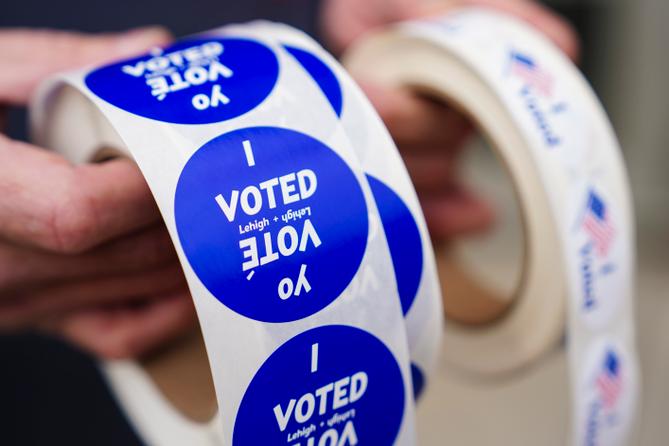
¿En cuáles contiendas votaré?
Los demócratas y los republicanos votarán por los candidatos de sus partidos en las elecciones para gobernador, vicegobernador, Cámara de Representantes y Senado estatales, y la Cámara de Representantes de los Estados Unidos.
Los ganadores de cada primaria se enfrentarán entre sí durante las elecciones generales del 3 de noviembre.
Gobernador
En la parte superior de la papeleta electoral de esta elección se encuentra la carrera por la gobernación, aunque ninguno de los dos partidos tiene oficialmente una primaria disputada en mayo.
El gobernador de Pensilvania supervisa una amplia red de agencias estatales responsables de todo, desde educación hasta servicios sociales y prisiones. El gobernador también se encarga de elaborar y presentar el presupuesto estatal anual a la Asamblea General, y tiene la facultad de declarar situaciones de emergencia, firmar órdenes ejecutivas y aprobar o vetar la legislación aprobada por los legisladores estatales.
El gobernador en funciones, Josh Shapiro, fue elegido para el cargo en 2022 y busca un segundo mandato. Se espera que se enfrente a la tesorera estatal republicana Stacy Garrity en las elecciones generales de noviembre.
Shapiro es un demócrata relativamente moderado, abierto a llegar a acuerdos con el otro lado del espectro político, aunque eso no ha evitado graves rupturas en las negociaciones con el Senado estatal, controlado por los republicanos, durante su primer mandato. También se le considera políticamente ambicioso y, según se informa, se está posicionando para postularse a la presidencia en 2028.
Entró en la política de Pensilvania con una exitosa candidatura a la Cámara de Representantes estatal en 2004. En 2011 fue elegido miembro de la Junta de Comisionados de su condado natal, Montgomery, y luego ganó la carrera por la fiscalía general de Pensilvania en 2016.
Puede leer más sobre Shapiro, lo que ha hecho como gobernador durante su primer mandato y mucho más en nuestra guía de candidatos.
La tesorera estatal Stacy Garrity es la única candidata republicana en las primarias, aunque se está preparando una campaña de votos por escrito para el senador estatal Doug Mastriano (R., Franklin).
Elegida en 2020, Garrity cumple su segundo mandato como tesorera. Este cargo es el primero en la política para la nativa del condado de Bradford: Garrity pasó gran parte de su carrera en el sector manufacturero y es una veterana condecorada, que fue desplegada tres veces entre 1991 y 2008: en la Operación Tormenta del Desierto, la Operación Libertad Iraquí y la Operación Libertad Duradera. Recibió dos Estrellas de Bronce y la condecoración de la Legión al Mérito. Se retiró como coronel de la Reserva del Ejército de los Estados Unidos.
Como tesorera, Garrity, una firme defensora del presidente Donald Trump, se encarga principalmente de administrar los fondos estatales, devolver los bienes no reclamados y gestionar los programas de ahorro. Pero también se ha involucrado periódicamente en la política. Por ejemplo, aumentó las inversiones estatales en Israel tras el ataque de Hamás del 7 de octubre de 2023, e intervino en el estancamiento presupuestario del año pasado ofreciendo préstamos a los condados y otras entidades a las que se les había congelado la financiación estatal.
Puede leer más sobre Garrity, lo que ha hecho como tesorera y su postura sobre diversos temas en nuestra guía de candidatos.
Vicegobernador
En Pensilvania, los candidatos a vicegobernador deben postularse para el cargo en las primarias por separado de los candidatos a gobernador, aunque pueden formar equipo y hacer campaña juntos como una fórmula si así lo desean.
Las responsabilidades del vicegobernador incluyen presidir el Senado estatal, donde también tiene la facultad de emitir el voto de desempate en algunas situaciones. La persona que ocupa el cargo preside la Junta de Indultos y participa en varias entidades estatales, incluido el Consejo de Gestión de Emergencias de Pensilvania. El vicegobernador también sucede al gobernador, en caso de que este no pueda terminar su mandato por cualquier motivo.
El candidato del Partido Demócrata es el actual titular, Austin Davis. Davis, originario de McKeesport, en el condado de Allegheny, es la primera persona negra de Pensilvania en ocupar el cargo, y también la más joven del país, según su oficina.
Davis ha estado involucrado en la política desde que era adolescente, cuando puso en marcha un consejo asesor juvenil para el alcalde de su ciudad natal tras un tiroteo cerca de su casa. Llegó al cargo electo en unas elecciones especiales de 2018 para el Distrito 35 de la Cámara de Representantes de Pensilvania. También se desempeñó como vicepresidente del Comité Demócrata del condado de Allegheny antes de renunciar, y se postuló para vicegobernador con el apoyo de Shapiro en 2022.
A lo largo de su mandato como vicegobernador, Davis ha hecho de la prevención de la violencia con armas de fuego un enfoque central de su trabajo, ayudando a aumentar los fondos para los programas de prevención de la violencia y relanzando la Oficina de Prevención de la Violencia con Armas de Fuego. Bajo su mandato como presidente de la Junta de Indultos, la junta comenzó a aceptar solicitudes en línea.
Puede leer más sobre Davis en nuestra guía de candidatos a vicegobernador aquí.
Los candidatos del Partido Republicano son Jason Richey y John Ventre.
Richey es abogado especializado en derecho de la construcción, inmobiliario y mercantil en un bufete con sede en Pittsburgh, donde ha trabajado durante casi tres décadas y es socio. Garrity respaldó formalmente su candidatura a vicegobernador con la esperanza de que se convirtiera en su compañero de fórmula para las elecciones de otoño.
En 2022, se postuló para gobernador, pero se retiró antes de las primarias. Ha afirmado que “todas las razones” por las que se postuló para gobernador siguen siendo válidas este año. En particular, ha expresado su deseo de ampliar la infraestructura de Pensilvania para extraer gas natural y dice que quiere eliminar el impuesto sobre la renta fijo del 3,07 % del estado, afirmando en PCN: “Odio absolutamente el impuesto sobre la renta”. Richey no confirmó si la reducción de ese impuesto formaría parte de su plataforma política con Garrity.
Puede leer más sobre Richey en nuestra guía de candidatos a vicegobernador aquí.
John Ventre se presenta sin el respaldo de Garrity ni del Partido Republicano estatal.
Ventre afirma que supervisó la seguridad, la gestión de crisis y los asuntos públicos en UPS en seis estados, incluido Pensilvania, durante más de treinta años. También es un destacado entusiasta de los ovnis — organizó la conferencia anual sobre ovnis de Pittsburgh en abril — y es un autor cuyas novelas abarcan temas que incluyen relatos ficticios de avistamientos de ovnis, profecías y el inicio de la pandemia de COVID-19. Nunca ha ocupado un cargo público, aunque se presentó sin éxito dos veces a comisionado del condado de Westmoreland y una vez a gobernador.
Puede leer más sobre Ventre en nuestra guía de candidatos a vicegobernador aquí.
Asamblea General
La Asamblea General de Pensilvania es el poder legislativo del estado y, al igual que el Congreso, cuenta con una cámara baja y una cámara alta: la Cámara de Representantes y el Senado. El Senado estatal está compuesto por 50 miembros y la Cámara de Representantes por 203, lo que la convierte en la legislatura a tiempo completo más grande del país.
La Asamblea General es la principal responsable de proponer y aprobar las leyes estatales, así como de elaborar el presupuesto estatal.
Este año habrá 228 contiendas legislativas estatales en la boleta electoral, lo que incluye a toda la Cámara de Representantes de Pensilvania y a la mitad del Senado estatal.
Puede leer sobre las contiendas de las primarias con mayor potencial para definir la composición de la Cámara de Representantes y el Senado estatales en nuestra guía.
Para saber cómo evaluar a los candidatos legislativos que se presentan en estas elecciones primarias, consulte nuestra guía de selección.
Para saber quiénes se postulan en su distrito, consulte el sitio web electoral de su condado para ver una papeleta de muestra.
Cámara de Representantes de EE. UU.
La Cámara de Representantes de EE. UU. está compuesta por 435 legisladores electos. El número de miembros de cada estado se basa en su población — Pensilvania tiene 17 representantes.
Los miembros de la Cámara de Representantes de EE. UU. tienen mandatos de dos años y se presentan a la reelección en los años pares.
Todos menos uno de los 17 miembros de la delegación de Pensilvania en la Cámara de Representantes de EE. UU. se postulan para la reelección en 2026. Los nombres que aparecerán en su papeleta electoral dependerán del distrito electoral en el que resida.
Para averiguar quién representa a su distrito, visite la herramienta de búsqueda de la Cámara de Representantes de los Estados Unidos.
¿Qué más habrá en mi papeleta?
Este año no hay medidas electorales a nivel estatal, pero algunos votantes pueden encontrar preguntas locales.
Filadelfia, por ejemplo, tendrá varias preguntas en su papeleta, incluida una sobre si la ciudad debería crear y supervisar un programa de ahorro para la jubilación. En Pittsburgh, se preguntará a los votantes si la ciudad debería cambiar la forma en que promueve las reuniones públicas.
Consulte con la oficina electoral de su condado para confirmar las candidaturas y las preguntas, y para ver una boleta de muestra.
Obtenga más información aquí sobre cómo Spotlight PA está cubriendo las elecciones primarias de 2026.
Far from the original in Philadelphia, these fans hunt for the Liberty Bell replica in each state
[link]
Spotlight PA
Apr 30 2026 at 08:00 PM
RALEIGH, N.C. (AP) — Want to see the Liberty Bell this semi-quincentennial but d...
RALEIGH, N.C. (AP) — Want to see the Liberty Bell this semi-quincentennial but don’t have the time or cheese for a pilgrimage to Philadelphia? Have no fear: Chances are, there’s one at a state Capitol, museum or even a fire station near you.
It won’t be the original, but it’ll be a dead ringer.
For a savings bond drive in 1950, the Treasury Department commissioned copies of the famously broken bell, one for each U.S. state and several territories. Except for the serial numbers, they were faithful replicas — right down to the Pass and Stow trademark and a faux crack.
There’s a small but growing group of “bell hunters” who’ve dedicated themselves to visiting as many of the replicas as possible. If they were a gang, Tom Campbell would be the ringleader.
“It was a casual thing that turned into an obsession,” Campbell, a graphic designer, said.
Let freedom ring!
Although Fort Collins, Colorado, is now his home, Campbell was born and raised in Philadelphia and visited the original Liberty Bell as a boy.
Ordered for the Pennsylvania State House, now known as Independence Hall, the bell cracked on its first test ring in the 1750s, was melted down and cast anew. There’s no evidence it was even rung on July 4, 1776; abolitionists rechristened it in the 1830s for the Bible verse encircling its crown, “Proclaim Liberty Throughout All the Land Unto All the Inhabitants thereof.”
No one knows exactly when or how the bell cracked again, but the last major attempt to restore it to ringing condition was in the 1840s.
Campbell didn’t know about the replicas until he moved to Denver in the late 1990s.
“I was wandering around, meeting a friend at a bar for a drink, and cut across the Capitol lawn and saw a full-size Liberty Bell sitting there,” he recalled. He read about the bond drive on a small bronze plaque, and a quest was born.
As Campbell and his wife, Dawn Putney, traveled the country, they began building bell trips into their itinerary. One day, she surprised him with his own website: tomlovesthelibertybell.com.
“It was just a kind of a fun goof,” he said.
But three decades after he stumbled on that first bell, Campbell has become the go-to expert on these pieces of Americana.
From France, avec amour
The replicas were cast by the Paccard Foundry, run by a family who’ve been making bells in southeastern France since 1796.
They weigh the same as the original — 2,080 pounds (944 kilograms) — but differ from the OG bell in one very important respect: metallurgical makeup.
According to the National Park Service, the original was 70% copper, 25% tin and “small amounts of lead, gold, arsenic, silver, and zinc.” In a bell, those other metals amount to “impurities,” said Anne Paccard, the foundry’s communications director and chief for “art of sound” projects, like sculptures that feature bells.
“I must say that the original Liberty Bell is a very poor quality bell, metallurgically speaking,” she told The Associated Press in a recent email. “The bells we delivered in 1950 are made of a specific alloy of bronze called ‘airain’: 78% copper, 22% tin, nothing else.”
The Treasury bells toured the country on the backs of flatbed Ford trucks equipped with loudspeakers and festooned with red-white-and-blue banners.
“You could buy a savings bond, ring the Liberty Bell, have a party,” Campbell said.
At drive’s end, Treasury gifted the bells to the 48 states and the then-territories of Alaska, Hawaii, the U.S. Virgin Islands, and Puerto Rico. The District of Columbia and the Treasury Department each got one as well. (Three others went to Tokyo, a church in Paccard’s hometown and the Harry S. Truman Presidential Library and Museum in Independence, Missouri, giving that state two bells.)
Trouble is, they came with no guidance and no funds to preserve them.
“A local or state historian described it to me as an ‘unaccessioned artifact,’” Campbell said. “Not every state wanted them necessarily, and not every state knew what to do with them.”
Virginia held a contest, and the people voted to send the bell to Thomas Jefferson’s Monticello. It later went into a storage shed until finally finding a home outside a local fire station.
More than half have spent most of their lives outdoors. Time, neglect and exposure to the elements have taken their toll.
Some of the painted-on cracks have faded or disappeared completely. Others bells are displayed without their clappers and/or yokes, or in steel frames that prevent them being rung.
“At that point, it really transitions to more of a monument than a functional bell,” Campbell said. “And, to me, that’s kind of sad.”
But as the nation prepares to celebrate 250 years of liberty, some of those orphan bells are getting a new life.
Just like new… sorta
Kansas’ bell languished, disassembled, for years in a Capitol parking garage until state Sen. Elaine Bowers got involved. In October, the reassembled bell — resting on a heated concrete pad and supported by a custom-made wooden yoke, but still sans clapper — was given a place of honor outside the new Docking State Office Building.
“It just belongs here,” said a beaming Bowers as she stood beside bell No. 21. “It’s a fascinating piece of artwork, but also history that we all should be proud of.”
The Alabama and Idaho bells were shipped to the Bell Foundry Christoph in Charleston, South Carolina, for restoration and are expected to be home in time for the Fourth. Several other bells have also received recent touchups.
Campbell doesn’t set out to guilt states into fixing up and displaying their bells. But if his website happens to nudge them a bit, “maybe I’ll take a little credit for that.”
He’s also helped inspire a new generation of bell hunters.
By age 4, Zoe Murphy of Morris County, New Jersey, knew all the state capitals and their flags. At 5, she saw her first replica in Allentown, Pennsylvania.
Now a 14-year-old high school freshman, she has her own website zlovesamerica.com. She’s visited 39 of the bells over the years, from Alabama to Wyoming and even far-off Alaska.
Zoe says traveling the country has given her a deeper appreciation for America’s “collective mix of people and our culture.”
Meanwhile, Campbell’s recent visit to Arizona’s newly restored bell — which was touring the state, complete with a rope for the tugging — brought his toll up to 40. Why does the Liberty Bell resonate with him?
“The fact that a cracked bell is the symbol of the United States is really the perfect symbol of an imperfect union,” he said.
Nothing to see here
Try as they might, it’ll be nearly impossible for these Liberty Bell fans to check all the replicas off their list. Three replicas remain totally unavailable to the public this anniversary year, as far as Campbell can tell. Ironically, one of them is Pennsylvania’s.
For many years, the Treasury bell was the centerpiece of a museum in the former Zion’s Reformed Church of Allentown, where the original was briefly hidden to prevent the British redcoats from melting it down for munitions. But the building changed hands in 2023, and the bell is no longer accessible to the general public while the church is being renovated. (Local officials are placing a lighter, taller replica in front of the church for the anniversary.)
Last June, North Carolina’s bell was hoisted from its spot across from the Legislative Building in Raleigh amid a multiyear renovation of the state history museum. When the AP asked to see it, the request was politely denied.
“Our Liberty Bell is in a secure storage facility,” spokeswoman Mary Huntley said.
The only replica that’s truly lost is the one sent to Washington, D.C., which went missing from storage in the early 1980s. Campbell suspects it’s long since been melted down.
“That’s 2,080 pounds of bronze,” he says. “So, that has a scrap value.”
But if anyone has information about the capital bell, feel free to give Campbell a ring.
U.S. Supreme Court restricts Voting Right Act, but effect on Pennsylvania likely limited
[link]
Spotlight PA
Apr 30 2026 at 03:03 PM
Votebeat is a nonprofit news organization reporting on voting access and electio...
Votebeat is a nonprofit news organization reporting on voting access and election administration across the U.S. Sign up for Votebeat Pennsylvania’s free newsletter here.
The U.S. Supreme Court’s decision in a Louisiana voting rights case will make it harder to challenge political maps as being racially discriminatory, but the ruling will likely have limited effect on statewide district maps in Pennsylvania, where the state constitution provides stronger protections against gerrymandering.
On Wednesday, the U.S. Supreme Court issued a 6-3 decision split along ideological lines that raises the bar for proving illegal racial gerrymandering.
The case revolved around Section 2 of the Voting Rights Act, a Civil Rights era protection that prohibits racial discrimination in voting and has historically been used to challenge how voting districts are drawn and require that members of a racial minority have an equal opportunity to elect candidates of their choice. In the most recent round of redistricting, Louisiana’s legislature drew a map that would create a second congressional district that was majority-Black, instead of the single majority-Black district it had previously. The new map was challenged on the grounds that it explicitly used race as the basis in determining the districts.
“Allowing race to play any part in government decisionmaking represents a departure from the constitutional rule that applies in almost every other context,” conservative Justice Samuel Alito wrote for the majority. He argued that compliance with Section 2 “could not justify the state’s use of race-based redistricting here.”
Election law experts in Pennsylvania have said in the past that Section 2 hasn’t had much of an impact in the state.
Chris Fowler, a geography professor at Penn State University, said that’s because there hasn’t been a clear advantage for mapmakers of either party in drawing majority-minority districts.
Most of the people of color in Pennsylvania are concentrated in its major cities. Minority voters in Philadelphia, a heavily Black city, are generally already concentrated in districts where their numbers allow them to elect preferred candidates. Meanwhile, Pittsburgh has a smaller minority population, and Black communities in the city tend to be geographically intermixed with communities of other races. More racially mixed communities and less consistent racial bloc voting make claims under Section 2 harder to bring in Pennsylvania than in the South.
So while the Voting Rights Act remains relevant in the state and communities of color exist, Fowler said there are “very idiosyncratic reasons that it would be hard to win a case” on those grounds in Pennsylvania.
”It's not necessary to draw a racially gerrymandered district to gain advantage,” he said. “I think both parties sort of know it and they come up with maps that are pretty bland when it comes to racial gerrymandering.”
Ben Geffen, a lawyer at the Philadelphia-based nonprofit Public Interest Law Center, agreed that Section 2’s relevance in Pennsylvania has been limited, aside from the general background rule it created — that you cannot discriminate racially when drawing districts — and the implications it has had for the growing Latino population in the northeast part of the state.
Section 2 has been invoked at the local level. Toward the end of President Joe Biden’s administration, his Department of Justice brought a case against Hazleton, alleging that its at-large method of electing city council members was diluting the power of Hispanic voters. Donald Trump’s Justice Department dropped that case. The Hazleton Area School District is currently facing a similar accusation that its at-large elections lock Hispanic voters out “from electing candidates of their choice.”
But Geffen has concerns about the Callais decision that extend beyond Pennsylvania. Namely, that more states may turn to drawing partisan gerrymanders, which the Supreme Court ruled in 2019 in Rucho v. Common Cause that federal courts cannot review. He worries the overlap of racial and partisan voting trends could produce similar maps that are harder to challenge.
Pennsylvania, however, has dealt with partisan gerrymandered maps several times in recent years, and the state’s Supreme Court has struck them down. Geffen said that’s because rules about fairness are much stronger in state law than they are federally.
“Our [state] Supreme Court has said the [state] constitution prohibits partisan gerrymandering, so state lawmakers can’t brazenly draw maps for partisan gains,” he said. “I think that has put important boundaries on what map makers do here that helps avoid the excesses we see in other parts of the country.”
Marian Schneider, an adjunct professor of law at Villanova University, said that in her two decades practicing election law in Pennsylvania she has only pursued one case related to Section 2. She agreed state law protections are stronger, and said there may be a path to bring the types of arguments in state court that a plaintiff might have previously made in federal court under Section 2.
But Schneider said that regardless of Section 2’s historically limited role in Pennsylvania, Wednesday’s ruling will have an effect on the state’s voters.
“Knowing that other states could engage in suppression of minority voters, we are all affected by that, because if they are not truly electing people that reflect the voters, what happens in Congress affects all of us,” she said.
Carter Walker is a reporter for Votebeat in partnership with Spotlight PA. Contact Carter at cwalker@votebeat.org.
Great PA News Quiz: NFL Draft attendance, lawmaker wealth, and NYT’s favorite Pa.-born songwriter
[link]
Spotlight PA
Apr 30 2026 at 03:00 PM
In this week’s quiz: Former governors weigh in on security, a buzzy new museum e...
In this week’s quiz: Former governors weigh in on security, a buzzy new museum exhibition, and the voter registration deadline for this May’s primary.
If a blue “Take the News Quiz” button doesn’t appear above for you, click here instead.
As always, let us know if you encounter any technical issues. Just email Newsletter Editor Colin Deppen (newsletters@spotlightpa.org) with a heads up. And good luck!
Where Garrity and Shapiro stand on broadband, federal cuts, and other key rural issues
[link]
Spotlight PA
Apr 30 2026 at 08:00 AM
HARRISBURG — While Pennsylvania’s two major party candidates for governor are bo...
HARRISBURG — While Pennsylvania’s two major party candidates for governor are both prioritizing helping rural communities, their approaches to some major issues — like how to handle broadband installation and federal program cuts — could lead to significantly different results for the people who live in the state’s more remote areas.
Rural communities in the commonwealth are home to more than 3 million people, and face different challenges compared to more populated areas as existing residents age and limited resources — health services, jobs, and other essentials — make it hard to attract new faces and businesses.
Democratic Gov. Josh Shapiro, who hails from a Philadelphia suburb, has made a point to visit and speak with voters in rural areas, as he did in his 2022 campaign. Earlier this month, he met with Democrats in Centre, Clinton, and Lycoming Counties.
Shapiro is running unopposed in the Democratic primary.
Republican Treasurer Stacy Garrity often flexes her Bradford County roots to argue she understands rural voters’ hardships. She claims in stump speeches that she’s the first statewide office holder from a rural county in more than four decades.
Garrity is her party’s endorsed gubernatorial candidate and has no primary challenger on the GOP ballot, though there is a write-in campaign for state Sen. Doug Mastriano (R., Franklin), with his support.
Daniel Mallinson, an associate professor of public policy and administration at Penn State Harrisburg, said the candidates need to appeal to rural voters directly because they tend to hold “higher levels of distrust” toward elected officials.
“They’re in communities that for a long time have felt left behind by government,” Mallinson said. “They’re in places that get a lot of attention every four years in presidential elections, and then … don’t hear from anybody, any other time.”
Here’s how Shapiro and Garrity are approaching some key issues for rural Pennsylvanians.
Broadband access
Pennsylvanians in rural areas have a disproportionately difficult time accessing high-speed internet — especially in areas near the Central Susquehanna Valley, portions of the Pennsylvania Wilds in the north-central part of the state, and northeastern Pennsylvania, according to a 2022 study from the Center for Rural Pennsylvania.
There is $711 million in federal money available to the commonwealth to increase internet speeds. However, that money has been repeatedly delayed, due in part to shifting federal guidelines and a related dispute over how much fiber optic cable installers should be paid.
The broadband program falls under Pennsylvania’s prevailing wage law, which sets minimum rates for workers on large, publicly-funded construction projects. The Shapiro administration has been classifying fiber technicians as electrical linemen under the law.
The federal government and industry stakeholders like Verizon have said Pennsylvania’s classification artificially inflates fiber technicians’ wages by about $20 an hour and doesn’t reflect the work they’re actually doing. State officials counter that there’s plenty of money to accomplish all the broadband upgrades necessary, even with a higher wage.
A federal official had said Pennsylvania couldn’t access broadband funds until it changed its classification structure, but the Shapiro administration said in an April statement that its final plan was approved by the federal Department of Commerce without any stipulations related to prevailing wage.
Garrity said she would have handled that dispute differently than Shapiro — likely in a way that would have led to the fiber technicians being paid less.
In a statement, she said that her administration would’ve altered how Pennsylvania classifies electrical lineman and those who install fiber-optic cables to fall in line with the federal government’s initial demands.
She said she supports Republican-sponsored bills in the state House and Senate that would create new classifications for fiber technicians. They would still get the prevailing wage under those proposals, but they would have the state Department of Labor and Industry set a different, likely lower rate for their work.
“These jobs require different training and take on different risks and demands,” Garrity said.
Garrity also noted her administration would use federal funds to prioritize the “hardest” to reach communities first, then work on the least costly areas.
Economic development and data centers
An ongoing wave of data center development is at the center of economic policy debate in the state Capitol.
The commonwealth is home to more than 100 active or proposed data centers, and Shapiro and Garrity are aligned on one major question of how to handle them. They want data center developers to either build or pay for their own power generation, rather than hit local communities with the higher electricity bills that are expected to stem from the facilities’ enormous energy demands.
The two candidates also agree that local residents should have more knowledge about and sway over the proposals.
Shapiro has been bullish on data center development, helping secure tens of billions of dollars in investments from Amazon, Google, and Microsoft for related projects. He has adjusted his tone in recent months, pitching in his budget address an environmental and transparency framework that he said must be met before projects qualify for expedited permits.
Garrity said in January that rural areas are well-suited for data centers.
In April, she told Spotlight PA that the state should promote developers entering community benefit agreements with local governments, which often include pledges to hire local workers and improve infrastructure.
Another of Garrity’s major campaign trail pledges is to increase the amount of natural gas extracted in Pennsylvania. She said doing so would lower energy costs statewide and create “generational wealth and opportunity in communities that have been left behind.”
She also told Spotlight PA that a moratorium on Pennsylvania’s gasoline tax would be “wildly popular,” and has been an enthusiastic supporter of President Donald Trump’s 2025 tax bill.
In a January speech to the Pennsylvania Press Club, Garrity said she wants to lower property taxes for older adults and make sure young people can afford a first home, proposals she said the state could fund by “eliminating burdensome regulations and cutting useless red tape.”
Shapiro has meanwhile claimed credit for a 2025 Moody’s Analytics finding that Pennsylvania is the only state in the Northeast with a growing economy.
Earlier this year, he announced that pharmaceutical company Eli Lilly would invest $3.5 billion in Lehigh County to build a manufacturing plant, bolstered by $100 million in taxpayer dollars.
The administration created a 10-year plan for growth in five key industries, including agriculture, energy, and life sciences. The Shapiro campaign noted the governor’s work to “streamline the permitting process and speed up government” — last year’s state budget mandated faster response times for some air and water quality permits.
Hospitals and health services
Pennsylvania’s health systems have long warned that rising costs, insufficient insurance reimbursements, and a patient base that overwhelmingly relies on Medicaid and Medicare have strained access to care in rural areas, which have been losing services and facilities.
And because of deep Medicaid cuts approved in a sweeping federal budget package that slashed spending by roughly $1 trillion over the next decade and tightened eligibility requirements, health experts anticipate even more pressure on providers in rural communities in the coming years.
Pennsylvania officials estimate the state will lose about $20 billion in federal Medicaid funding over 10 years starting in 2028, and the $50 billion, five-year federal Rural Health Transformation Program isn’t enough to offset those cuts.
The Shapiro administration was a vocal opponent of the federal cuts, cautioning that Pennsylvania wouldn’t be able to make up for the lost funding, while Garrity has been largely supportive of the spending package.
Under Shapiro, the state budget has maintained funding for rural and critical access hospitals, though advocates hope for more to help address longstanding challenges in the field. He has also said he supports using state funds to raise the rate at which care providers are reimbursed when they care for patients on Medicaid, which hasn’t kept pace with inflation, so hospitals are often paid less than the cost of providing care.
“Look, we have seen, unfortunately, the federal government cut over a billion dollars out of just Pennsylvania’s state Medicaid allotment,” he said during an April press conference. “In addition to that, I’ve got forces on the other side of the aisle that are pushing me every budget cycle to cut money out of Medicaid. … We have resisted that.”
His campaign did not respond to a question about how much of an increase to Medicaid reimbursement he would support or why this wasn’t included in his 2026 budget pitch to lawmakers. Additionally, the campaign did not say how the governor plans to win support from Senate Republicans.
Garrity said Pennsylvania should create a policy to provide rural Medicaid reimbursement rates for specialities like maternity care.
Additionally, she said the state should route money it got from settlements with major opioid manufacturers toward “perinatal care, maternal addiction treatment, or OB-GYN recruitment in fragile rural health systems.”
She also said she would call for a “Rural Health Emergency” to get federal funding for signing bonuses, salary support, and higher Medicaid reimbursement rates for rural OB-GYN providers, and added that she would consider passing medical liability reform to protect rural doctors.
Agriculture and land use
Agriculture contributes about $132 billion to Pennsylvania’s economy and supports 1 in every 10 jobs in the state, according to the state Department of Agriculture’s most recent economic impact report, from 2021.
Although farmers are used to fluctuations within the industry, federal policies — such as tariffs — and rising gas prices due to the war in Iran have hit the sector hard and added more volatility to an already challenging job.
In June 2025, Shapiro filed a lawsuit against the U.S. Department of Agriculture for terminating Pennsylvania’s $13 million Local Food Purchase Assistance Cooperative Agreement Program, which supplied fresh products from local farms to 14 food banks. He has also criticized the Trump administration for embracing tariffs and engaging in the war with Iran.
Garrity, on the other hand, has jabbed at Shapiro for his lawsuits against Trump and generally supported the president’s tariff policies, arguing that in the long term they will bring jobs, revenue, and economic development to the United States.
Both gubernatorial candidates have backed initiatives to support farmers.
Shapiro often cites the state’s Agriculture Innovation Program — a first-of-its kind initiative created with $10 million in the 2024 budget — as a way to support farmers through new technologies that boost efficiency.
He told a room full of industry insiders at a Pennsylvania Farm Show luncheon that the agriculture sector is to thank for the commonwealth’s economy.
“Putting ag at the center of the conversation on economic development has made all the difference in our collective success over the last three years,” Shapiro said.
His campaign also pointed to the Shapiro administration’s continuation of grants for nonprofits working to expand the sale and export of Pennsylvania-grown agricultural products, including beef, dairy, hardwoods, and vegetables.
“From Day One, the Governor has focused on the issues that impact rural Pennsylvania the most,” Shapiro’s spokesman Manuel Bonder said in an email, “and he has delivered results: from investing in rural schools, main streets, small businesses, and agricultural innovation, to repairing roads and bridges, to funding the state and local law enforcement agencies so many rural communities rely on.”
Garrity told Spotlight PA she would create a “one stop” office for farmers under the Department of Agriculture to coordinate permitting and compliance across various state agencies. Its staff, she said, would also focus on three areas: streamlining environmental permitting for barns, manure storage, water use, and on-farm upgrades; simplifying rules surrounding nutrient management and manure paperwork; and eliminating “duplicate reporting requirements across state agencies.”
“Right now, by my count, farmers deal with five state agencies and too many other state boards and commissions to count,” Garrity said. It’s unwieldy, unmanageable, and prevents farmers from doing their job, she added.
Garrity also wrote on Facebook that she wants to “end the death tax so farmers can pass their land onto the next generation headache-free.” The “death tax” refers to the state’s inheritance tax, which applies to any estate after a person dies. Exemptions already exist for some farm land.
Both Shapiro and Garrity, according to their campaigns, support using state funds to ensure farmland is preserved from development plans.
Shapiro’s campaign noted that through the state farmland preservation program, in which the state teams up with local governments to buy the development rights to farms, his administration has made sure 555 farms and more than 46,000 acres of farmland stay dedicated to agriculture. The state, since before Shapiro entered office, has allocated $25.5 million annually from cigarette taxes toward the program, along with a portion of the Environmental Stewardship Fund.
Garrity told Spotlight PA that the commonwealth must further “lean on and rely on our farmers” to improve the state’s economy.
Elecciones primarias 2026 en Pa.: Todo lo que necesita saber sobre cómo solicitar, llenar y devolver su papeleta de voto por correo
[link]
Spotlight PA
Apr 29 2026 at 08:09 PM
Read in English
HARRISBURG — El 19 de mayo, los demócratas y los republicanos de...
HARRISBURG — El 19 de mayo, los demócratas y los republicanos de Pensilvania votarán en las elecciones primarias para elegir a los candidatos de sus partidos.
Los votantes tendrán en sus papeletas elecciones para gobernador y vicegobernador, así como elecciones para toda la Cámara de Representantes de Pensilvania y todos los distritos pares del Senado estatal. Todos los distritos congresionales de Pensilvania también figuran en la papeleta.
Aunque muchos votantes acudirán a su centro de votación local el día de las elecciones, otros optarán a votar por correo. Todos los votantes registrados en Pensilvania han podido votar por correo desde el año 2020.
El voto por correo puede ser confuso y se ha vuelto aún más en los últimos cinco años debido a los desafíos legales, a la desinformación que socava la fe pública en las elecciones y a los esfuerzos de muchos legisladores republicanos para prohibir su uso.
También ha sido extremadamente popular entre los ciudadanos de Pensilvania que necesitan o quieren más flexibilidad a la hora de votar. En la carrera presidencial de 2024, casi 2 millones de votantes en el estado emitieron su voto por correo.
Aquí está todo lo que necesita saber sobre el voto por correo:
¿Cómo se solicita el voto por correo?
Puede solicitar una papeleta de voto por correo en línea, en persona en una oficina electoral del condado o por correo. Las solicitudes en papel también se pueden descargar en inglés y chino, además de español. Las solicitudes deben ser recibidas por la junta electoral de su condado antes de las 5 p.m. del 12 de mayo.
Durante las elecciones presidenciales de 2024, un alto volumen de personas deseaba tanto solicitar y emitir su voto por correo en persona en las oficinas electorales de su condado o las oficinas satélite, lo que provocó filas y frustración en algunos lugares. Esa práctica está permitida por la ley de Pensilvania, pero no es lo mismo que las opciones de votación anticipada disponibles en algunos otros estados, y puede llevar mucho tiempo.
El Departamento de Estado de Pensilvania ha publicado una guía actualizada en la que se instruye a los trabajadores electorales de los condados a tener un plan para atender a todos los votantes que deseen emitir su voto de esta manera, incluyendo “un plan para garantizar que todos los votantes que estén en la fila antes de las 5:00 p.m. del último día para solicitar el voto por correo tengan la oportunidad de solicitar y presentar su papeleta”.
Si aún no está inscrito para votar, debe hacerlo antes del 4 de mayo para poder participar en las elecciones del 19 de mayo. Las solicitudes de registro de votantes en línea deben enviarse antes de las 11:59 p.m. de ese día. Las solicitudes por correo y en persona deben ser recibidas por la junta electoral del condado antes de las 5 p.m. Los matasellos no son suficientes.
Debe presentar un documento de identidad para solicitar el voto por correo. Las opciones aceptables incluyen la licencia de conducir de Pensilvania o los últimos cuatro dígitos del número de Seguro Social. El Departamento de Estado de Pensilvania tiene en línea una lista completa de las formas de identificación aprobadas.
Puede solicitar el voto por correo una sola vez o solicitar que se le añada a la lista anual de voto por correo, lo que significa que recibirá un formulario cada año. Deberá enviar este formulario de solicitud cada año que desee votar por correo.
Si tiene una urgencia y se le pasa el plazo, aún puede solicitar un formulario de urgencia para votar en ausencia.
¿Cómo puedo asegurarme de que se cuenta mi papeleta?
La mejor manera de asegurarse de que su voto cuenta es seguir las instrucciones de su papeleta de voto por correo, especialmente cuando se trata de fecharla correctamente.
Aquí algunas reglas clave del voto por correo que hay que recordar:
-
Debe utilizar tinta azul o negra para rellenar su papeleta.
-
Cada papeleta viene con dos sobres: un sobre interior "secreto" (con la etiqueta "papeleta electoral oficial") y un sobre exterior. Las papeletas deben ir selladas en el sobre interior y no se puede escribir en él.
-
Una vez que haya cerrado bien el sobre interior, introdúzcalo en el sobre exterior y ciérrelo.
-
En el sobre exterior hay una declaración del votante. Debe escribir su firma y la fecha actual debajo de la declaración. El año completo de cuatro dígitos en el campo de la fecha debe estar pre-impreso, por lo que los votantes solo tendrán que rellenar los campos del mes y día. Asegúrese de no escribir accidentalmente su fecha de nacimiento. La cuestión de si los condados pueden aceptar papeletas sin fechas aún está en los tribunales, pero siempre es mejor llenar la papeleta entera y correctamente.
-
Algunos condados exigen un sello postal pagado, pero otros no. Consulte el sitio web electoral de su condado para confirmar y comprobar la cantidad, ya que las papeletas de voto por correo más largas pueden requerir sello adicional.
¿Cómo devuelvo mi voto por correo?
Existen varios métodos para devolver su papeleta, pero lo más importante que debe recordar es que la junta electoral de su condado debe recibir su papeleta antes de las 8 p.m. del día de las elecciones. Si devuelve su papeleta en persona, usa un buzón, o un sitio de entrega, debe hacerlo en un lugar dentro de su condado. Si entrega su papeleta en otro condado, no se contará.
-
Devolución por correo: Para devolver su papeleta por correo, todo lo que tiene que hacer es utilizar el franqueo adecuado y enviarla de la misma manera que enviaría cualquier correo. Dado que los condados no pueden contar las papeletas que llegan después de las 8 p.m. del día de las elecciones, cuanto antes envíe su papeleta, mejor.
-
Entrega en persona: Asegúrese de que su papeleta ha sido correctamente rellenada y sellada, luego devuelva la papeleta en persona a la oficina electoral de su condado. Algunos condados también pueden tener otros lugares de devolución designados. Encuentre la dirección de la oficina electoral de su condado o los lugares de entrega.
-
Utilice un buzón de entrega: Los buzones de entrega son otro método seguro para devolver una papeleta de voto por correo. Las directrices del Departamento de Estado de Pensilvania indican a los condados que deben asegurarse de que estén bien sujetos a un objeto inamovible o colocados detrás de un mostrador, y monitoreados por una persona o una cámara de seguridad en todo momento, entre otras medidas contra la manipulación. No todos los condados las tienen. El Departamento de Estado de Pensilvania dice que los votantes deben buscar en el sitio web de su condado para encontrar una lista oficial de lugares.
¿Qué pasa si me equivoco o pierdo mi papeleta de voto por correo?
Si pierde o comete un error en su papeleta, tiene opciones. Sin embargo, algunas de estas opciones varían según el condado.
Si se da cuenta de que ha dañado o cometido un error en su papeleta y aún no la ha devuelto, siempre puede votar en persona en su local de votación.
Para votar en persona, debe llevar todos los componentes de su papeleta de voto por correo a su colegio electoral y entregárselos a los trabajadores electorales. Se le pedirá que firme un formulario declarando que no ha votado por correo. Después de eso, se le debería permitir votar en el precinto.
Si no puede entregar sus materiales de voto por correo, ya sea porque perdió la papeleta, porque nunca la recibió o porque la olvidó, aún puede votar con una papeleta provisional. Los votantes pueden verificar el estado de su papeleta provisional en línea.
Algunos condados también emitirán una papeleta de voto por correo de sustitución antes de las elecciones si se da cuenta de que la suya se ha perdido, dañado o si ha cometido un error. Los votantes que deseen una papeleta de sustitución deben ponerse en contacto con la oficina electoral de su condado para obtener instrucciones.
La ley electoral de Pensilvania es imprecisa en cuanto a lo que los condados pueden hacer para ayudar a los votantes a corregir errores, ya sea antes o después de enviar su papeleta. Sin embargo, decisiones recientes de la Corte Suprema de Pensilvania han dejado claro que, como mínimo, los condados deben notificar a los votantes cuando devuelven una papeleta por correo con errores, ya sea por falta de firma o por una fecha incorrecta. La Corte Suprema también estableció que se debe dar a los votantes la oportunidad de votar mediante una papeleta provisional el día de las elecciones, en caso de que su papeleta por correo sea rechazada.
Aun así, el proceso para corregir un error en una papeleta por correo sigue variando según el condado.
Para conocer cuál es la política en su condado, comuníquese con la oficina electoral de su condado.
¿Cómo puedo comprobar el estado de mi voto por correo?
Después de enviar o entregar su voto por correo, puede comprobar en línea el estado de su papeleta. Esto se debe a que cada sobre exterior de voto por correo tiene un código de barras individual específico para usted. Una vez escaneado este código de barras, se registrará que su voto por correo ha sido recibido. Sin embargo, su voto por correo no se abrirá y contará hasta el día de las elecciones, de acuerdo con la ley de Pensilvania.
Si tiene una discapacidad que le impide devolver su propia papeleta, puede rellenar un formulario para designar a otra persona que la devuelva por usted. La persona designada debe tener una copia del formulario a mano cuando devuelva su papeleta.
De lo contrario, deberá devolver su propia papeleta.
Los políticos han utilizado casos aislados de devolución ilegal de papeletas para cuestionar la seguridad del voto por correo, pero estos incidentes no indican que se haya generalizado el voto fraudulento. De hecho, el fraude en el voto por correo es extremadamente raro, dados los obstáculos de seguridad que deben superar los votantes para recibir una papeleta, las medidas de seguimiento a las que se someten estas papeletas y los procedimientos de auditoría que utilizan los estados para asegurarse de que las papeletas no son emitidas por votantes inhabilitados y de que nadie vota dos veces.
Visite pa.gov/agencies/vote/recursos-en-espanol para leer las normas del Departamento de Estado de Pensilvania sobre el voto por correo.
Pennsylvania court grants public access to voting data in dispute from 2020 election's aftermath
[link]
Spotlight PA
Apr 29 2026 at 03:03 PM
HARRISBURG — Pennsylvania's high court ruled Tuesday that spreadsheets of raw da...
HARRISBURG — Pennsylvania's high court ruled Tuesday that spreadsheets of raw data associated with every ballot are public records, providing access to the "cast vote records" that had been requested by an election researcher hired by the Trump Administration last year.
The Democratic-majority Supreme Court said its unanimous decision was a way to "satisfy the voting public that our elections are safe, secure and accurate" while preserving the state constitution's requirement that votes remain secret.
The Lycoming County elections director in Williamsport had denied Heather Honey's request for digital copies from the 2020 presidential election, saying that would amount to letting her review the contents of a ballot box, one vote at a time. Cast vote records are created when a voter's choices are made electronically or scanned.
Pennsylvania election law provides wide public access to county election records, except for the contents of ballot boxes and voting machines and records of assisted voters. Lycoming Voter Services had argued its scanners and tabulators constitute voting machines and the cast vote records are the contents of ballot boxes.
As Honey did not live and vote in Lycoming County, she was succeeded in the litigation by three Williamsport area residents — a local businessman, a retired state trooper and Republican state Rep. Joe Hamm.
Their lawyer, Thomas Breth, said the data will allow people to review what happened in the hotly contested 2020 election.
"In short, it's not solely about the past," Breth said. "It's about the future. This significantly improves election integrity moving forward in the Commonwealth of Pennsylvania."
Lycoming elections chief Forrest Lehman said Tuesday he does not believe the records, which contain randomized data, will reveal any secret ballot information and that he is ready to provide the records upon request.
"The court made its decision, and anybody who wants it can have at it," Lehman said.
The Supreme Court ruled that the cast vote records "are spreadsheets of raw data pulled from the cast ballots. They are not the physical ballots contained in the ballot box." Therefore, they are public records, the justices concluded: "This interpretation does not destroy the secrecy of the vote any more than a tally of all votes from a specific election."
The high court said it was only ruling in the Lycoming County matter and said it was possible that other counties do not sufficiently randomize the data. "Whether the Election Code requires disclosure of CVRs that clearly link the contents of a ballot with personally identifying data is not before us," wrote Justice Daniel McCaffery.
Breth dismissed that possibility, saying the state's current election equipment standards require safeguards to protect voter identity.
When a public pipe bursts on private land, who fixes it? One Pa. farmer wants answers.
[link]
Spotlight PA
Apr 29 2026 at 09:00 AM
WASHINGTON TOWNSHIP — Contractors were installing a fence on Ge Fangyuan’s Old R...
WASHINGTON TOWNSHIP — Contractors were installing a fence on Ge Fangyuan’s Old Route 100 farm when crews unknowingly hit a sewer pipe and shot raw sewage into the air.
The workers had called the state hotline that provides information about utility placements, as required, and were told there was no problem. But there was. The punctured pipe covered Fangyuan’s pasture and wooded land with sludge and revealed infrastructure that Washington Township officials say no one knew was there.
The force main pipe — which uses pressure to move sewage — was never logged by the township with the hotline, PA One Call. The municipality also said it didn’t have records authorizing the pipeline on the private property.
In the immediate aftermath of the Nov. 6, 2024, sewer break, the township repaired the pipe and cleaned the unnamed tributary’s embankment. It was soon issued violations by the Pennsylvania Department of Environmental Protection (DEP) for the unpermitted discharge of 8,000 gallons of raw sewage and for failing to notify the agency about the break for nearly two days.
Officials said the record mishap was an accident and defended their response.
“The township has been working to remedy the situation,” Solicitor Joan London said during a March 11 phone interview. “There was an error going back to the 1990s that unfortunately presented itself, and we are doing our best to remediate the problem and prevent it from happening again.”
But Fangyuan and his wife, Qiu Wenhuan, are frustrated that they are still waiting for the township to move the pipe and come to a financial settlement that covers the damages. He claimed township officials initially tried to apply incorrect records to his property to claim he was trespassing when he installed the fence.
The rupture also revealed additional missing records related to the sewer system, leading to community concerns that something like this could happen again. Wastewater contains pollutants and pathogens that can harm human health and aquatic life, and when it’s illegally discharged, it can seep into the ground, impacting aquifers and tributaries that feed drinking water sources.
Resources like water and air “are finite, and they are interconnected. The enforcement of these things matters because when things go wrong, it affects other people,” said Emma Bast, an attorney at environmental nonprofit PennFuture. Government regulation on these issues ultimately came about because people died, she added.
“DEP has to enforce these things so that it’s fair to everyone, so nobody gets special treatment, and everybody has to follow them.”
The sewer pipe
Fangyuan and Wenhuan moved from El Paso, Texas, to the Berks County community in 2021 after serving in the U.S. Army — he was a combat medic and she was a cook. Wenhuan had friends in metro Philadelphia, and the couple wanted a small farm to raise livestock and enjoy their retirement.
Located about an hour and a half outside Philadelphia in a small town of about 4,500 people, the Old Route 100 property is idyllic. The setting, the environment, and the long history attracted the couple to the parcel, which boasts 15 acres and a farmhouse. All they needed was a fence, Fangyuan told Spotlight PA.
“Both of us are disabled veterans, so we are just trying to enjoy our retirement life,” he said.
When contractors hit the pipe, municipal officials told Fangyuan a 1994 sewer easement for adjacent vacant land applied to his property, he said. These agreements give public utilities the right to access parts of private properties, and can prevent owners from building fences or planting trees on that land.
That meant Fangyuan was trespassing, he said officials told him. The municipality did not comment when Spotlight PA asked if it made this accusation.
He searched titles and found no such easement record. It wasn’t until Fangyuan hired an attorney that municipal leaders backed off their claims, he said.
Municipalities are required to notify DEP within four hours of a pollution incident. Washington Township did so at 8 a.m. on Nov. 8 — nearly two days after the rupture.
For that reason, DEP issued a notice of violation — the first level of enforcement the department pursues. Expected response times range from 10 to 30 days, and the notice doesn’t carry a fine. If issues are more serious or go unaddressed, DEP can pursue a consent order of agreement and assess civil penalties.
Despite that notice, London, the township solicitor, told Spotlight PA, “There was no delay in reporting the incident.”
“The first priority was to stop the flow of sewage from the force main and prevent further property damage or any environmental harm,” she said in a statement.
She added: “Washington Township has been fully responsive and transparent about the 2024 incident, acted promptly and in accordance with accepted practice to prevent damage, and is working expeditiously within the DEP framework towards a permanent repair which removes the line from the owners’ property.”
Since 2025, township officials have gone back and forth with Fangyuan’s attorney to reach an agreement that compensates him for the damages to his property, meeting minutes show.
The unresolved issues have prevented Fangyuan from finishing the electric fence — meant to keep various animals on his property — and have curtailed his small farm operations. He said he’s lost animals due to the limited space he has to keep them.
Fangyuan and his wife’s disabilities have gotten worse because of the extra labor they must do to keep the farm running, he told Spotlight PA. He said they have been forced to change plans and downsize their number of livestock.
The couple is still waiting for the township to relocate the pipe off their property. An email sent by a DEP employee, obtained by Spotlight PA, shows township officials and agency representatives had a conference call in March 2025 to discuss the municipal sewer system and move the force main.
However, the township didn’t file for a necessary permit until Oct. 13, after DEP prompted it to. The agency provided the permit on Dec. 17, and the Berks County Conservation District let the township know they could move forward with the plan on March 20.
London said sewer work can often take as long as 18 months to plan due to permitting, surveys, design work, and other requirements. On April 23, the township selected a contractor for the work, which is expected to cost nearly $126,000.
Once a contractor is hired and the weather cooperates, construction likely will take 30 to 60 days to complete, she estimated.
The township’s Board of Supervisors on March 26 debated whether it would be cheaper to relocate the force main in-house using the municipal highway crew rather than put it out to bid. This stoked concern among Fangyuan and his allied neighbors that the township would cut corners or skirt rules, based on past negative experiences with officials and the DEP notices.
Fangyuan said it feels like no one with the township is following the rules: “We are the people who follow the rules, but now we have to suffer from this.”
Missing records and oversight questions
The 2024 incident also revealed Washington Township is missing other sewer line records, underscoring the consequences of not knowing where these systems are placed.
DEP sought records related to four additions to the system permitted through the Water Quality Management, or WQM, permit process. The state department oversees permits for public and private storm, waste, and drinking water systems.
These records are important to maintain so local governments know where “municipally-owned pipes are located,” said John Repetz, a DEP spokesperson. “The township would need to utilize these records to address or prevent unpermitted sewage discharges from their sewage collection system during construction or maintenance activities.”
Between 1993 and 2012, the Washington Township Municipal Authority owned and operated the sewer system, until the township’s Board of Supervisors appointed themselves to the body and dissolved it of responsibility for the public sewer system. It applied for all four permits associated with DEP’s request for missing records. However, the township could not locate documentation for three of those permits.
The township says some of the facilities and sewer lines were privately installed and never turned over to the municipality, which is why it doesn’t have the records. London, the township solicitor, said the municipal authority often applies for the DEP permits, but the projects are “managed by the private developer.”
“There is probably a legal agreement” for that, she said.
Regardless of ownership, development and construction typically go through a planning process, which is usually reviewed by township engineers and planners, said Dave Cunningham, a vice president and director of water/wastewater at Keller Engineers. If the building will be served by municipal sewers, the community’s Act 537 plan is updated to reflect that, he said.
If the sewer lines or pump station will eventually be turned over to the municipality, Cunningham said a Water Quality Management permit is required from DEP.
London said Washington Township started developing geographic information system mapping of its sewer system; the township improves these as information in the field is gathered.
“GIS mapping is far more accurate than the prior mapping techniques and is being performed on an ongoing basis to protect the system and allow for accurate information to be passed along to contractors making the required PA One-Call,” she said in a statement.
Separately from the sewer break, DEP had raised concerns about another incident in which the township did not promptly notify it of an issue with the system.
During an August 2024 inspection of the wastewater treatment plant, DEP inspectors discovered the township hadn’t notified the state about part of the system being offline for over a month.
As a result, Washington Township received three notices of violation: failure to maintain treatment units in operating condition; high levels of ammonia during site testing; and 11 pollutant violations between November 2022 and September 2024, according to a DEP inspection report.
London said an engineering firm worked with DEP to address the concerns found during the August inspection.
“In my experience, it is common for a facility to have at least one Notice of Violation during any 5-year permit cycle,” a response from the engineers provided by London on March 11 said. Engineers argued DEP usually doesn’t take enforcement action against a facility or municipality “unless they see repeated violations.”
Repetz said the department uses discretion when moving to an enforcement proceeding, but noted that municipalities are expected to promptly respond to notices of violation.
There are various types of violations, some of which are excused if it’s an unavoidable event, like a disaster, he said, adding that it’s difficult to generalize or compare different facilities and the issues they face.
Meet Melissa Pérez-Carrillo, local accountability reporter for Spotlight PA State College
[link]
Spotlight PA
Apr 29 2026 at 08:00 AM
Hello! I’m Melissa Pérez-Carrillo, and I’m excited to join Spotlight PA’s State ...
Hello! I’m Melissa Pérez-Carrillo, and I’m excited to join Spotlight PA’s State College regional bureau as the local accountability reporter.
Before Spotlight PA, I reported on breaking news and public safety in Florida at the Sarasota Herald-Tribune for four years, where I scoured arrest logs and monitored internal affairs cases to uncover trends in police misconduct.
One of my proudest moments was fighting a court-ordered injunction from the Sarasota County Sheriff’s Office three months into my first reporting job. The injunction came after I filed a public records request connected to a fatal shooting by a deputy. We fought for the right to publish the story and eventually won. It was a contentious start to my time in Sarasota, but it instilled in me the importance of public records and dogged reporting.
I grew up in Miami and attended the University of Central Florida. I started as a STEM major, but after realizing how much I missed creative writing, I started a music zine called “Debaserrr” with the help of my best friend and my brother. We interviewed local bands in South Florida, wrote about our favorite albums, and spoke to fans at shows. A semester later, I changed majors and became enamored with local reporting.
My background in computer science and math eventually came in handy as I dabbled in data journalism, using coding to streamline the collection of public records across my beat and analyzing numbers to uncover hidden patterns.
I’ll bring that experience to Spotlight PA to hold local governments accountable. I’m particularly interested in diving into public safety issues and how local agencies collaborate with the federal government on immigration enforcement. If something in your north-central Pennsylvania community doesn’t sit right with you, I want to hear about it. Tell me about what needs a closer look.
When I’m not working on a story, I enjoy reading while curled up with my cats, Shadow and Cloudy, antiquing, going to concerts, taking impromptu road trips, and drawing comics. Let me know the cool places to check out in central Pennsylvania.
Share tips and local recommendations with me at mperezcarrillo@spotlightpa.org or 267-618-6677.
Latino leaders surge into local office as Trump-era attacks fuel new urgency
[link]
Spotlight PA
Apr 28 2026 at 03:44 PM
Rhetoric dehumanizing immigrant and Latino communities may appear more open and ...
Rhetoric dehumanizing immigrant and Latino communities may appear more open and in-your-face in the current political climate. But that has not been a barrier for Latinos seeking elective office or high-level roles in government.
Voters are choosing an increasing number of nonwhite Hispanic leaders to local elective office — and many of the leaders are the first Latinos to hold their seats. Some political science experts attribute the rise of Latino leadership to years of grassroots organizing, coupled with ongoing demonization of their communities by Trump administration officials and conservative activists.
“That’s the difference now, is that there’s this extra incentive of an unrelenting attack on Latinos across the country,” said Anna Sampaio, an ethnic studies professor at Santa Clara University who specializes in race and gender politics.
There are currently an estimated 7,700 Latino elected officials nationwide, according to data from the National Association of Latino Elected and Appointed Officials. That’s up from 6,883 officials in 2020.
Estimated to number as many as 55 million people — 16% of the U.S. population — Latinos are the largest ethnic minority in the country, with politics, interests and priorities as diverse as the national origins represented within their population. But Latinos also are underrepresented as a demographic across elective offices.
Since the beginning of President Donald Trump’s second term, Latino communities have been a target of his hard-line immigration tactics. The feeling of attack doesn’t stop there. From memes shared from the official White House page perpetuating Hispanic stereotypes, a federally led English-only initiative and an anti-diversity, equity and inclusion push have painted a target on Latinos across the country.
It’s all led to more Latinos seeking office to defend their communities and give voice to those who may be afraid to speak out in the current political climate. As a result, legislators have proposed measures that include providing community members with protections against the U.S. Immigration and Customs Enforcement, halting the approval of ICE detention centers in their cities, and calling for a stop to ICE funding, among other actions.
Pennsylvania Latino mayor makes history
Lancaster, Pennsylvania, with a roughly 40% Hispanic population, recently elected Jaime Arroyo their first Latino mayor. Arroyo took office in January, after being elected with 85% of the vote.
“I think being the first Latino to be in this role and the first person of color to be mayor of Lancaster City has been exciting,” Arroyo told The Associated Press, adding that he finds it “extremely exciting to lead and represent our community in this role.”
With rhetoric and national policies — such as heightened immigration enforcement — hurting the Latino communities, Arroyo said, diverse representation in government is more important than ever. He also believes that the rise of elected Latino officials over the last couple of years is the result of generations of Latinos being politically active fighting for civil rights.
“We’re starting to see a lot of the fruits of that labor come to fruition,” Arroyo said. “There’s never a perfect time to serve your community, there’s the right time. And I think right now is the right time for a lot of Latinos to step up into these roles, especially with everything that is going on.”
Latino representation expanding in city councils
Many more Latinos made history when they took office in earlier this year.
In Iowa, Rob Barron was sworn in Jan. 12 as the first Latino representative on the Des Moines City Council. Antonio Pacheco was sworn on Jan. 7 to be the first Latino member of the city council in Conyers, Georgia. In Ohio, Eileen
Torres became the first Mexican American women to win a city council seat in Lorain. Sabrina Gonzalez also took office there as the first Puerto Rican women to serve.
And in Michigan, Clara Martinez and Deyanira Nevarez Martinez were sworn in Jan. 1 to the Lansing City Council, making the city the first in the U.S. to have a council with majority Latino representation.
Martinez said her election, and that of Nevarez Martinez, makes a bit statement about “what people are truly open to despite the national rhetoric.”
“I think because of the rhetoric that we are having to face and some of the backlash on the national stage, I think that’s just fueled the fire for so many people,” she said.
The Salt Lake City Council also has a Latino majority, with four of seven seats, after Erika Carlsen, the granddaughter of Mexican immigrants, was sworn in on Jan. 5. Carlsen said her success is possible because of current and previous generations that put in the work to create spaces where Latinas were encouraged to take leadership positions.
“I feel like I’m building on early generations of leadership,” Carlsen said. “That’s both an honor and responsibility to improve Salt Lake City for the people who live here.”
Carlsen said even if representation at the federal level is not high or visible she said having representation at the local level can have a huge impact.
“I think that it’s critically important that we continue to build on this momentum,” Carlsen said. “The majority of change that can happen starts locally, it doesn’t start in Washington but in City Hall, school boards and neighborhoods conversations. That’s the kind of momentum I’d love to see all across the United States.”
Carolina Welles, executive director of The First Ask, an organization that supports first-time female candidates at the state level, said the reason why Latino representation is more visible at the local level is because those leaders are able to built trust with their community much easier given their proximity.
“They actually know what people care about,” Welles said. “They have a stake because they are facing similar things.”
Local level Latino leadership builds on state and federal representation
It’s not just at the local level. Latinos are making inroads at the federal level too.
The 119th Congress has 56 Hispanic or Latino members. That shakes out to 10.35% of total membership, according to the Congressional Research Service.
For comparison, there were only 14 Hispanic or Latino members and all were male in the 99th Congress, 40 years ago.
At the start of 2025, there were seven Hispanic U.S. senators. That number decreased to six when then Sen. Marco Rubio resigned to become the Secretary of State, the first Latino to hold the position.
Last year also marked a record for Latinas at the state level. Latinas held 214, or 2.9%, of seats in state legislatures, according to the Center for American Women and Politics. That was up from 192 seats in 2024.
Currently, New Mexico Gov. Michelle Lujan Grisham is the only active Latina governor in the U.S. Only two Latinas have been elected governor in U.S. history, and both were in New Mexico.
In March, Gina Hinojosa won the Democratic nomination for governor, making her the second Latina to win a major party gubernatorial nomination in Texas.
Latinos saw the biggest rise in elected officials during the Trump administration in response to attacks on their fundamental rights, said Sampaio, the Santa Clara University professor. She said that trend is likely to continue as the administration continues its attacks on immigrant communities.
“We’re likely to see more Latinos run for office at the local level, at the state level and even at the national level in response to the attack on simply their existence,” Sampaio said. “It is unwittingly both terrorizing the Latino community as well as mobilizing communities.”
Pa. primary election 2026: A complete guide to who is on the primary ballot, when to vote, how to vote, where to vote, casting mail ballots, and more
[link]
Spotlight PA
Apr 28 2026 at 08:00 AM
Leer en español
HARRISBURG — On May 19, Democrats and Republicans across Pennsyl...
HARRISBURG — On May 19, Democrats and Republicans across Pennsylvania will decide which candidates from their respective parties will go on to run in the November general election.
On the ballot are the governor and lieutenant governor, along with the entire Pennsylvania House and half of the state Senate. All of Pennsylvania’s 17 congressional districts will also be up for election. Across the state, there might also be local ballot questions.
To help you prepare for the 2026 primary in Pennsylvania, we’ve answered some of your most frequently asked questions below:
When is the 2026 primary Election Day in Pennsylvania?
Tuesday, May 19, 2026. Mark your calendar!
When do polls open for Pennsylvania’s 2026 election?
Polls open at 7 a.m and close at 8 p.m. As long as you are in line to vote by 8 p.m., you are entitled to cast a ballot.
When is the last day to register to vote?
The last day to register is May 4.
You can register online here, or submit a registration form in person or through the mail to your county election office by the same date. Online voter registration applications must be received by that day.
How can I check my voter registration?
You can check your registration here. You can search using your name, county, ZIP code, and birthday, or by entering your driver’s license or PennDOT identification card numbers.
How do I change parties?
To change your party affiliation, fill out the same voter registration form that you used to register the first time.
When filling out the form, select the box that says “change of party.” If you do this less than 15 days before the election (May 4), the party change will not take place until the next election cycle.
I’m a registered independent. Can I vote on May 19?
In Pennsylvania, if you are registered as an independent or with a third party, you cannot vote for candidates in the primary election. Pennsylvania is one of eight states that has a closed primary system, meaning only registered Democrats and Republicans can vote in their respective party's primary.
If you wish to participate in a specific party's primary, you must change your affiliation to that party before the registration deadline.
Unaffiliated and third-party voters can participate in special elections that coincide with the primary; they can also vote on statewide constitutional amendments and local ballot initiatives.
How do I find my polling place?
You can find your polling place here by entering your address.
What else do I need to know to vote in person?
If this is your first time voting or your first time voting since changing addresses, you’ll need to bring proof of identification. This can be a government-issued ID, such as a driver’s license or U.S. passport; a utility bill or bank statement that includes your name and address; or a U.S. military or student ID. See the full list of options here.
Can I still request a mail ballot?
You can apply for a mail ballot until May 12, either online or through the mail. However, your complete application must be received by your county’s election office by 5 p.m. that day.
Here’s the application. You’ll need to provide your name, date of birth, proof of identification, and signature.
How do I vote absentee?
The process to request an absentee ballot is similar to that for requesting a mail ballot. You can apply online or download the form and send it to your county election office. However, the application requires you to list a reason for your absence, unlike a mail ballot. You can find the application here.
Applications are due May 12 by 5 p.m. and must be received by your county office by that time.
If you miss the May 12 deadline, you can still request an emergency absentee ballot from your county election office if you experience an unexpected illness, disability, or last-minute absence. You can request one here.
I applied but still haven’t gotten my absentee or mail ballot. What should I do?
You can check the status of your absentee or mail ballot here. If you’re worried your ballot won’t arrive with enough time to return it, you can call your county election office for advice on how to proceed.
You can also go to your county election office to request a ballot and fill it out on the spot, or go to your polling place and vote in person on Election Day — though if you applied for a mail ballot and don’t have it in hand, you may need to vote in person using a provisional ballot.
I’ve received my absentee or mail ballot. How do I return it?
First, make sure you’ve filled it out completely and followed all instructions, including dating the ballot envelope properly. Otherwise, your ballot may not be counted.
Everyone can return their ballot through the mail or by dropping it off at their county election office. Some counties also have drop boxes available. Find county contact information here.
Your county election office must receive your ballot by 8 p.m. on Election Day. Postmarks do not count.
If you have a disability that prevents you from returning your own ballot, you may fill out a form to designate someone else to return it for you. Make a copy of the completed form and give the original to your designated agent. The designee must have the form on hand when they return your ballot.
Otherwise, you must return your own ballot.
Which races will I be voting on?
Democrats and Republicans will cast votes for their parties’ candidates across races for governor, lieutenant governor, state House and Senate, and the U.S. House of Representatives.
The winners of each primary will face each other during the Nov. 3 general election.
Governor
At the top of the ballot this election is the governor’s race — though neither party officially has a contested May primary.
Pennsylvania’s governor oversees a vast network of state agencies responsible for everything from education to human services to prisons. The governor is also in charge of creating and submitting an annual state budget to the General Assembly, and has the power to make emergency declarations, sign executive orders, and approve or veto legislation passed by state lawmakers.
Incumbent Gov. Josh Shapiro was elected to the role in 2022 and is seeking a second term in office. He is expected to face Republican state Treasurer Stacy Garrity in the November general election.
Shapiro is a relatively moderate Democrat open to across-the-aisle dealmaking, though that hasn’t prevented serious negotiating breakdowns with the Republican-controlled state Senate during his first term. He’s also considered politically ambitious, and is reportedly positioning himself to run for president in 2028.
He entered Pennsylvania politics with a successful 2004 run for state House. He was elected in 2011 to the Board of Commissioners in his native Montgomery County, then won the race for Pennsylvania attorney general in 2016.
You can read more about Shapiro, what he’s done as governor during his first term and more in our candidate guide.
State Treasurer Stacy Garrity is the sole Republican candidate in the primary, though a write-in campaign for state Sen. Doug Mastriano (R., Franklin) is in the works.
Elected in 2020, Garrity is in her second term as treasurer. The role is the Bradford County native’s first in politics — Garrity spent much of her career in manufacturing and is a decorated veteran, deploying three times between 1991 and 2008: in Operation Desert Storm, Operation Iraqi Freedom, and Operation Enduring Freedom. She received two Bronze Stars and the Legion of Merit award. She retired as a U.S. Army Reserve colonel.
As treasurer, Garrity, a vocal supporter of President Donald Trump, primarily stewards state dollars, returns unclaimed property, and administers savings programs. But she has periodically waded into politics, too. She increased state investments in Israel following the Oct. 7, 2023 attack by Hamas, for instance, and inserted the Treasury Department into last year’s budget impasse by offering loans to counties and other entities that had their state funding frozen.
You can read more about Garrity, what she’s done as treasurer and her stance on various issues in our candidate guide.
Lieutenant governor
In Pennsylvania, candidates for lieutenant governor must run for the role in the primary separately from gubernatorial candidates, though they can team up and campaign together as a ticket if they choose.
The lieutenant governor’s responsibilities include presiding over the state Senate, where they also have the power to cast tie-breaking votes in some situations. The person in the role chairs the Board of Pardons and is involved in several state entities, including the Pennsylvania Emergency Management Council. The lieutenant governor also succeeds the governor, should the governor be unable to finish his or her term for any reason.
The candidate for the Democratic Party is incumbent Austin Davis. Davis, who is from McKeesport in Allegheny County, is Pennsylvania’s first Black person to hold the role, and also the youngest in the country, according to his office.
Davis has been involved in politics since he was a teenager, when he launched a youth advisory council for the mayor of his hometown after a shooting near his home. He entered elected office in a 2018 special election for Pennsylvania’s 35th House District. He also served as vice chair of the Allegheny County Democratic Committee before resigning, and ran for lieutenant governor with Shapiro’s support in 2022.
Throughout his time as lieutenant governor, Davis has made gun violence prevention a central focus of his work, helping to increase funds for violence prevention programs and relaunching the Office of Gun Violence Prevention. Under his tenure as chair of the Board of Pardons, the board began to accept online applications.
You can read more about Davis in our lieutenant governor candidate guide here.
The candidates for the Republican Party are Jason Richey and John Ventre.
Richey is a construction, real estate, and commercial law attorney at a Pittsburgh-based firm, where he has worked for almost three decades and is a partner. Garrity formally backed his run for lieutenant governor in hopes of him becoming her running mate for the fall.
In 2022, he mounted a bid for governor but withdrew before the primary. He has said that “all the reasons” he ran for governor are still relevant this year. In particular, he has expressed a desire to expand Pennsylvania’s infrastructure to extract natural gas and says he wants to get rid of the state’s flat 3.07% income tax, saying on PCN, “I absolutely hate income tax.” Richey did not confirm whether cutting that tax would be a part of his and Garrity’s policy platform.
You can read more about Richey in our lieutenant governor candidate guide here.
John Ventre is running without endorsement from Garrity or the state GOP.
Ventre says he oversaw security, crisis management and public affairs at UPS in six states, including Pennsylvania, for more than thirty years. He is also a prominent UFO enthusiast — he hosted Pittsburgh’s annual UFO conference in April — and is an author whose novels cover topics including fictional accounts of UFO sightings, prophecies, and the beginning of the COVID-19 pandemic. He has never held public office, though he unsuccessfully ran twice for commissioner of Westmoreland County and once for governor.
You can read more about Ventre in our lieutenant governor candidate guide here.
General Assembly
The Pennsylvania General Assembly is the legislative branch of the commonwealth, and like Congress, it has a lower and upper chamber: the House of Representatives and the Senate. The state Senate consists of 50 members and the state House has 203, making it the largest full-time legislature in the country.
The General Assembly is mainly responsible for proposing and passing state laws, and developing the state budget.
There will be 228 state legislative races on the ballot this year — this includes all of Pennsylvania’s House of Representatives and half the state Senate.
You can read about the primary races with the biggest potential to shape the state House and Senate in our guide.
To learn how to evaluate legislative candidates who are on the ballot this primary election, check out our vetting guide.
To find who is running in your district, check your county election website for a sample ballot.
U.S. House
The U.S. House of Representatives is made up of 435 elected lawmakers. The number of members from each state is based on its population — Pennsylvania has 17 representatives.
Members of the U.S. House serve two-year terms and are up for reelection during even years.
All but one of 17 members of Pennsylvania’s U.S. House delegation seek reelection in 2026. Who is listed on your ballot will be dictated by the congressional district you live in.
To find out who represents your district, visit the U.S. House of Representatives lookup tool.
What else will be on my ballot?
There are no statewide ballot measures this year, but some voters may see local questions.
Philadelphia, for instance, will have multiple questions on its ballot, including one about whether the city should create and oversee a retirement savings program. In Pittsburgh, voters will be asked about whether the city should change the way it promotes public meetings.
Check with your county election office to confirm races and questions, and to view a sample ballot.
Learn more here about how Spotlight PA is covering the 2026 primary election.
Pennsylvania has spent $1.4 million updating its voter registration system — but won’t provide progress reports
[link]
Spotlight PA
Apr 28 2026 at 08:00 AM
Votebeat is a nonprofit news organization reporting on voting access and electio...
Votebeat is a nonprofit news organization reporting on voting access and election administration across the U.S. Sign up for Votebeat Pennsylvania’s free newsletter here.
Pennsylvania’s latest effort to upgrade its two-decade-old voter registration system has already cost nearly $1.4 million, according to records obtained by Votebeat and Spotlight PA. Officials hope the updated system will be ready for the 2027 elections. However, the state isn’t saying much about where the project stands.
That’s a departure for the Pennsylvania Department of State. This is the second time the department has attempted to update the aging Statewide Uniform Registry of Electors, or SURE system.
During the last project — which was canceled in late 2023 due to what the department said was the inability of the previous contractor to meet timetables and standards — a detailed timeline was available online as part of the public contract. It showed specific dates for each project milestone. The new contract does not contain a similar outline.
This time around, the Department of State has declined to share the project’s specific timeline, monthly progress reports, or reports of any issues that may have arisen so far.
The department said these records reflect internal deliberations of the agency and releasing them could pose a security risk.
Pennsylvania officials announced last March that the Department of State had signed a $10.6 million contract with Louisiana-based technology company Civix to upgrade the SURE system.
SURE is a statewide database that is central to running elections. Counties use it to register voters and maintain their records, print pollbooks, process mail ballot applications, and carry out other administrative functions.
The current system was built in the early 2000s and wasn’t designed to handle the way elections are run now, particularly with mail voting. According to local election officials, it is also sometimes prone to crashes.
The upgrade is intended to address these issues, as well as to integrate the system with other tools such as the state’s lobbying disclosure system and campaign finance database, which have also faced complaints for not being user-friendly.
At a budget hearing in the state House last month, Secretary of the Commonwealth Al Schmidt received questions from lawmakers about the status of the project, but he didn’t provide much insight into where the project stood.
“We put out a [request for proposals] and less than a year ago signed it with a new vendor, and we’ve been working with that vendor, informed by our county partners, on a replacement system,” Schmidt said in response to one such question.
In response to questions about the project, Amy Gulli, a spokesperson for the Department of State, said so far the department has been “gathering requirements” for the project’s five aspects: voter registration, election administration preparation, election management, election night reporting, and campaign finance and lobbying disclosure. Once that is completed, data from the current system will be converted and brought into the new version.
She added that the department is working closely with counties on the project to ensure that the system functions well for them once it is in full operation.
County election directors who spoke with Votebeat and Spotlight PA didn’t have any more insight on where the project stands.
As for a timeline, Gulli said the department does not want to prioritize meeting a deadline over delivering a high-quality system, but that ideally the system will launch for counties to use in next year’s municipal election.
“As Secretary Schmidt has said before, as a former county election official, he would never launch a new system to be used for the first time in a presidential election,” Gulli said.
Carter Walker is a reporter for Votebeat in partnership with Spotlight PA. Contact Carter at cwalker@votebeat.org.
Organizer pleads guilty in Pennsylvania voter registration fraud case
[link]
Spotlight PA
Apr 27 2026 at 11:13 PM
Votebeat is a nonprofit news organization reporting on voting access and electio...
Votebeat is a nonprofit news organization reporting on voting access and election administration across the U.S. Sign up for Votebeat Pennsylvania’s free newsletter here.
A man who was accused of orchestrating a fraudulent voter registration scheme in Pennsylvania ahead of the 2024 presidential election has pleaded guilty.
In October 2024, district attorneys in multiple counties announced they had received thousands of voter registration applications that did not appear to be legitimate. The announcements made national news, and the incidents were eventually turned over to state Attorney General Dave Sunday for prosecution.
Guillermo Sainz, who was in charge of the operation, pleaded guilty Monday to three misdemeanor counts of soliciting voter registrations and will face 30 days in jail, along with a $1,000 fine and 11 months probation.
Sainz was an organizer for the Arizona-based campaign firm Field+Media Corps, which conducted voter registration drives in Pennsylvania ahead of the 2024 election. According to criminal complaints filed against Sainz and six street canvassers, canvassers were paid based on how many registration forms they submitted. That’s illegal in Pennsylvania.
“The Office of Attorney General determined that the crimes were not motivated by efforts to sway any election or voter rolls for any specific party or candidate,” Sunday’s office said in a statement. “Rather, the charged defendants were motivated to maintain employment and income by reaching quotas.”
According to affidavits in the case, one canvasser who was eventually fired for not meeting her quota told investigators that, on some days, she would “make up names and information to meet the quota, due to fear of losing her job.”
Local election officials in Berks, Lancaster, and York counties started taking note of the defective forms and referring them to law enforcement. According to county officials, none of the suspicious applications ever led to someone getting fraudulently registered. Nevertheless, now-President Donald Trump referenced the scheme during his 2024 campaign, falsely claiming fake ballots had been found in Pennsylvania.
Charges against the six canvassers, some of whom face felony counts of tampering with public records, are still pending.
A spokesperson for the attorney general’s office did not immediately respond to a request for an update on those cases.
Carter Walker is a reporter for Votebeat in partnership with Spotlight PA. Contact Carter at cwalker@votebeat.org.
Pa. governor mansion attack, security upgrades prompt new oversight push in Harrisburg
[link]
Spotlight PA
Apr 27 2026 at 10:02 PM
HARRISBURG — Security-related upgrades to address emergencies at the state-owned...
HARRISBURG — Security-related upgrades to address emergencies at the state-owned governor's mansion, as well as at private property owned by Pennsylvania's sitting governor, would be subject to new oversight and public accountability under a measure being pushed in the legislature.
The proposal from state Sen. Jarrett Coleman (R., Lehigh) follows last year’s attack at the governor’s mansion in Harrisburg and last week’s decision by the state treasurer to block the use of taxpayer money to pay for nearly $1.1 million in security upgrades at Democratic Gov. Josh Shapiro’s privately-owned home in Montgomery County.
In announcing the decision, Treasurer Stacy Garrity said state rules do not give her office the necessary legal authority to authorize payments of public money for improvements to private property. Shapiro’s office called the move “shameful” and accused Garrity, a Republican seeking to challenge Shapiro for governor, of playing politics — a criticism Garrity flatly rejected.
The billing dispute has rekindled questions over how best to protect Pennsylvania’s top public official — and to what extent residents should be on the hook for paying for it.
In a rare joint statement, Pennsylvania’s five living former governors on Monday urged state leaders to prioritize the “safety and security of the Governor and his family,” stopping short of endorsing a specific path to achieving that goal. They cited both last year’s attack at the mansion and this past weekend’s alleged attempted assassination of President Donald Trump at the White House correspondents’ dinner in Washington D.C.
The dispute has also highlighted lingering concerns among some lawmakers that Shapiro could have been more transparent about the millions of dollars in publicly-funded safety upgrades at both the state-owned mansion and his private property in Abington. Those were recommended by Pennsylvania State Police officials after last year’s brazen attack during which a man broke into the mansion while Shapiro and his family were asleep inside, set fire to several rooms, and attempted to find and harm the governor.
Coleman has noted in interviews with Spotlight PA that lawmakers were not made aware of the upgrades to Shapiro’s Abington home until late last year, after the majority of the work had already been completed. A Senate committee he chairs took the dramatic step late last year of subpoenaing the administration for a wide range of records detailing that work.
In a Monday memo seeking support for the planned legislation, Coleman said the “governor deserves reasonable and appropriate security protection,” and that the April 2025 attack “exposed unacceptable weaknesses in existing security measures.”
But he also criticized the Shapiro administration, saying that its “needless secrecy and failure to collaborate fully with the General Assembly” have led to “ongoing issues about statutory authority, procurement methods and cost, compliance with the State Ethics Act, and use of official resources to enforce private matters.”
Publicly-funded upgrades to an elected official’s private home or other assets are rare, due to strict ethics rules that broadly prohibit public officials from personally benefiting from their positions.
Coleman’s proposed bill would create a panel with seven voting members, to be known as the Executive Protection Oversight Board, who would review and approve contracts, purchases and related expenditures (including for legal and consulting services) for “executive protection activities conducted on an emergency basis” at the governor’s official residence. It would also oversee any emergency expenditures on private property should the mansion become temporarily uninhabitable (as it did after last year’s arson) and the governor has to move elsewhere.
The board would also have to provide legislative leaders with written notice prior to the expenditure of taxpayer dollars; issue confidential reports to the legislature; and prepare annual summary reports that would be made publicly available, with redactions if needed, outlining executive protection activities and costs.
The state’s three row officers and four members appointed by the four caucuses within the legislature would be included in the board. The governor would have one nonvoting member.
Coleman said he believes his bill, which has not yet been introduced, will provide the “necessary transparency, accountability and statutory compliance structure so that we can protect both the governor and Pennsylvania taxpayers, and prevent a repeat of the situation that occurred after the arson at the Governor’s Official Residence.”
State Police spokesperson Logan Brouse said in an email that the agency “is strongly opposed to any legislation that would limit law enforcement’s ability to act quickly to ensure the safety of Governor Shapiro and future governors.”
Brouse added: “In this time of rising political violence, it is critical that the State Police are able to act efficiently and law enforcement recommendations remain in the hands of law enforcement, not elected officials.”
In their statement, the five living former governors — Tom Ridge, Mark Schweiker, Ed Rendell, Tom Corbett, and Tom Wolf — said that combatting political violence “should always be nonpartisan and a priority.” The statement did not mention Garrity’s decision, and did not advocate for the best way to handle paying for executive security.
Garrity last week noted that Shapiro has options to resolve the unpaid bills for security upgrades. His administration can seek an out-of-court settlement for payment of the outstanding bills through the Office of Attorney General. Additionally, state lawmakers could authorize the spending as part of their annual budget approval process — although legislative leaders have not definitively said whether they will pursue that route.
Both options would provide the state Treasury with the legal authorization it needs to cut a check for the work, agency officials said.
In a statement Monday, Garrity said she agreed with the five former governors “on one fundamental point: violence and threats against public officials have no place in our country.”
“At the same time … the Treasury does not currently have the legal authority to pay for security improvements to a personal residence,” Garrity wrote. “In fact, doing so would conflict with responsibilities defined in the state constitution. That is not a political judgment, it is a legal constraint that applies regardless of who holds office.”
Spotlight PA has reported that the nearly $1.1 million in security upgrades at Shapiro’s Abington home include a new security system, electrical work, tree trimming and extensive landscaping and other maintenance work on the grounds on his property.
A Shapiro spokesperson had told the news organization that the governor had consulted with the state Ethics Commission to ensure that the publicly funded work on his house adhered with provisions in the ethics code. The commission issued an opinion last October saying those upgrades did not constitute a personal benefit, given the governor’s position in state government and the circumstances that necessitated the work.
Yet much of the security upgrade work, Spotlight PA has revealed, was authorized to start last summer — at least two months before Shapiro sought the commission’s guidance.
Asked Monday to explain the timeline, Shapiro spokesperson Rosie Lapowsky said the State Police and the governor’s Office of General Counsel “agreed these security measures were entirely in the bounds of the law and an ethics opinion was not necessary for the project to begin.”
Still, she added, “we thought it best to proactively seek an ethics opinion prior to its completion.”
Congress’ Pa. delegation is mostly millionaires. Here’s where their money comes from.
[link]
Spotlight PA
Apr 27 2026 at 04:13 PM
This article is made possible through Spotlight PA’s partnership with NOTUS, a n...
This article is made possible through Spotlight PA’s partnership with NOTUS, a nonpartisan news organization that covers government and politics with the fresh eyes of early career journalists and the expertise of veteran reporters.
The median net worth of Pennsylvania residents sits around $200,000, according to a recent report by the financial company SmartAsset. The people who represent them in Congress have far, far more wealth.
Thirteen of the state’s U.S. lawmakers, including both senators, have median net worths in the millions. Yet another two have median net worths that sit above $900,000. The majority of members have built their wealth through stock holdings, cryptocurrency or real estate — or a combination of all of those.
Sen. Dave McCormick is the richest in the delegation. The former chief executive of one of the world’s largest hedge funds, Bridgewater Associates, entered Congress last year with a median net worth of more than $191 million, according to a NOTUS analysis of his personal financial disclosure. McCormick, whose campaign was dogged with allegations that he lived in Connecticut (he has a home in Pittsburgh), put nearly $6 million toward winning the seat in the last cycle, according to OpenSecrets.
“Senator McCormick’s financial disclosure is completely transparent and in line with Senate ethics rules, including the fact that he and his wife maintain their primary residence in Pittsburgh,” a spokesperson for McCormick said in a statement to NOTUS. “He has and will continue to hold himself to the highest standard in reporting and disclosing his financial information as required of all U.S. Senators.”
Pennsylvania lawmakers are at the center of national debates around affordability, home ownership versus renting, and more in the lead-up to the 2026 midterms. Their stock trading habits have invited particular scrutiny.
Rep. Rob Bresnahan, whose median net worth amounts to more than $37 million, reported owning more than 500 individual stocks in his 2024 financial disclosure. Bresnahan continued to trade individual stocks throughout 2025, but seems to have abruptly stopped in recent months, according to congressional financial disclosures.
The Republican is also among several Pennsylvania lawmakers who have pushed to ban lawmakers from trading individual stocks.
Bresnahan’s assets include stock in some of the government’s biggest contractors, such as Lockheed Martin, aerospace company and defense conglomerate RTX and airline company Boeing, which is a contractor of U.S. military aircraft and satellite systems. Bresnahan himself owns a 2024 Robinson R66 helicopter, which he personally pilots.
Bresnahan also drew criticism for selling more than $100,000 worth of stock in companies that manage Medicaid enrollees shortly before voting for Republicans’ sweeping tax bill that cut funds from the program in May.
The lawmaker has also reported multiple stock holdings in energy companies, including a holding in the solar panel manufacturer First Solar valued between $1,001 and $15,000. Bresnahan sold that stock holding in February 2025, according to a transaction report he filed last year. Environmental advocacy groups criticized the congressman for selling off several clean energy stocks, including in a round of sales in May before he voted to roll back clean energy tax credits as part of President Donald Trump’s signature tax legislation.
The first-term lawmaker, who flipped a swing district in 2024, is facing a strong Democratic challenger in Scranton Mayor Paige Cognetti, who is centering Bresnahan’s stock trading in her campaign to oust him. Bresnahan’s office did not respond to a request for comment from NOTUS.
Bresnahan isn’t the only Pennsylvania lawmaker with holdings in companies that contract with the federal government.
Rep. Dan Meuser, who is the richest House member in the Pennsylvania delegation with a net worth of $68 million, owns stock in Lockheed Martin, as well as other government contractors such as Nvidia, Honeywell International and Pfizer.
Much of Meuser’s personal wealth comes from his involvement in Pride Mobility Products, a family-owned health care company. Meuser was formerly the president of the company and left in 2008, the same year he launched his first unsuccessful run for Congress. Meuser’s brother, Scott Meuser, is currently the chair and CEO of the company, according to his LinkedIn profile.
In 2024, Meuser reported ownership interest in the company valued at a minimum of about $31 million. He also reported owning between $500,001 and $1 million in stock in the company, and between $250,001 and $500,000 from a cash account related to the company.
Meuser, a Republican, reported significant wealth — more than $100,000 — from royalties and partnership income his spouse earned from oil, gas and minerals companies across the country.
In August, NOTUS revealed that Meuser violated the STOCK Act when he was almost a year late publicly reporting the sale of $750,000 to $1.5 million worth of his wife’s stock in Nvidia Corp. Meuser’s office did not respond to a request for comment from NOTUS.
Meuser and other Pennsylvania lawmakers are among a sizable share of Congress members who were or still are business owners.
Some of Republican Rep. Mike Kelly’s wealth is tied up in a Pennsylvania auto dealership business. Kelly is the president of the company Mike Kelly Automotive, according to his financial disclosure. Together, Kelly and his spouse made between $30,002 and $100,000 — a mix of business income and money from interest — from the auto dealership business in 2024. Kelly and his spouse’s assets from the dealership are valued between $50,000 and $500,000, his filing said.
>>> READ MORE: Congress’ ultrarich think they can sell an affordability agenda
Kelly is also president of a Hyundai dealership and a Chevrolet-Cadillac dealership in the state, according to his financial disclosure. His salary from the Chevrolet-Cadillac dealership in 2024 was $29,613, and he did not report any money from the Hyundai dealership.
The Kellys’ stock trading became the subject of an investigation by the House Ethics Committee. While Kelly avoided strict punishment, the committee in 2025 ordered him and his wife to divest of investments in steelmaker Cleveland-Cliffs and publicly scolded Kelly for violating the House’s Code of Conduct by having “not demonstrated sufficient appreciation for the harm to the institution caused by the appearance of impropriety.” Kelly’s office did not respond to a request for comment.
Republican Rep. John Joyce, a dermatologist, founded Altoona Dermatology Associates, a medical practice in Altoona, Pennsylvania. He worked there alongside his wife, who is also a dermatologist, before leaving to run for Congress in 2018. Joyce no longer receives a salary or other income directly from the practice, according to his financial disclosure filings.
But some of his wealth is still tied up there: Joyce reported owning a rental office space in Altoona that’s home to the dermatology practice and provided between $50,001 and $100,000 in rental income in 2024.

Lawmakers report their assets and liabilities in ranges, including open-ended ones such as “over $50,000,000.” NOTUS calculated the minimum and maximum possible values of their total reported assets and liabilities, and then identified the midpoint between those two numbers to arrive at each lawmaker’s median net worth.
The data is imperfect, but it provides an important window into the financial habits of the most powerful officials in the United States.
Increasingly, investments in cryptocurrency are driving wealth within Pennsylvania’s delegation.
Bresnahan reported holding between $50,001 and $100,000 in Bitcoin and $1,001 and $15,000 in Ethereum in his 2024 financial disclosure.
Rep. Ryan Mackenzie, a Republican whose median net worth is a little over $900,000, reported holding between $1,000 and $15,000 in a Coinbase account. The congressman, whose seat is also heavily contested in 2026, did not report owning any individual stocks.
Arnaud Armstrong, a spokesperson for Mackenzie, said the congressman’s disclosures “accurately reflects his assets,” adding that the bulk of his disclosures are in retirement accounts.
“As the Congressman’s disclosures show, he is not in Congress to get rich, he’s in Congress to deliver results for working Americans. That’s why he does not own individual stocks, and why he’s helping to lead the charge against insider trading — co-sponsoring all three leading pieces of legislation to crack down on this practice,” Armstrong said.
Rep. Guy Reschenthaler, a Republican, also reported purchasing between $3,001 and $45,000 in cryptocurrency in December 2024, according to his financial disclosure. Similar to Mackenzie, the holding was Reschenthaler’s only reported asset other than his bank accounts, Roth IRA and pension.
That’s a big change from when Reschenthaler first came to Congress. The congressman’s median net worth stood at -$2.8 million in 2024, largely because of a pair of sizable mortgages. That’s down from a median net worth of $93,000 in 2018. Reschenthaler’s office did not respond to a request for comment from NOTUS.
Real estate is a popular personal asset for Pennsylvania’s congressional delegation, as almost half of the members derive at least some of their wealth from rental income.
Often, the properties the members own are outside their home state.
McCormick owns the largest number of rental properties in the delegation. His investments include a residential property in Wilmington, Delaware, and a residential property in Danville, Pennsylvania — a family farm that McCormick has received property tax breaks on previously — each valued between $1 million and $5 million.
McCormick reported owning a Dallas property valued between $5 million and $25 million and a ranch in Colorado valued between $25 million and $50 million. The Pennsylvania senator also reported commercial real estate ownership of a multifamily development in Englewood, Colorado, worth between $1 million and $5 million. In total, McCormick’s filing notes between $265,004 and $2.2 million in rental income from all these properties in 2024.
When Democratic Rep. Brendan Boyle, whose median net worth sits at just over $1 million, was elected in 2014, he reported a broad real estate portfolio of 15 properties. A decade later, that was down to two rental properties: a condo in Ocean City, New Jersey, and the other a four-bedroom townhouse in Warrington, Pennsylvania. Both of Boyle’s properties are worth between $250,000 and $500,000, and the lawmaker reported making between $15,001 and $50,000 off renting out each property in 2024. Boyle’s office did not respond to NOTUS’ questions.
Other lawmakers, including Republican Rep. Brian Fitzpatrick, have seen their net worths balloon while in office thanks to real estate, among other factors. In 2024, Fitzpatrick reported a median net worth of more than $2.5 million. He entered Congress in 2016 with less than $1,000 in his checking account and one investment property in Dana Point, California, that he valued between $500,001 and $1 million. He did not report any rental income from that property that year.
Now, the Dana Point property is worth between $1 million and $5 million, according to Fitzpatrick’s filings, and the lawmaker made between $15,001 and $50,000 by renting it out in 2024. Fitzpatrick is one of the lawmakers leading calls to ban stock trading in Congress and owns no individual stocks. Fitzpatrick’s office did not respond to a request for comment.
Other out-of-state real estate owners in the delegation include Democratic Rep. Mary Gay Scanlon, who owns a rental property in Chaumont, New York, and Meuser, who owns a property in Oak Beach, New York.
Meanwhile, Democratic Rep. Dwight Evans and Republican Rep. Scott Perry make money off rentals in or close to their districts. Evans owns a rental home in Philadelphia valued between $100,001 and $250,000 according to his disclosure, though he did not report any income from it in 2024. Evans also violated the STOCK Act in 2025 when he failed to properly disclose sales of Amazon and Tesla stock, according to OpenSecrets. Evans’ office did not respond to a request for comment.
Perry owns two properties in Pennsylvania, each valued between $100,001 and $250,000. A residential rental property in Dillsburg, Pennsylvania, generated between $5,001 and $15,000 in income for Perry in 2024, and the other, in Harrisburg, Pennsylvania, generated between $15,001 and $50,000 the same year. Perry’s office did not respond to a request for comment.
Demand for second homes is growing in the state and throughout the United States, but the rate of second home ownership across the country — just over 5% of the total population owns a second property — pales in comparison to where Pennsylvania’s lawmakers sit.
Wealth in the delegation is not always tied to real estate.
Democratic Sen. John Fetterman’s median net worth is nearly $1.6 million, though he did not report owning any investment properties. Most of Fetterman’s wealth is from bank deposits, mutual fund holdings and corporate bonds. He also reported several corporate securities stock holdings owned by his child, including in a petroleum refining company, Nvidia and Amazon. Fetterman’s office did not respond to a request for comment.
In the House, some Pennsylvania lawmakers without real estate also have sizable median net worths, including Rep. Chris Deluzio. Deluzio’s office did not respond to a request for comment.
There are a few members of Pennsylvania’s delegation whose wealth is decidedly modest — if they have any personal wealth at all.
Alongside Reschenthaler in that category is Rep. Summer Lee, who reported holding zero assets. She does have significant debt, though, including $15,001 to $50,000 in student loan debt in 2024. Her median net worth is -$407,501, and she is among the dozens of other members of Congress whose wealth is dragged down by loans.
Lee’s office did not respond to a request for comment.
Rep. Glenn “GT” Thompson is also part of that group. His median net worth is -$84,995. His chief of staff, Matt Brennan, told NOTUS that “financial disclosures were not designed to calculate the net worth of a member, but rather to highlight the potential for conflicts of interest with their financial duties.”
“One thing is certain, Mr. Thompson did not run for office to enrich himself financially, but to make a difference in the lives of those he humbly represents,” Brennan said in a statement.
Meet 2 of the 1 million independent Pa. voters shut out of next month’s primary
[link]
Spotlight PA
Apr 27 2026 at 08:00 AM
HARRISBURG — The May primary election will likely determine who represents Bruce...
HARRISBURG — The May primary election will likely determine who represents Bruce Parker in the Pennsylvania House. But he might not be able to cast a ballot.
Parker, a 74-year-old retired graphic artist, is a self-described political contrarian. He told Spotlight PA he has always liked to rebel against the dominant political culture of where he lives.
When he first registered to vote in 1973, it was as a Democrat. When he moved to solidly Democratic Philadelphia in the 1990s, he switched his registration to Republican. A decade later, when he moved to the Philadelphia suburb of Lafayette Hill (which was then more conservative than it is today), he registered as a Democrat again.
“I’ve always been the kind of person who, if you say that’s chocolate ice cream, I’d say, ‘No, that’s vanilla,’” Parker told Spotlight PA.
Parker changed his registration again in 2016, choosing to reject both major parties and become an independent for the first time in his voting career. The label — or lack thereof — is important to him. He sees it as an allegiance to the country rather than any individual political party.
But now, it’s the reason Parker feels disenfranchised. Pennsylvania is one of just eight states with a fully closed primary system, which means that only voters registered as Democrats or Republicans can participate in their respective parties’ spring elections.
That system affects more than one million Pennsylvania voters — and rising — who are registered to no party. And it can be particularly frustrating for voters who live in one of the commonwealth’s many districts that tend to have competitive primaries but noncompetitive or uncontested general elections.
In those cases, independents simply don’t get a say in who represents them.
That’s the situation Parker is in. His longtime Democratic state representative, Mary Jo Daley, is retiring this year. The primary race to replace her in Montgomery County’s 148th House District is crowded — and because the district has shifted significantly to the left in the 30-plus years that Parker has lived there, that election is expected to be the definitive race of the year. No Republican is even on the May primary ballot for the district.
If Parker wants to have his choice between the four Democrats running to represent him — environmental attorney and community organizer Jason Landau Goodman, former Narberth Mayor Andrea Deutsch, former English teacher and legislative staffer Megan Griffin-Shelley, and community organizer Leo Solga — he’ll have to give up his independent label, which frustrates him.
“It’s just a word game they play to give them the ability to eliminate my ability to vote,” he said.
While it’s hard to say whether opening primaries up to independent voters would meaningfully affect electoral outcomes, research shows that by keeping primaries closed, the state likely limits the kinds of people who participate in these critical elections.
How do independents affect primaries?
No two voters are exactly the same, and independents are, by definition, a politically mixed bunch. However, they can share some characteristics.
They tend to be younger, a Gallup poll found earlier this year. And within Pennsylvania, voter registration trends show there are higher percentages of independents in the Lehigh Valley, central and south-central Pennsylvania, and Philadelphia’s and Pittsburgh’s suburbs — all areas seeing population growth.
Lara Putnam, a historian at the University of Pittsburgh who studies election data, said independents are also more likely to be undecided than a registered Republican or Democrat. That makes them particularly important in races in which “the topline numbers are often very narrowly divided,” according to Putnam. For instance, President Donald Trump won Pennsylvania by less than 2 points in the most recent general election.
Political scientists have also found that when primaries are limited to major party members, it leads to a less diverse voting population.
A study published last year found that while opening up primaries wasn’t associated with higher turnout, it can change the pool of voters who participate. Closed primary voters tend to be older and wealthier, while nonpartisan primaries are associated with a greater diversity of income levels, educational attainment, and ages. Another study, from 2024, also found that open and nonpartisan primaries “tend to produce more representative electorates than closed primaries.”
Political observers often assume that opening primaries to any voter would also lead to them electing more moderate politicians, but studies don’t consistently bear that out. A 2015 one that focused on congressional representation concluded that an “impressive array of empirical evidence comes up with mostly null evidence on the relationship between primaries and representative behavior.”
Most of the candidates running to represent Bruce Parker in the 148th House District are self-described progressives, and the issues they list as focuses are broadly similar. They have big goals like improving affordability and protecting democracy, mixed with local priorities like funding SEPTA.
They generally said they’re focused on what Democrats want. Solga told Spotlight PA that “it’s a tricky thing” to balance catering to Democratic voters in the primary with listening to independent voters “because the primary is so much more impactful in this district.”
“There aren’t a lot of opportunities to reach across the aisle,” he said.
But it’s possible that Parker, who identified as a centrist, would find an appealing candidate among this bunch, even if they aren’t catering to him. He told Spotlight PA he’s chiefly concerned about having representatives who follow the “rule of law” and preserve democracy. He also said environmental and education policies are top of mind.
That dovetails with another of Putnam’s observations: There are two distinct archetypes of independent voters in Pennsylvania, she said: one acts like a partisan in general elections, “when push comes to shove.” These voters are “likely to basically vote very consistently for Democrats or very consistently Republicans.”
Parker could be considered one of those voters. He told Spotlight PA that in practice, he hasn’t voted for a Republican since George W. Bush in 2004.
‘Distance and skepticism’
The other kind of independent voter, Putnam said, tends to be more cynical about or removed from the political system. These people are less likely to vote in primaries because they don’t feel allegiance to either party, or to formal politics as a whole.
“The fact that they chose to register as independent is a reflection of their basic stance towards organized politics and voting, which is one of sort of distance and skepticism,” Putnam said.
Chloe Passamonte, a 22-year-old college student and registered independent, falls into that category.
Passamonte studies media and broadcasting at East Stroudsburg University in Monroe County. When she first registered to vote in 2022, during a student voter registration drive, she intentionally chose not to affiliate with either party.
“If [people] knew that you picked a side, if they’re the opposite side, they always judge you, and even say they don’t want to be friends with you anymore,” Passamonte said. “As an independent, they won’t judge you. But they will try to sway you to their side.”
In Passamonte’s corner of Northeast Pennsylvania, U.S. Army veteran Tyler Meyers is challenging longtime Republican state Sen. Lisa Baker for her 20th District seat. Baker, who has periodically bucked her party on issues like abortion, describes herself as “independent in her judgement and actions,” and “able to find a reasonable balance on difficult issues,” on her campaign website. Meyers describes himself as a “real” conservative Republican on his site.
Whoever wins the primary will probably take the general election too; while there is a Democratic candidate, Republicans have consistently won the district by at least 10 percentage points in recent elections.
However, Passamonte told Spotlight PA that even if lawmakers were to change the law and open up Pennsylvania’s primaries, she still wouldn’t vote next month.
Her priority is affordability. She lives with her parents in Pike County so she can pay for college, and has a part-time job at a local hotel, with a photography business on the side.
She feels neither party focuses enough on rising costs, which she sees as a fundamental problem — though mostly, she’s talking about national politics (she was vaguely aware of a primary next month, though not about the competitive state Senate race).
Since registering, Passamonte has voted only once, in the 2024 presidential election. She said she chose candidates from both parties down her ballot, but at the top of the ticket she voted for Trump, crediting his campaign focus on bringing down costs. She’s since soured on Trump, citing the war in Iran and the fact that he was named in the Jeffrey Epstein files.
Parker, while more engaged in politics in general, also said he probably won’t go out of his way to vote for a state House candidate.
He told Spotlight PA he didn’t know much about any of the candidates, but “would have done more research if I had the ability to vote.” But for now, he says he’s “pretty checked out.”
Philadelphia museum brings Rocky statue inside after decades of tension
[link]
Spotlight PA
Apr 27 2026 at 04:00 AM
PHILADELPHIA (AP) — Every day, visitors from around the world make their way to ...
PHILADELPHIA (AP) — Every day, visitors from around the world make their way to the steps of the Philadelphia Museum of Art — not necessarily for the galleries inside, but for a statue of a fictional boxer from Philadelphia.
The bronze figure of Rocky Balboa — arms raised in victory, clad in boxing trunks and boots — has become a point of pilgrimage for people around the world.
For decades, the museum kept an uncomfortable distance from this kind of devotion. Now, it is embracing it — and inviting Rocky in.
“Rising Up: Rocky and the Making of Monuments” examines how a fictional fighter became a real-world symbol, placing the statue within the sweep of art history and Philadelphia’s identity. The exhibition is the brainchild of guest curator Paul Farber, who spent years exploring the meaning of the statue and public monuments — including through his NPR podcasts — before bringing the conversation into the museum.
The exhibition spans more than 2,000 years of boxing imagery, tracing a thread of human struggle that Louis Marchesano, the museum’s deputy director of curatorial affairs and conservation, said helps explain Rocky’s enduring pull.
“The common theme that runs throughout 2,000 years of boxing imagery is that people respond to the body under struggle, a conflict in much the same way today as they did 2,500 years ago,” Marchesano said. “It’s not simply about watching two people beat each other up — it’s about endurance, internal fortitude and internal struggle.”
When the bronze statue was left on the steps after filming the “Rocky” movies, the museum fought to have it removed. It was eventually relocated to South Philadelphia before returning to the bottom of the steps in 2006. It was welcomed back, but never fully embraced. The city owns the spot where the statue sits — not the museum.
“The museum has had — and I hate to say this, no pun intended — a rocky relationship with the statue,” Marchesano said.
“It took us decades to come to terms with it,” he added. “But I’m glad that we did.”
According to the Philadelphia Visitor Center, about 4 million people visit the steps each year — rivaling the nearby Liberty Bell in annual foot traffic.
David Muller, a wrestling coach from France who recently brought his students to the steps, said he thinks Balboa’s trials and travails are “good for the next generation.”
“The movie ‘Rocky’ is important for the mind of sport and the mind of life,” Muller said, after running with them up the steps as they raised their hands at the top, smiling and punching the air like boxers.
Kate Tarchalska traveled from Poland with family and made the statue one of their stops.
“He was my hero when I was younger,” she said. “And now I am so glad I could be in the same spot as him.”
Suraj Kumar, visiting his aunt in Philadelphia from St. Louis, made a point to photograph the statue to share with his father, who first introduced him to the films when he was growing up in Bengaluru, India.
“When I got to know this statue is here, I was like, I really have to come down here,” he said.
One gallery places Rocky in the global boxing fever of the 1970s, featuring works by Keith Haring, Jean-Michel Basquiat and Andy Warhol — all created during a time when boxing had the world’s attention.
“In the 1970s, we knew minute by minute who the heavyweight champion of the world was,” Marchesano said. “The artists in this gallery are responding to that global frenzy. Sylvester Stallone, in ‘Rocky,’ was doing the same — thinking about internal and external struggle.”
Another gallery turns to Philadelphia itself, presenting photographs of the Blue Horizon boxing gym and a section on Joe Frazier, whose real-life story at least partially inspired Rocky.
“Without Joe Frazier, Rocky doesn’t exist,” Marchesano said.
When the exhibition closes in August, the statue inside will move to a permanent home at the top of the museum’s steps — a place it has never officially held. The statue currently outside remains on loan from Stallone.
Rocky’s longtime spot at the bottom of the steps won’t be empty — a statue of Frazier will replace it.
Meet a business leader connecting teens to entrepreneurship
[link]
Spotlight PA
Apr 25 2026 at 01:00 PM
This article originally appeared in Good Day, Berks — Spotlight PA’s free daily ...
This article originally appeared in Good Day, Berks — Spotlight PA’s free daily newsletter for Berks County and your daily dose of Berks County essentials. Sign up here.
This week’s Community Spotlight honoree is Christine Kreisher, 55, executive director of the Emerging Entrepreneurs Leadership Academy, a Berks County summer educational program for high school students working toward owning their own businesses.
This conversation, which took place through email, has been edited for length and clarity.
Good Day, Berks: Where do you live?
Christine Kreisher: Fleetwood
Tell us a little about your family.
I absolutely love my family. I’ve been married to my husband and best friend, Jim, for nearly 32 years and together we’ve raised three incredible sons. Our family has grown to include their brilliant and beautiful significant others, along with four grandchildren. I call them my “Bellababies,” and they are truly the light of my life. Family is at the heart of everything I do.
Tell us about your work and what you like about it.
I’m the executive director of the Emerging Entrepreneurs Leadership Academy (EELA) and the founder of Irresistible Teams, where I coach leaders and organizations on building healthy, high-performing cultures. I’ve also owned the Bagel Bar Cafe in Kutztown for over 30 years and am thrilled that our youngest son, Jimmy, is the manager there.
What I love most about my work is helping people see what’s possible in themselves and having the privilege of walking beside them as they step into it. Through EELA, I get to work with high school students and young adults, connecting them to real-world business experiences, mentors, and opportunities that build confidence and direction. I also get to lock arms with an incredible team of volunteers who pour their time, wisdom, and hearts into these students. There’s something powerful about watching a community come together to invest in the next generation.
Seeing a student walk into our six-week summer program unsure of who they are or what they’re capable of, and then just weeks later having them stand in front of a panel of investors presenting a business idea with clarity and confidence, is amazing. It’s emotional every time. This is, without a doubt, the most meaningful work I’ve ever done.
Tell us about a challenge you faced.
Growing up as the oldest of three sisters in a home impacted by addiction and instability, I learned early on how to be resilient. My childhood and teenage years were challenging and I often lacked clear direction and support, but those experiences shaped my strength, perspective, and drive. I learned to be adaptable and quickly learned the power of the right support system.
Favorite place to eat in Berks County?
That’s a tough one as a foodie and coffee lover. I love variety and especially love supporting local small businesses, so it’s hard to choose just one. Of course, the Bagel Bar Cafe is close to my heart. My son Jimmy has created a culture there that’s better than it’s ever been. It’s not just about great food and drinks. Our team genuinely cares about making your day.
Where would you take a visitor to in Berks and why?
I would start in Kutztown by grabbing a monthly drink special at the Bagel Bar Cafe, then head over to West Reading to explore the shops and restaurants. We’d finish at the GoggleWorks Center for the Arts. To me, that would be the perfect blend of local culture, art and entrepreneurship — all the things I love most about Berks County.
What book, poem, song, or artwork is meaningful to you?
I’m drawn to anything that speaks to growth and potential. Recently, I’ve been influenced by Richard Rohr’s book, Falling Upward, which challenged me to see growth through a new lens. At the same time, Carol Dweck’s writing on growth versus [a] fixed mindset in Mindset: The New Psychology of Success continues to resonate.
Who in your life has had a great influence on you, and how did they influence you?
I feel incredibly fortunate to have learned from so many mentors and leaders over the years, including my sons, who continue to teach and inspire me. I think, though, that my father had the greatest influence on my life. He instilled in me a deep love for all people. He was an entrepreneur, incredibly brave and carried a positive outlook even while battling pancreatic cancer for 18 months. He encouraged me to take risks, pursue my passions and invest in others — values that continue to guide everything I do today.
This positive news for Berks County is made possible thanks to a generous grant from the United Way of Berks County, which is celebrating 100 years of service to the community. Learn more here | Become a supporter of Spotlight PA here.